Niko read the message aloud, and it seemed as if the air had disappeared from the room.
I went to the window, but pulled the curtain aside only by one finger. A black car stood at the corner of the street. Its engine did not seem to be running, but a weak red light was blinking on the driver’s side.
“I am calling the police,” I said.
Niko grabbed my hand.
“Do not turn off all the lights in the house yet. He has to think that you are frightened.”
“I am frightened.”
“But you are no longer alone.”
I called.
Twenty minutes later two investigators stood at our door. One of them, a woman named Salome, picked up the folder wearing gloves. The other investigator wrote down the car’s number in the street.
The car turned out to be empty.
Giorgi had fled.
His mobile phone was found switched off, but that same night he tried to withdraw money from Hannah’s fund account at the bank. The attempt was recorded.
This turned out to be only the beginning.
The next morning the investigators brought Luka’s complete operation records from the hospital archive. Doctor Vakhtang had documented everything before his death: Giorgi had paid him a large sum so that he would conceal the traces of a toxic substance in Luka and record the death as a rare complication.
Luka realized this by accident.
One day before the operation he went to a camera in the back corridor of the hospital. The camera filmed how Giorgi handed the doctor a small brown bottle.
Salome played the recording in our living room.
My former husband appeared on the screen instead of my father. He looked tired, thin, and enraged.
“Saving Hannah costs money,” Giorgi was saying. “But if Luka dies, the entire fund will pass into his name. I will be the legal guardian.”
The doctor answered:
“The boy is still a child.”
“He is eighteen. He is already old enough to die as a hero.”
My knees lost their strength.
Hannah watched the screen and did not even cry. Her face was empty.
“Those are his own words,” she said.
Salome turned off the sound.
“Yes. And that is exactly why we cannot say that the recording was falsified.”
That same day Giorgi’s lawyer called me.
“My client claims that the context of the video has been distorted.”
“Then why did he hide the operation records?”
“Mrs. Marina, I advise you not to say anything publicly.”
“Tell your client that for the first time in my life I am no longer interested in his advice.”
The lawyer hung up.
Three hours later the lawyer himself called Salome. He said that he no longer represented Giorgi because his case was “morally and legally indefensible.”
Giorgi lost control.
First he went to the bank. Then to Hannah’s university. Finally he called me from twenty-nine different numbers.
I answered at least one call.
“Marina,” he said, “I made a mistake.”
“No. You made a choice.”
“I did not want to kill Luka.”
“But you counted his life as the price.”
“Hannah would have had nothing if I had not come.”
“Hannah had Luka. She had me. And you saw only her money.”
He exhaled quietly.
“If you go to court, I will make both of you lose everything.”
“You already made us lose the most precious thing.”
“I was your husband.”
“You were Luka’s father.”
I said these words aloud to him for the first time. And for the first time I heard how his guilt sounded from another person’s mouth.
Until then I thought that his confession would change something for me. But when he heard his own words from me, his voice broke off. Perhaps then he realized that he could no longer control the past.
Three days later he was arrested for embezzling the fund’s money and organizing Luka’s murder. The court passed sentence on him several months later.
I did not go there.
Hannah did not want to either.
We had the doctor’s testimony, the video recording, the bank documents, and Luka’s own voice. I needed no further revenge than that.
After he went to prison, I opened Luka’s room for the first time.
For six years I had left everything there as it was: a football under the wardrobe, a book beside the bed, a small glass bird on the windowsill.
Only the dust changed.
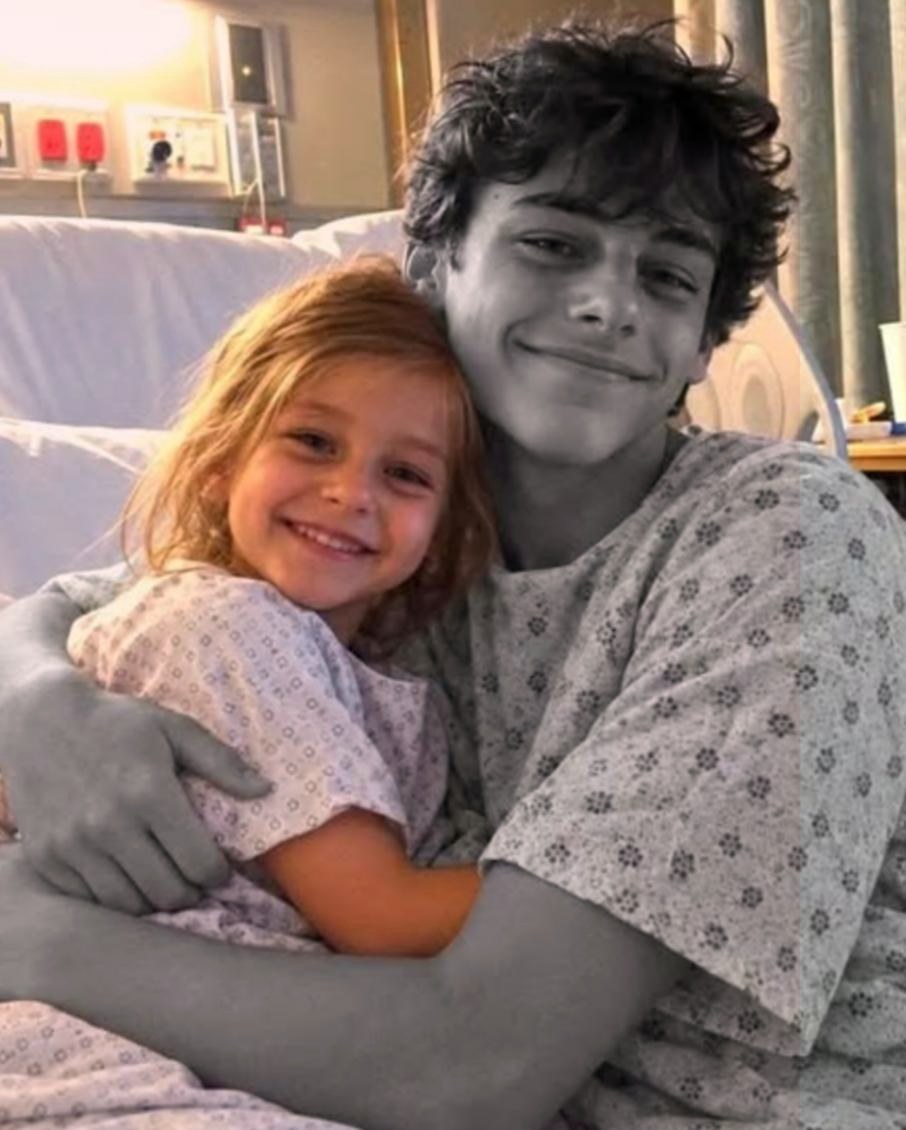
Hannah took down the photographs hanging on the wall. In one photograph Luka was carrying her on his shoulders. Hannah was five years old and laughing so much that her eyes were closed.
“Let us take this one with us,” she told me.
“All of them?”
“No. Let one remain here.”
She placed Luka’s old camera beside the photograph. The camera that had stood on the shelf that night and in whose memory Niko later found Luka’s last photographs.
For the first time the empty room no longer resembled a tomb.
More precisely, it was no longer a museum. It became a memory.
Four months passed.
Hannah began studying biochemistry at the university. She said that one day, in places like that hospital, no one would have the right to turn a family’s pain into money.
I started a small consulting service. Every morning I got up at six, brewed coffee, and sat by the window. Earlier, the morning had reminded me only of doctors’ telephone calls. Now I listened to the noise of the city.
Hannah hung Luka’s photograph on the wall of the room, but also attached a small piece of paper beneath it.
It said: “I am here.”
“Are these Luka’s words?” I asked.
“No, Mom. Now they are my words.”
In December it snowed for the first time.
Hannah took me onto the balcony and placed a small white paper in my hand. On it, in childish, slightly crooked letters, three people were drawn: me, Hannah, and Luka. Luka was holding a silver keychain in his hand.
“Niko sent it to me,” Hannah told me. “He said that Luka had always intended to keep drawings like this.”
That evening I received a last letter from Giorgi.
“I am still your family. Come, listen to me at least once.”
I read the letter to the end.
Then I folded the envelope and put it in the trash can.
I gave no answer.
Not because it no longer hurt.
Because pain was no longer a reason to open the door for him.
Hannah placed Luka’s camera by the window. Snow was falling outside, and the flakes looked like small stars on the streetlamps.
I ran my hand over the camera.
For six years I thought that it had stopped at the final frame.
But in the last picture Luka had left a future for us.
And for the first time his absence no longer seemed like emptiness to me.
It was a light that no longer needed a door.
Missed the beginning?
Related posts:
 My son’s life managed to save his sister, but on Hannah’s eighteenth birthday she opened a letter and a guest turned pale
 My servant made my disabled daughter stand, but one question of hers silenced every voice in the room
 Before our fifth anniversary, I overheard my husband’s secret conversation and his laughter suddenly stopped
 My Former Billionaire Husband Left Me Because of the Children, but He Saw the Twins in a Restaurant and Lost the Color in His Face
 For three years he told me that he would never walk again, but when his laughter returned home, it froze my husband in place
 Part 4 — Every day, I saw a huge motorcyclist waiting for an abandoned infant—but a single question from me would make the smile vanish from his face.