Part 4
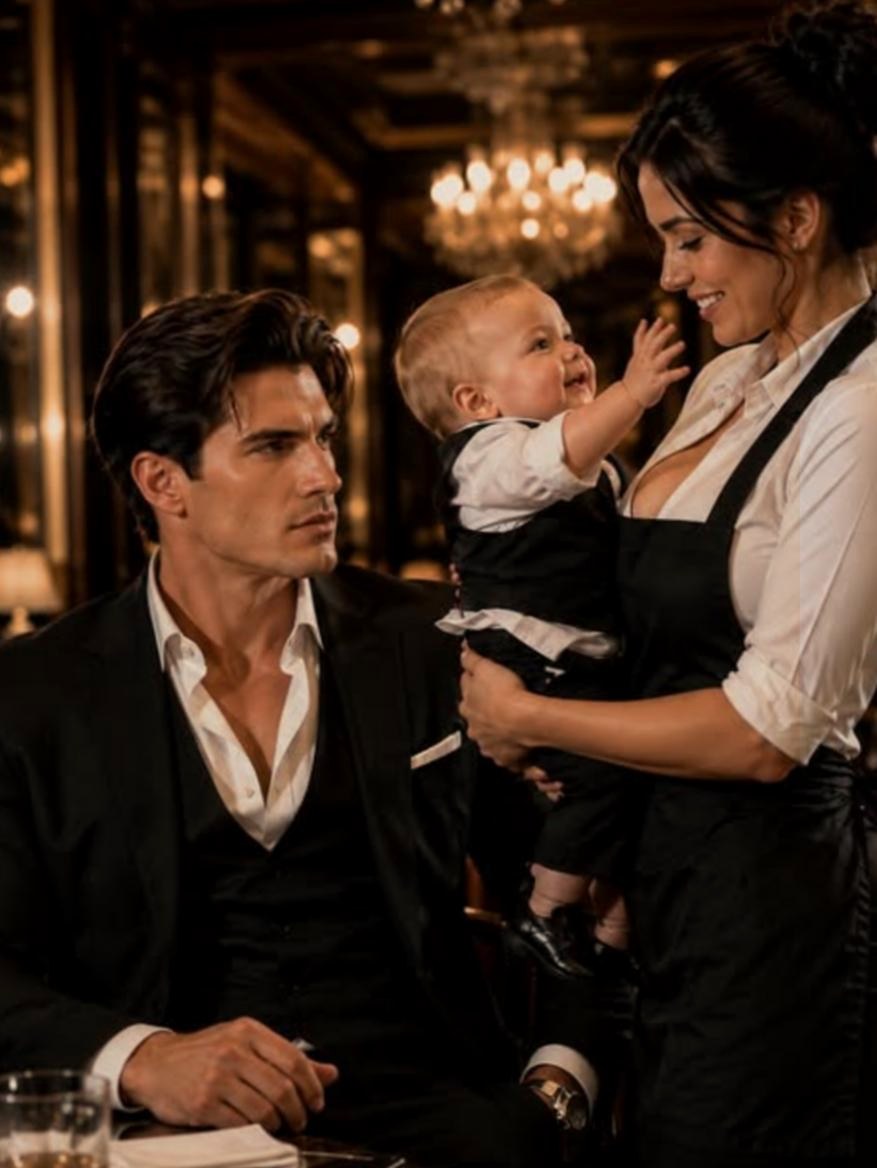
Lorenzo gripped the phone so tightly it looked as though his entire life were slipping through that tiny device.
— “Where is Niko?” he demanded.
Mira stood up immediately, pressing the child to her chest.
— “He’s with me.”
— “Do not leave this room.”
— “No one is coming in,” Dario said, positioning himself directly in front of the door.
The voice on the phone resonated once more:
— “You raised a stranger’s child for years, Lorenzo. And now your biological daughter stands right beside you, and you don’t even know which one is which.”
— “Vittoria,” Lorenzo said.
— “You realized too late.”
— “If you lay a hand on Niko…”
— “No one is touching Niko. Not yet.”
The call cut off.
Lorenzo slammed his fist against the wall, sending a shower of white plaster dust down to the floor.
And for the very first time, I realized that fear didn’t live inside me alone.
— “Tell me the truth now,” I said. “Who actually raised Niko?”
Lorenzo could offer no answer.
Dario glanced down at his phone.
— “Boss, there are three vehicles parked outside the clinic. They don’t belong to our men.”
— “Call the attorney,” Lorenzo said.
— “Which one?”
— “All of them.”
The first lawyer ended the call within five seconds.
— “I cannot get involved in this,” he said. “If Vittoria’s recording is genuine, a financial investigation is already underway.”
The second attorney didn’t pick up at all.
The third simply waited for one thing: a copy of the recording.
— “If this audio is going to court, both of you need to understand what you’re saying,” he told us.
— “What do you mean?” I asked.
He switched on his laptop and replayed Vittoria’s recording from the beginning.
Her voice echoed through the room:
“Sophia will disappear. The child will remain in the orphanage. And Lorenzo will go on believing that every choice was his own.”
Vittoria laughed on the recording.
Then she spoke in her own unvarnished tone:
“He never had a family. He only ever needed someone who looked like one.”
Lorenzo sat down heavily in a chair.
He was hearing those words spoken from the outside for the very first time—not as a warning from a friend, but as an inescapable record of his own past.
— “I trusted her,” he said softly.
— “You handed her power,” the attorney replied.
— “I thought Sophia was dead.”
— “You didn’t verify it.”
Lorenzo buried his head in his hands.
I said nothing. Sometimes the most brutal answer is pure silence, when a person can no longer outrun their own mistakes.
That same night, the police entered the clinic. This time, no one ran away. Dario set his firearm on the table. The attorney handed over the recordings, the financial ledgers, and the address to Vittoria’s private safe.
Lorenzo looked over at me.
— “You are free to leave.”
— “Are you letting me?”
— “No. But I won’t force you to stay anymore.”
It was the first honest thing I had ever heard from him.
They apprehended Vittoria at her estate the following morning. Caught alongside her were two men who had participated in Sophia’s disappearance and the creation of the forged documents. Inside her safe, investigators recovered ledgers, photographs, and letters that confirmed the entire scheme.
Sophia was no longer alive, but her voice, her handwriting, and her carefully hidden truth survived.
As for Niko, he turned out to be Lorenzo’s biological son after all. The lie on the recording had been fabricated by a man hired by Vittoria, designed to throw Lorenzo into a panic and allow her to seize control of his assets.
The trial concluded months later. The court sentenced Vittoria and her accomplices to lengthy prison terms. Lorenzo transferred the majority of his commercial holdings into a legitimate charitable foundation dedicated to searching for missing children.
I never returned to work there.
On the day I left Aurelio, I stepped into the small employee locker room. My locker was nearly empty. Only my white apron remained, with the small copper bell resting in its pocket.
I turned it over in my hand for a few seconds.
Then I left it behind.
— “You are still here,” I whispered softly to myself, setting the bell on the wooden shelf.
Three months later, I relocated to a coastal town. I lived in a small apartment, worked at a local bakery in the mornings, and volunteered at a children’s assistance center in the evenings.
Niko came to visit me twice a week. Lorenzo always paused at the doorway, asking before stepping inside:
— “May I?”
He had never needed to ask that question before.
Niko was walking now. One afternoon, he sat at the table drawing a house with colored pencils. Inside the house were three figures: a little boy, a tall man, and a woman with wide eyes.
— “Is that Mommy?” I asked him.
Niko nodded.
— “Is that Daddy?”
He nodded again.
— “Who is the third person?”
The child picked up a pencil and drew a small circle encompassing all three figures.
— “Family,” he said.
Lorenzo turned his head away, trying to hide his tears.
I ran my hand gently over Niko’s hair.
— “Family isn’t always who was supposed to be there at the start,” I told him. “Sometimes it’s whoever remains at the end.”
The season’s first snow fell on the initial day of winter, blanketing the town in a quiet white layer. In my new apartment, three potted plants sat on the window sill, and the rich scent of cinnamon drifted through the kitchen in the morning.
I received a letter from Lorenzo.
“I am not asking for forgiveness. I am only writing to let you know that if you ever need me, I will be here.”
I held the letter in my hands for a long time.
Then I wrote back a reply:
“I no longer need to go to you to feel safe. But for Niko, the door will always remain open.”
He sent no further reply.
Yet he came the very next day. He stood at the door holding a small wooden box containing my mother’s photographs and her personal letters.
— “These belong to you,” he said.
— “Now I know who you are.”
— “Who?”
— “A man who came into my life late, but stopped trying to force his way into it.”
Lorenzo bowed his head.
I opened the door wide.
Niko ran toward him. Lorenzo knelt down and pulled him into his arms. I stepped over to the window and looked out at the street.
That evening, I moved the old copper bell into my new kitchen, hanging it from a small nail beside the stove. Whenever the wind rattled the windowpane, the bell rang softly.
I no longer needed to ring it to convince myself that I existed.
Yet I touched it anyway.
Its cool surface slowly warmed beneath my fingers.
Outside, the first snow fell silently. Inside, Niko laughed. Lorenzo was organizing glasses in the kitchen, asking with every movement whether he was doing it correctly.
I looked at my own reflection in the windowpane.
I had my mother’s eyes.
For the very first time, it no longer hurt.
The copper bell chimed once.
This time, I was not lost.
Missed the beginning?
Related posts:
 When the dangerous mobster’s son reached out towards me, his father looked at the photo and went pale.
 A Moretti-birtokon terhes cselédként mindenki átnézett rajtam, míg az idős úr egyetlen mozdulata után Lorenzo arca elsápadt
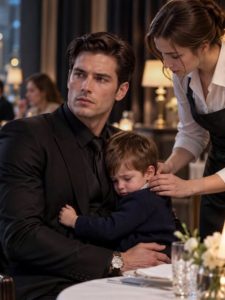 No one could stop the mafia boss’s son until I approached him—and the color instantly drained from Rico’s face.
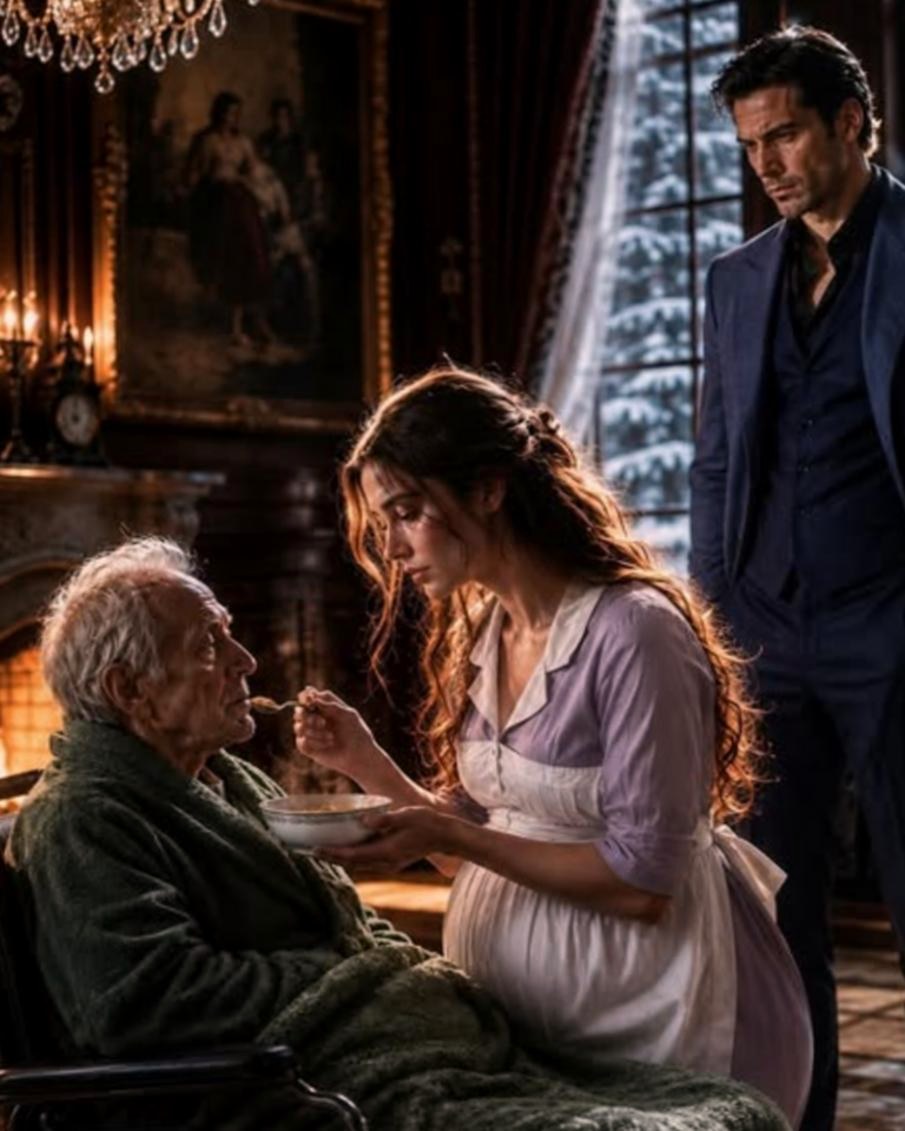 Ich musste trotz Schwangerschaft die Villa bewachen, doch als der Hausherr nach fünf Jahren zum ersten Mal zeigte, auf wen er deutete, erstarrte jeder
 My wife saw something in the photo that I hadn’t noticed—and her voice suddenly cut off on the phone.
 Zwei Tage vor meiner Hochzeit wurde ich einer gefürchteten Familie versprochen – doch als mein Bräutigam die Schlafzimmertür schloss, erstarrte er