

Part 4
Nora’s words still hung in the air when Officer Lea Morgan took the phone from my hand and examined the photograph once more.
— “Who is this?” she asked.
— “I don’t know,” I replied. “I’ve never seen her before.”
Derek, already handcuffed, suddenly froze.
— “Abigail, listen. It’s not what it looks like.”
— “Then explain it to me.”
He opened his mouth, but couldn’t find an answer.
Nora looked at him inquiringly.
— “Lucas is at school right now. I’ll call the principal to ensure the child is handed over strictly to you or his official guardian.”
Lea signaled to the second officer.
— “Go to the school immediately.”
Derek rattled his handcuffs.
— “You can’t take the child from me.”
— “No one is taking him,” Lea told him. “We are simply taking away your ability to threaten anyone using his name.”
At that moment, Margaret looked at Derek. The anger had drained from her face, replaced by something far heavier—fear.
— “Tell her the truth,” she said softly.
Derek turned his head toward her.
— “Shut up.”
But that command no longer frightened anyone.
The police loaded Derek and Margaret into separate cruisers. Harold remained in the kitchen, sitting on the very same chair where Nora had spread out the documents just minutes earlier.
— “Abigail,” he said, “I knew my son was a difficult man. But I never imagined anything like this.”
— “You could have helped me that night.”
Harold lowered his eyes.
— “I was afraid.”
His honesty was painful, but it hurt far less than a lie.
— “I was afraid too,” I told him. “I just made a choice anyway.”
Before my transfer to the hospital, Nora handed me my small brass bookmark. It had been recovered from the items left under the bed. My fingers traced its cold metallic surface, and I remembered my father’s voice: “When you lose your way, first read what you already know.”
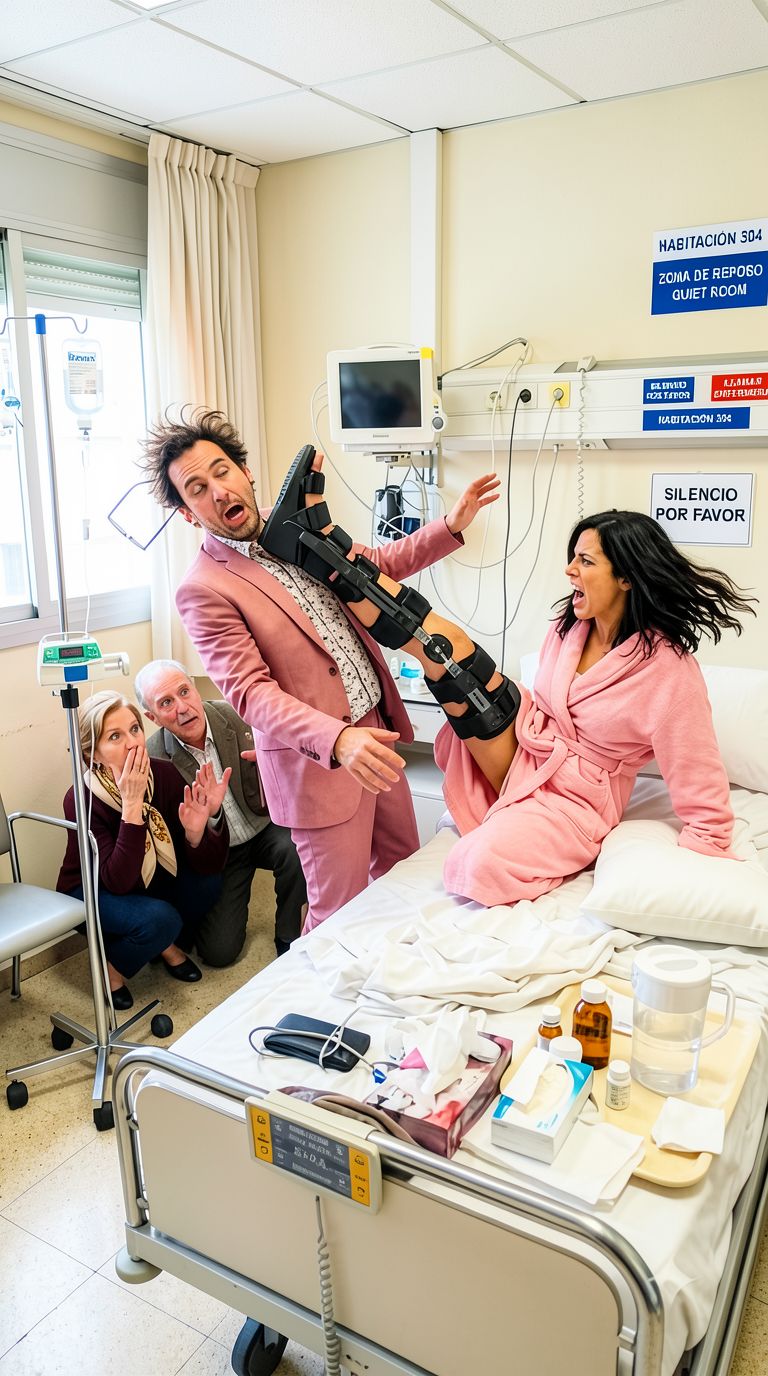
On the third floor of the clinic at seven o’clock that evening, the doctor informed me that the fracture in my leg was severe, but surgery would be successful.
— “Will I be able to walk for long?” I asked.
— “It will take several months,” he replied. “But you will walk.”
That simple sentence sounded like a solemn promise to me.
That very night, Derek’s lawyer called me. His tone was overly smooth and composed.
— “Mrs. Hayes, my client is prepared to resolve everything out of court. If you modify your statement, it might be better for both parties.”
— “He broke my leg and planned to strip me of my nephew.”
— “Domestic conflicts sometimes amplify emotions.”
— “This was not emotion for me. This was violence.”
— “Think about your future.”
Nora set a small recording device beside my hospital bed and gave me a firm shake of her head. In that exact moment, I realized why I shouldn’t rush my response.
— “I will be thinking about my future for the very first time when I no longer have to listen to anything from you,” I said, and disconnected the call.
Two days later, Derek heard his own voice played back for the first time.
It took place during a preliminary court hearing. A long wooden table stood in the room, while an old space heater hummed noisily in the corner. I sat in a wheelchair, my leg elevated. Derek stood directly across from me, flanked by his attorney.
Nora switched on the recording.
“Tomorrow we’ll just say she fell down the stairs.”
Derek closed his eyes tightly.
Then came his second sentence:
“Then she’ll stay at home and stop being so full of herself.”
Silence gripped everyone in the room.
Derek pressed his hands over his ears.
— “Turn it off.”
— “That is your voice,” the judge stated firmly.
— “I didn’t mean it like that.”
— “But you said it,” I replied.
He looked over at me. For the first time, he didn’t appear strong, angry, or confident. He was merely an exhausted man whose own words had returned to haunt him.
— “Abigail, I loved you.”
— “You might have loved me, but you loved controlling me even more.”
His lawyer immediately began whispering to him:
— “Derek, don’t say another word.”
This time, Derek didn’t nod back. He finally understood that silence would no longer save him.
Nora then unsealed a second folder. Inside was a forensic handwriting expert’s report confirming the forged signature, bank statements, the camera logs, and Derek’s electronic correspondence with Margaret. It documented their joint plan to force me out of my job, restrict my access to funds, and file a false claim for guardianship over Lucas.
Margaret buried her face in her hands.
Harold refused to look at Derek any longer.
The ruling came that very week. Derek was sentenced to prison for domestic assault, extortion, and fraud, while the court issued a permanent restraining order against Margaret, opening a separate criminal case into her actions. She faced severe penalties for her involvement in executing forged documents. Harold testified against them both.
I felt no joy in their punishment.
I simply stopped trying to shield them from the consequences of their actions.
Three weeks later, I was discharged from the hospital. I went directly to my new apartment—not back to their house. The room was small, its window overlooking the city rooftops. I bought a new mug for the kitchen—white with a thin green rim. When I picked it up, my hands still trembled slightly.
Lucas arrived that evening.
He stood in the doorway, clutching his backpack with both hands.
— “Auntie Abby, am I going to live with you now?”
— “If you want to.”
— “And that man won’t come back?”
I lowered myself down before him, even though my leg still ached.
— “No. He can’t come back.”
— “Because the police took him?”
— “Because the grown-ups made a decision. You did nothing wrong.”
Lucas rested his head against my shoulder.
— “Then I’ll help you walk.”
— “You already helped me.”
— “When?”
— “The day you sent me your drawing. Remember when you drew that little house?”
He smiled up at me.
— “I always draw the windows open in that house.”
— “I know. That’s why I like it.”
Months passed.
My leg healed slowly. At first, moving from the room to the kitchen took ten full minutes. Then I managed to walk to the corner of the street. Eventually, I returned to work, where a small soft desk lamp was waiting beside my computer—left there by my coworkers because they knew I couldn’t handle harsh lighting just yet.
My life didn’t magically turn extraordinary overnight.
But it became mine.
In the mornings, I prepared oatmeal for Lucas and left out the salt. He still complained anyway.
— “Auntie, this doesn’t taste like anything.”
— “You can add some yourself if the doctor allows it.”
— “If I were a doctor, I’d allow ice cream.”
For the first time, laughter resonated in our home again. Not the artificial laughter I used to hear behind closed doors in that kitchen, but the kind that lightened your whole spirit.
On a December morning, the season’s first snow fell. Lucas taped his drawing to the window. The little house had its windows wide open, with two figures standing by the door.
— “Is that us?” I asked.
— “Yes. But nobody is shouting here.”
— “It’s a good house.”
— “Because we built it.”
That evening, I received a letter from Derek sent through official prison mail. The court permitted his letters to reach me, though I was under no legal obligation to reply.
“I made a mistake. We can still piece our family back together. Lucas needs a father. You won’t be able to do everything alone.”
I read it and sat at the kitchen table for a long time.
The old Abigail might have blamed herself. She might have believed that preserving a family was more important than anything else. She might have called back, explained herself, or begged.
Now, however, I knew that being alone and being abandoned were not the same thing.
I called Nora.
— “Should I send a response?” I asked.
— “Only if you want to.”
I typed a single sentence onto a sheet of paper:
“Our life is no longer waiting for you.”
Nothing more.
I forwarded the text to Nora and walked over to the window. Snow fell silently across the yard outside. Lucas sat on the floor, using colored pencils to draw a brand-new house.
As I prepared dinner, I reached into my sweater pocket and touched the small brass bookmark. My father had given it to me years ago, and I had clutched it on those cold kitchen tiles as my sole proof of survival.
Now, I pinned that bookmark to a small board standing by the window in my new kitchen. Every morning, I used it to mark a page in the book I was reading that evening.
I was no longer hiding my past.
I simply stopped allowing it to write my future.
Lucas set his pencil down and asked:
— “Auntie Abby, where is your place now?”
I looked toward him in the soft snowlight filtering through the window, and offered him a peaceful smile.
— “Right where I can breathe freely.”
The brass bookmark gleamed in the warm light on the windowsill.
This time, I locked the door from the inside.
Related posts:
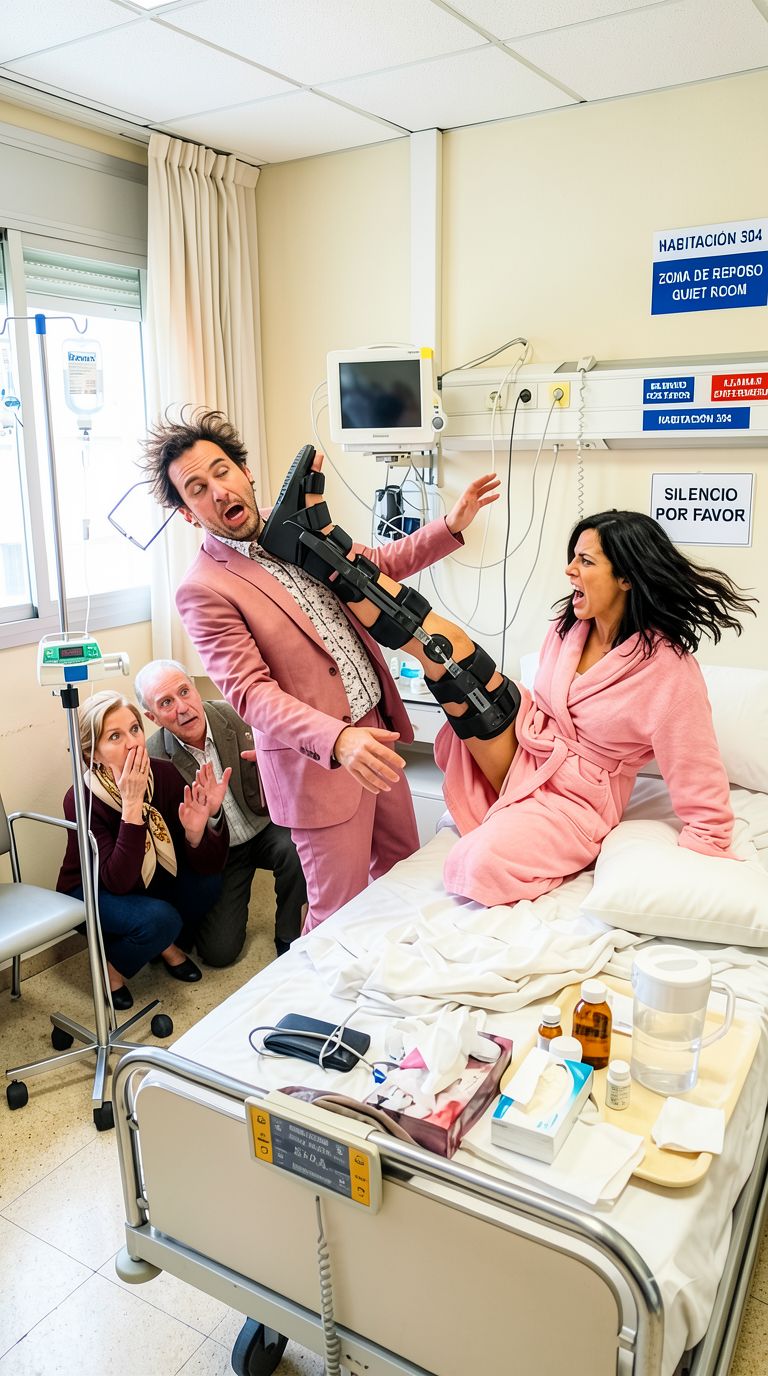 When my husband’s family broke my leg and my husband told me to submit, the smile vanished from his face three days later.
 I was ordered to feed the city’s most feared man, but when he tasted my burnt garlic, his expression suddenly changed
 I was publicly disowned at my father’s funeral, but when I opened his battered fishing box, my uncle suddenly stopped smiling
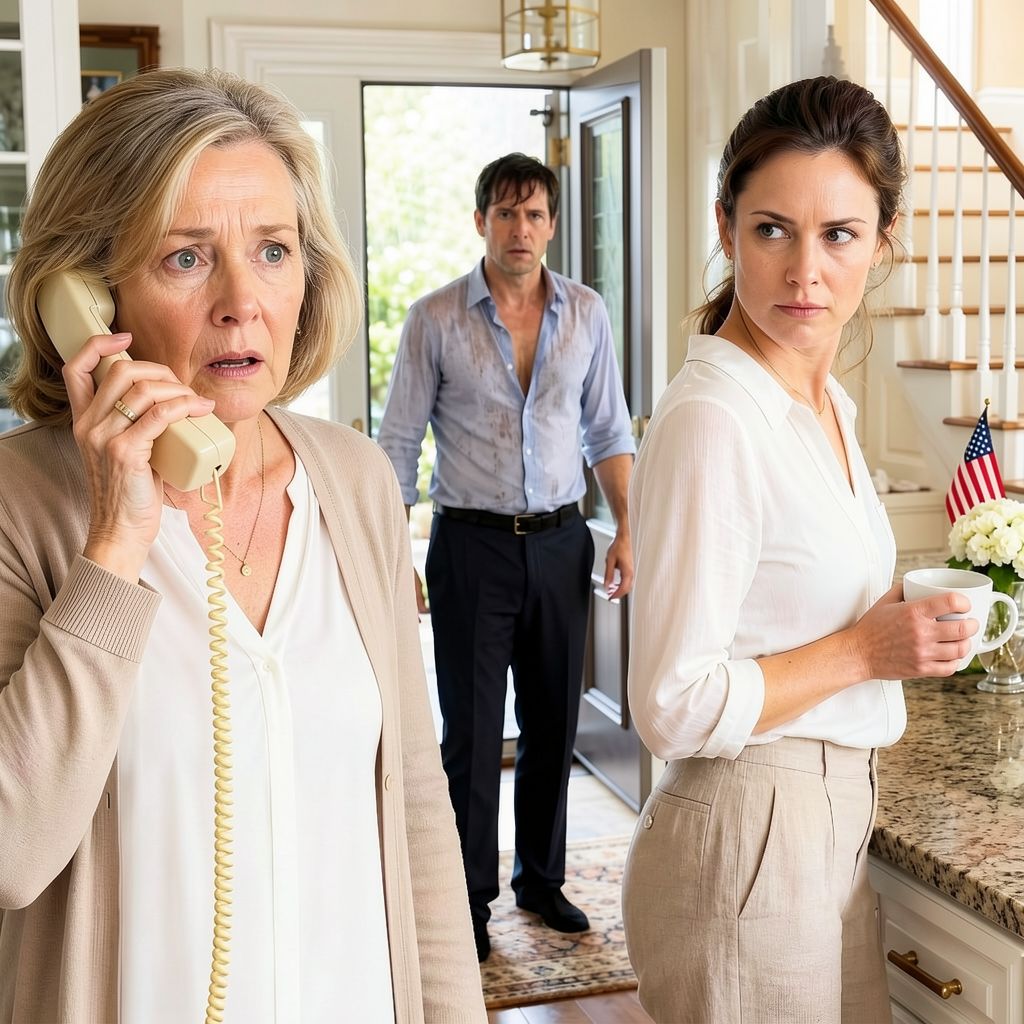 I heard my daughter-in-law showering upstairs while my son said she had flown away, and the woman who entered my kitchen suddenly stopped smiling
 My husband’s fiancée used my surname on her wedding invitation, but when I mentioned one stolen bracelet, his face went white
I brought my daughter to the Cole mansion for one dinner, but when Julian saw her sleeve, his polite smile vanished
My husband’s fiancée used my surname on her wedding invitation, but when I mentioned one stolen bracelet, his face went white
I brought my daughter to the Cole mansion for one dinner, but when Julian saw her sleeve, his polite smile vanished