
After Irakli’s words, everyone fell silent.
He slowly turned us around.
A large mirror hung in our living room, reflecting half of the entire room. In its upper corner, beneath the dust, a small black dot could be seen.
A camera.
Hanna covered her mouth with her hand.
“There was a camera in my house?”
“Not only in the house,” Irakli said. “He probably also placed a transmitter in the suitcase.”
The next ten minutes passed in chaos. Police cars blocked the street. I wrapped a blanket around Noa’s shoulders, although the room was warm. Hanna searched for Lucy, and when she found her, the girl was talking to a small plastic duck in the bathroom.
“Mother, why is everyone so quiet?” Lucy asked.
Hanna knelt down and hugged her.
“Because many people came today to protect you.”

Outside, the police surrounded the van. The door was locked from the inside. A few minutes later it turned out to be empty.
Daniel was not there.
But on the seat lay Lucy’s old pink hair clip, which Hanna thought she had lost years ago.
Irakli looked at the object for a long time.
“He was here. Perhaps even a few minutes ago.”
Hanna’s telephone rang.
It was Daniel.
She answered the call only after Irakli turned on the recording.
“Where are you?” Hanna asked.
“Closer to your house than you think.”
“Do not touch Lucy.”
“I am her father.”
“A father is the one who sits beside a child at night when she has a fever.”
Heavy breathing was heard on the other side.
“You are raising my child against me.”
“You have not come to her birthday even once.”
“Now I have come.”

Irakli signaled with his hand that I should continue the conversation. Hanna’s voice trembled, but did not break.
“Why did you leave the bags in the yard?”
Daniel chuckled.
“Because I have to thank your new friends. Especially the little boy. He is very kind. Kind children suffer most easily.”
Noa heard this. His face turned pale, but he did not lower his head.
“I am not afraid of you,” he said.
Daniel fell silent.
Then the connection was cut.
The police found the source of the call within a few minutes. Daniel was hiding in the basement of the old workshop. When they entered, he had already begun deleting the recordings from the cameras hidden behind the door.
But he did not know that the voice recorder was not only in the suitcase.
Irakli found a second device under our stairs. It transmitted the recording directly to the police car. Every word of Daniel’s was saved there: how he planned to take Lucy, how he followed Hanna, and how he tried to silence everyone through the children’s fear.

When the police brought him out, Daniel was still trying to justify himself.
“This is my family matter!”
Irakli answered calmly:
“No. This is an attempted child abduction, a threat, and illegal surveillance.”
Daniel lost his voice for the first time.
The next day Hanna called me.
“The lawyer told me that the recording will be enough for a protective order. But I am still afraid.”
“The fear will disappear slowly,” I told her.
“How can you speak so calmly?”
I looked at our yard through the window. The large, battered metal suitcase that the police had left as evidence was still lying there.
“I am not calm,” I answered. “I just know now that you are no longer alone.”


That same day the whole street gathered at Hanna’s. The people who had left the colorful food bags came one after another. Some were from the school, some were neighbors, and some were complete strangers who had seen Noa’s story on social media.
One woman told Hanna:
“We brought bags for you. And for Lucy we can fill an entire wardrobe.”
Hanna nodded and burst into tears.
Noa took her hand.
“Now Lucy will have as many lunches as she wants.”
A week later the court issued a protective order for Hanna and Lucy. Several months later Daniel was convicted. He was sentenced to prison and forbidden to approach Lucy.
After the trial Hanna told me that the hardest thing for her had been hearing Daniel’s words. The police played his recording in the courtroom.
“Kind children suffer most easily.”
Daniel sat on a chair and listened to his own voice.
For the first time he understood that in the recording he was hearing not a threat, but his own fear.

After the case ended, his lawyer shook Hanna’s hand.
“I will no longer work with you,” he told Daniel. “You knew the truth from the beginning and still chose fear.”
Daniel raised his head.
“I was only asking for my child.”
Hanna answered:
“You cannot ask for a child as if she were an object.”
Then she walked toward the door.
Daniel did not follow her.
That evening I saw the empty room in Hanna’s house. Lucy’s bed had stood there before, and her drawings had been on the wall. Because of the cameras, everything had been moved temporarily. Beside the bed only one small pink hair clip remained.
Hanna picked it up.
“I thought I had lost this forever.”
“Sometimes lost things come back,” I told her.
“People don’t?”
“Not all of them.”

Three months passed.
The first spring rain was coming. Noa started attending a new school, because the old school was near that house and being at peace became more important for Hanna. Every Friday he went to Lucy. They drew together, ate apple slices, and counted the raindrops on the window.
One evening Noa asked me:
“Mother, does Lucy understand now what a birthday is?”
“I think so.”
“How?”
“Because that day so many people came who decided to protect her.”
Noa thought for a while.
“Then a birthday may not be just a cake.”
“It may be people telling one another: ‘You are not alone.’”
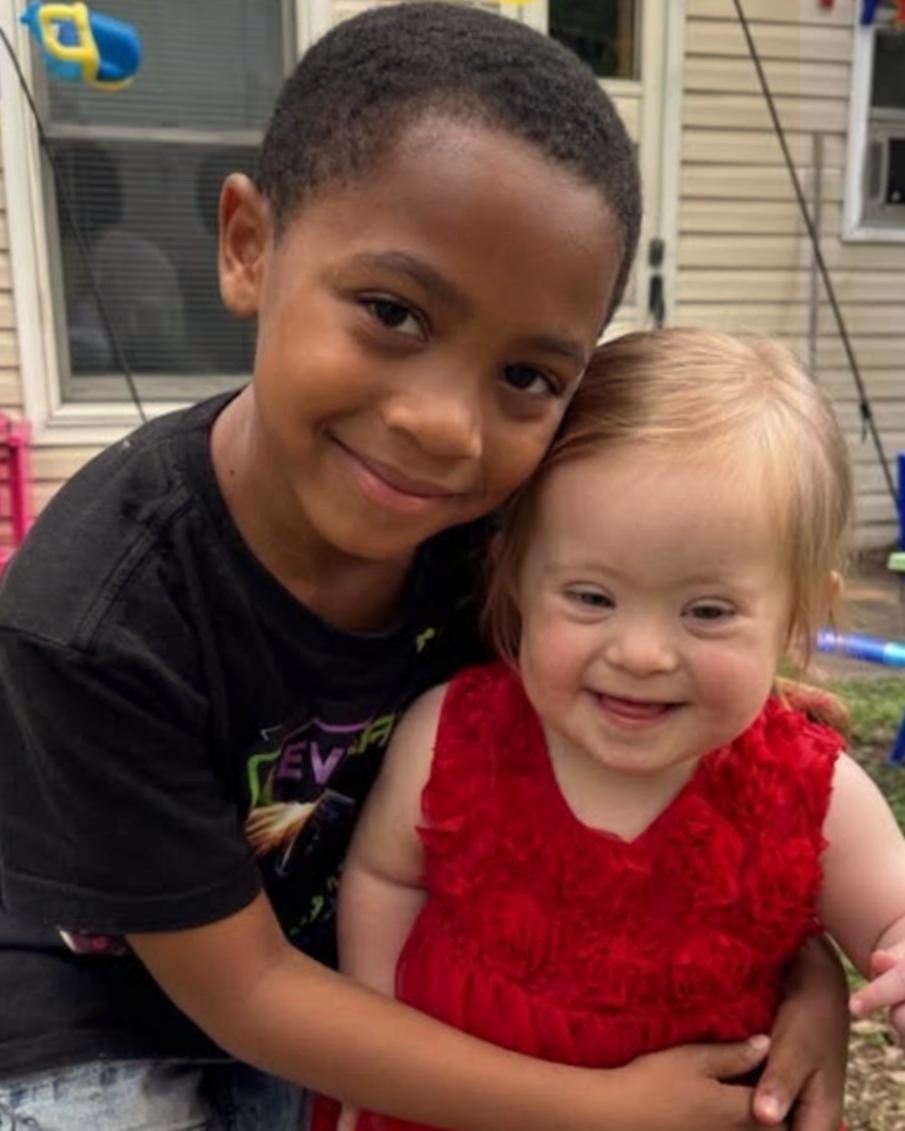
He wrote this phrase in his notebook. On the page he also drew a new picture: Lucy in the red dress, Hanna behind her, me beside them, and the whole street around us.


I also found a new job for Noa’s sake. I worked four days a week in a small library. In the morning I arranged books, and in the evening I read fairy tales to children. Before, every unfamiliar sound frightened me. Now I locked the door, checked the windows, and then made tea.
Peace did not return in one day.
It came in small habits.
In Noa sleeping peacefully.
In Hanna’s laughter.
In Lucy’s red dress, which had already become slightly shorter because the girl had grown.
Four months later a letter from Daniel arrived. The envelope bore a prison stamp. Hanna looked at it for a long time before opening it. The letter said that he had changed, that he missed Lucy, and that he deserved one chance.
She folded the letter.
“What will you do?” I asked.
Hanna opened the window. A quiet evening lay outside.
“I will write back.”
“What will you tell him?”
She took a pen and wrote only one sentence:
“Your chance does not mean that I must put my child in danger again.”
Then she hid the letter in a folder and never returned to it.

That same week Lucy put on a new dress. The red dress was already small, so Hanna folded it into the wardrobe. Noa sewed a small white star onto the lower edge of the dress. It became their new, strangely created symbol: whenever someone needed help, they drew such a star on the door.
The old metal suitcase did not remain in our yard. After the evidence process was finished, the police returned it to me. I washed it, did not repair the scratches, and placed it in the corner of the library.
Now I keep children’s books in it.
Every Saturday Noa takes out one book and brings it to Lucy. Sometimes I also put a small lunch in the suitcase: an apple, a piece of cheese, and a chocolate biscuit.
One morning Lucy opened the suitcase, took out a book, and looked at me with a laugh.
“Is there more?” she asked.
“Always,” I answered.
Noa knelt beside her.
“Kindness really does come back.”
I looked at the metal suitcase. It was still battered, but now there was no fear inside it.
There was light inside.
And this time we opened the door ourselves.
Missed the beginning?
Related posts:
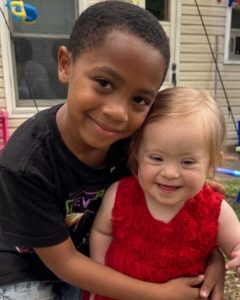 My eight-year-old son bought a red dress for Lucy, and in the morning unknown bags appeared in our yard and his face turned pale
 My Wife Disappeared with Our Child When the Lawyer Showed Me One Photograph and the Man Standing Behind Me Turned Pale
 Three hours after the honeymoon ended, he swung a belt at me, but at the sound of the elevator bell his face suddenly turned pale
 On my sixtieth birthday, all six children disappeared, and when the policeman saw my name on the folded letter in his hand, he turned pale
 My husband asked me to donate an organ to his ex-mistress, but the doctor turned pale after my calm response.
 Part 4 — My Wife Disappeared with Our Child When the Lawyer Showed Me One Photograph and the Man Standing Behind Me Turned Pale





