
That morning, when they put a lock on the water of my land, Don Gumersindo Salgado entered the yard as if it were already his house.
Behind him came the village commissioner, Efrain Morales, and two workers. He looked over the sun-dried cornfield, then handed me a paper he was holding.
“Sign here, Doña Elena. In a week this plot will not even be fit for raising lizards.”
I did not take the paper.
“What does this mean?”
Efrain took off his hat and lowered his eyes to the ground.
“It says that two months ago you were refused the right to use the water.”
My name was written correctly. At the end stood something resembling my signature. That signature lacked only one thing: truth.
“I did not write this.”
Gumersindo smiled and pointed with his finger at the seal.
“The seal is genuine. The village commissioner’s office approved it.”
“I did not approve it.”
Efrain cleared his throat.
“Doña Elena, the matter has already been formalized.”
Five minutes later they brought a chain to the small water channel. The metallic sound, when the lock closed, pierced my heart. Water had come through this channel to my field since my father’s time. I had spent more than forty years on that land. I buried my husband there, raised my children there, and knew the place of every stone.

And now three men were telling me that my signature was no longer mine.
“Think about it,” Gumersindo told me and walked toward the car door. “Your nephew understands that selling will be better for everyone.”
“What does Julian have to do with this?”
He only shrugged.
“Ask him yourself.”
I returned home alone. Four tortillas and an empty water jug remained on the kitchen table. That evening I walked to Julian’s house, but his wife met me at the door.
“He has gone to work, Aunt.”
“When will he return?”
The woman did not answer me. Behind her, a new television shone on the wall.
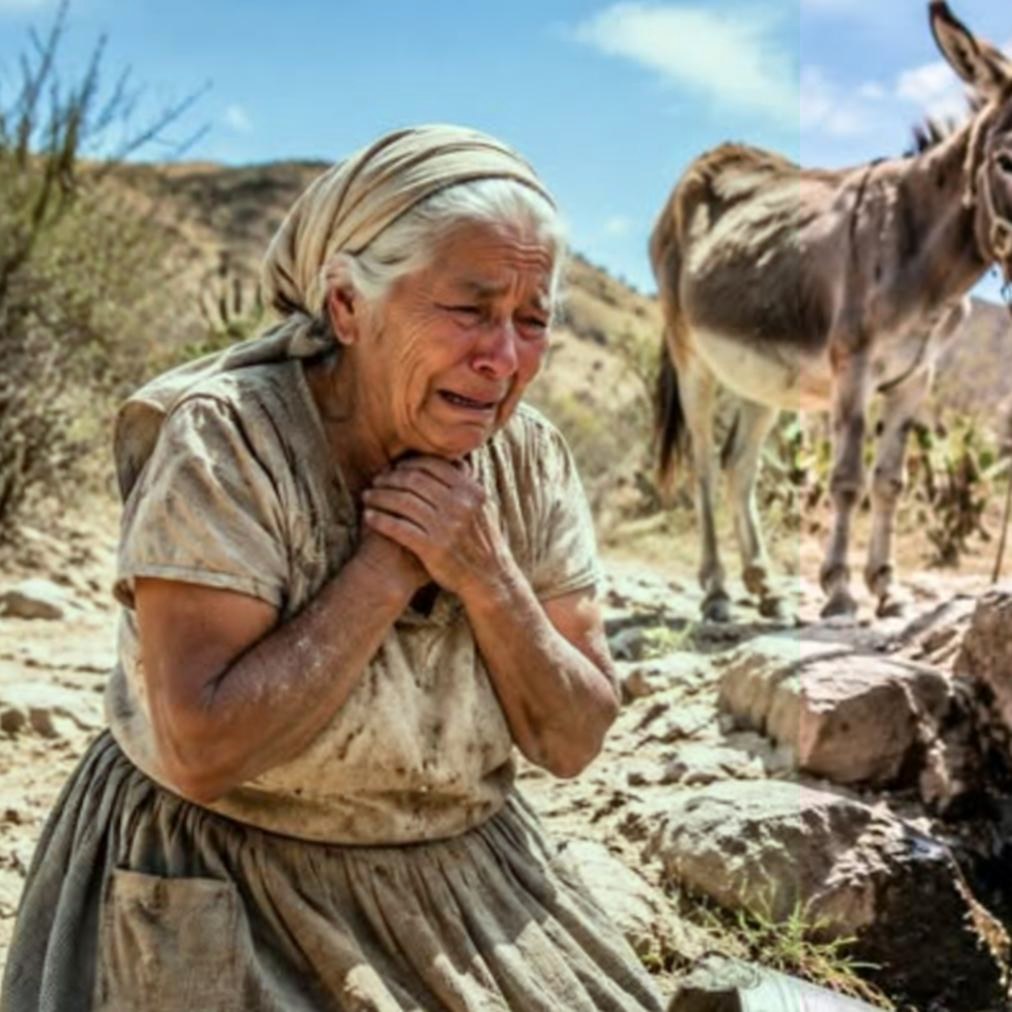
When I returned home, a gray donkey was waiting for me in the yard. Two weeks earlier I had found it fallen into the ravine. All day I had moved stones, pulled it out with a rope, and shared my last corn with it. One ear was torn, and there was an old wound on its hind leg.
The neighbors mocked me.
“Elena has lost her mind, feeding a useless animal,” they said.
That night I sat beside it and gave it two of the remaining four tortillas.
“You have no one either, do you?”
The donkey pressed its warm muzzle against my hand. For the first time that day I felt that I was not completely alone.

For four days I carried water from a distant stream. The field was turning yellow. Gumersindo sent me two new offers. I tore up both.
On the fourth evening Julian came.
“Aunt, stop being stubborn.”
“Did you know about that false paper?”
He looked away from me.
“I know that Gumersindo is offering you good money.”
“I asked whether you knew.”
Julian struck the table with his fist.
“Sell it. What do you need so much land for at your age?”
Then something inside me finally broke.
“Get out of my house.”
He left furious. As he got into the car, a small envelope fell from his pocket. I picked it up. Inside was a copy of my identity document and an old signature that I had given him years ago so he could obtain a loan. Written on it in blue ink was: “For use in G. Salgado’s matter.”
I sat down on the chair. My hands were trembling.
That night the donkey pulled the rope with all its strength and looked toward the hill. At last the rope broke. The animal disappeared into the darkness, and I followed its tracks until I heard someone whispering from the bushes and saw a hand reaching toward a folder abandoned beside the stones…

In front of me, beside the stones, lay a black folder. The donkey’s torn ear was visible above the bushes, but the animal itself was no longer moving.
“Who is there?” I shouted.
There was no answer.
The wind rubbed the stalks of dry grass together. For several seconds I even held my breath, then slowly went to the folder. Inside I found only blank sheets, but at that same moment, below, on the path, the sound of a car engine was heard.
Someone was leaving the hill.
I took the folder home, put the envelope inside it, and at dawn went to Efrain Morales. The old wall clock in the commissioner’s office showed eight. On the table stood an extinguished lamp, and beside it was a coffee cup with a cracked handle.
When I placed the envelope before him, Efrain’s face changed.
“Where did you get this?”
“Julian dropped it.”
He removed his hat and placed both hands on the table.
“Doña Elena, there are things you should not tell me.”
“You have already taken the water from me. What else can you take?”
Efrain looked out the window. Outside, two children were rolling a wheel along the dusty street.
“Gumersindo has been lending money to people for years. Whoever cannot repay, he takes their animal, harvest, or land.”
“How much does Julian owe?”
“More than one hundred twenty thousand pesos.”
The words seemed to stick in my throat.
“Is that why you used my signature?”
Efrain lowered his eyes.
“I did not know where they had the copy from. They brought the document already prepared. I stamped it.”
“So you participated too.”
“Yes.”
His voice was so quiet that instead of anger I felt tiredness. I left the room without looking back.

That same day I saw Gumersindo’s car beside his barn. I hid behind a neighboring mesquite tree. Julian stood in front of him, his hands in his pockets.
“As soon as the old woman signs, your debt will disappear,” Gumersindo was telling him.
“You promised me at least fifty thousand.”
“Bring me the ownership document first.”
Julian’s voice was trembling.
“What if she does not agree?”
“Then without water she will come to me herself.”
I closed my eyes. This had not been a mistake. Nor fear. The boy who had eaten from my hand in childhood was handing over my land to pay his own debt.
That night Julian came again. The kitchen clock showed half past nine. A small candle was burning on the table.
“Aunt, we can settle this.”
“How much were the years I gave you worth?”
He fell silent.
“Fifty thousand pesos?”
His face changed immediately.
“Were you spying on me?”
“I trusted you. That is something else.”
“I have two children! I have debts! You are alone!”
“Being alone does not mean I am waiting for my life to end.”
He pulled the chair so hard that a wooden streak remained on the floor.
“This land would have belonged to the family someday anyway.”
“A family does not divide a person’s belongings before that person dies.”
Julian slammed the door. Only when the sound of the engine disappeared did I begin to cry.

For the next two days we had no food. I had four chickens left, half the field had dried up, and every bucket of water stripped the skin from my hands. On Friday a man from Gumersindo came.
“Tomorrow is the last day. If you do not agree, Gumersindo will declare the land abandoned.”
I understood that this was not an offer, but a threat.
That evening the donkey pulled the rope. Once. Twice. Three times.
“What do you want from me?”
The animal was looking not at the empty trough but at the hill. I released it. It walked ten or fifteen steps and looked back to see whether I was following.
Moss and ferns appeared on the path. The soil became damp. At last the donkey stopped beside a stone wall and pushed the branches aside with its muzzle.
Water drops glittered behind the stone.
I dug the earth with my fingers. First one drop appeared, then another, and finally a small stream, cold as ice, came out.
Beside the stone lay a flat slab. I removed the moss. Two letters were written on it: R. M.
Rufino Montiel. From my father’s stories I knew this name. The last majordomo who had found a secret spring in these mountains.
I looked at the donkey.
“You have been here before.”
The animal stood motionless. The old majordomo’s knot still seemed to be fastened in its tail.
The spring was only the beginning. Father had said that this water came with a secret document, one that Gumersindo could never erase. The next morning I decided to prove it before the whole village…

The next morning more people gathered in the village square than I expected. The sun had not yet risen high, but dust was already sticking to their shoes. Gumersindo was leaning against the hood of his pickup, while Efrain stood at the commissioner’s office table.
Julian stood farther from me with his wife. He could no longer look into my eyes.
“What are you planning, Doña Elena?” Gumersindo asked me. “These people have no time to listen to fairy tales.”
I was holding a jug full of water.
“The fairy tale is that I sold the right to water.”
A murmur went through the crowd.
“The spring disappeared years ago,” Efrain said.
“No. You simply hid its location.”
The donkey stood behind me. Its torn ear moved in the wind. I went upward toward the stone, and everyone followed me. Half an hour later we reached the spring. The smile disappeared from Gumersindo’s face.
“This land is not in my plot,” he said.
“That is exactly why you must see this.”
Under the stone where the water was emerging, I found a small rusty tin box. It had the old majordomo’s marks on the lid. My fingers were trembling so much that I had difficulty opening it.
Inside lay a document wrapped in oiled cloth and a letter written in my father’s hand.
The document was dated 1948. It said that Rufino Montiel had found the spring for the common use of all the village families, but that the upper part of the land had been transferred to my father, Mateo Flores, for the rest of his life and then to his direct heir. Drying up the spring, selling it, or closing it to a private person was forbidden.
I was the direct heir.
One sentence was written in Father’s letter: “Whoever locks up the water violates not only the land, but also the mountain’s promise.”

Gumersindo snatched the document from me.
“This is an old paper. It means nothing.”
Efrain looked at the sheet and his face turned pale.
“The seal is genuine.”
“You be quiet!” Gumersindo shouted at him.
And I took another sheet from the envelope. It was the copy that had fallen from Julian. Beside it was Efrain’s signature.
“And is this genuine too? My false signature, your seal, and the note saying that the old sample should be used for Gumersindo?”
Julian raised his head.
“Aunt…”
“Do not call me that now, as if that word still had any power.”
Gumersindo came toward me.
“You still cannot prove anything with this document.”
“I have already proved it. The village saw the water. Your offer is illegal. My signature is false. And I recorded your conversation yesterday.”
I took a small voice recorder from my pocket. Julian’s voice rang out across the square: “As soon as the old woman signs, your debt will disappear… You promised me at least fifty thousand…”
Julian fell onto a chair. His wife covered her mouth with her hand. Efrain leaned against the wall.
But Gumersindo fell silent for the first time.
That evening the water lock was removed. But when I returned home, I found a small piece of paper pushed under the door: “You found the spring. Now see what you will lose.” At night I saw smoke through the window. Fire was moving toward my barn, while an unknown voice on the telephone told me that these documents would no longer exist by morning…
იმ ღამეს ჩემს ბეღელს ცეცხლი გაუჩნდა, მაგრამ ყველაზე მძიმე წინ მელოდა…
მეგონა, სიმართლე უკვე ყველასთვის ნათელი იყო. მაშინ ვერ წარმოვიდგენდი, რამდენის გადახდა მოუწევდა თითოეულ ჩვენგანს.
„მე ასე არ მინდოდა.“
მე მშვიდად შევხედე — „მაგრამ ასე გააკეთე.“
👇 ისტორიის ფინალი უკვე გახსნილია
Related posts:
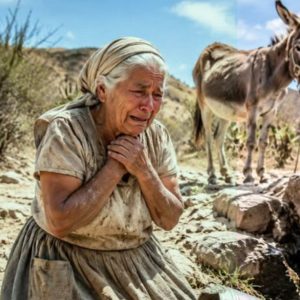 Part 4 — My nephew asked me to sell the land, but when I cleared one stone in front of the people, his smile disappeared
 My husband humiliated me in front of everyone on his birthday, but the moment I took the microphone, his smile disappeared
 My Former Partner Accused Me of Selling the Song on Stage, but One Calm Question from Me Would Drain the Color from His Face
 I Went to the Cemetery with Five Children, and My Ex-Husband’s Gaze Suddenly Froze
 A Flat Tire Stopped Me at a Desert Diner, but When the Waitress Heard My Name, the Color Drained from Her Face
 An Unknown Man Humiliated Me in Front of Everyone, but the Restaurant Owner Looked at Me Only Once — and His Smile Immediately Disappeared





