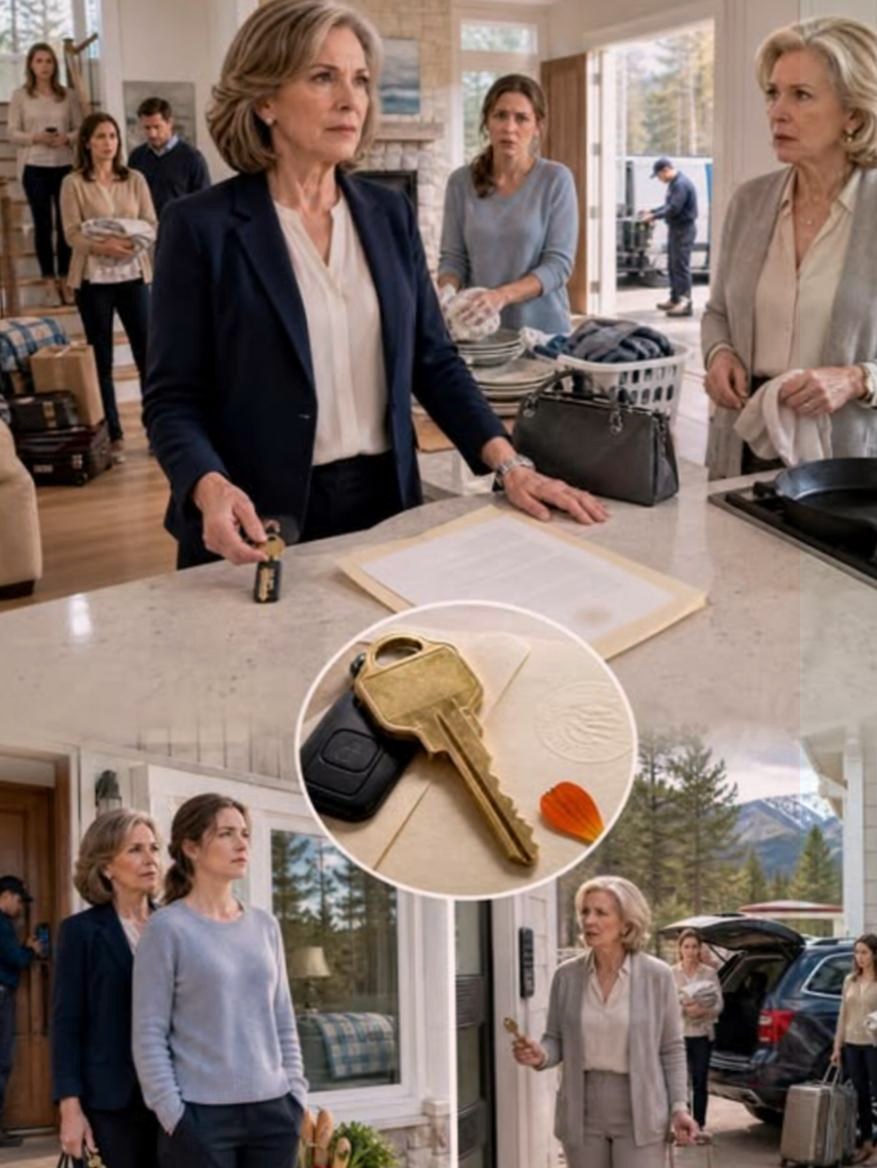


By the third minute after entering the house, I realized that my daughter no longer even owned her own room.
A woman’s voice called from the back:
“These towels are very thin. Do they really live like this here?”
It was not Anelisi’s voice.
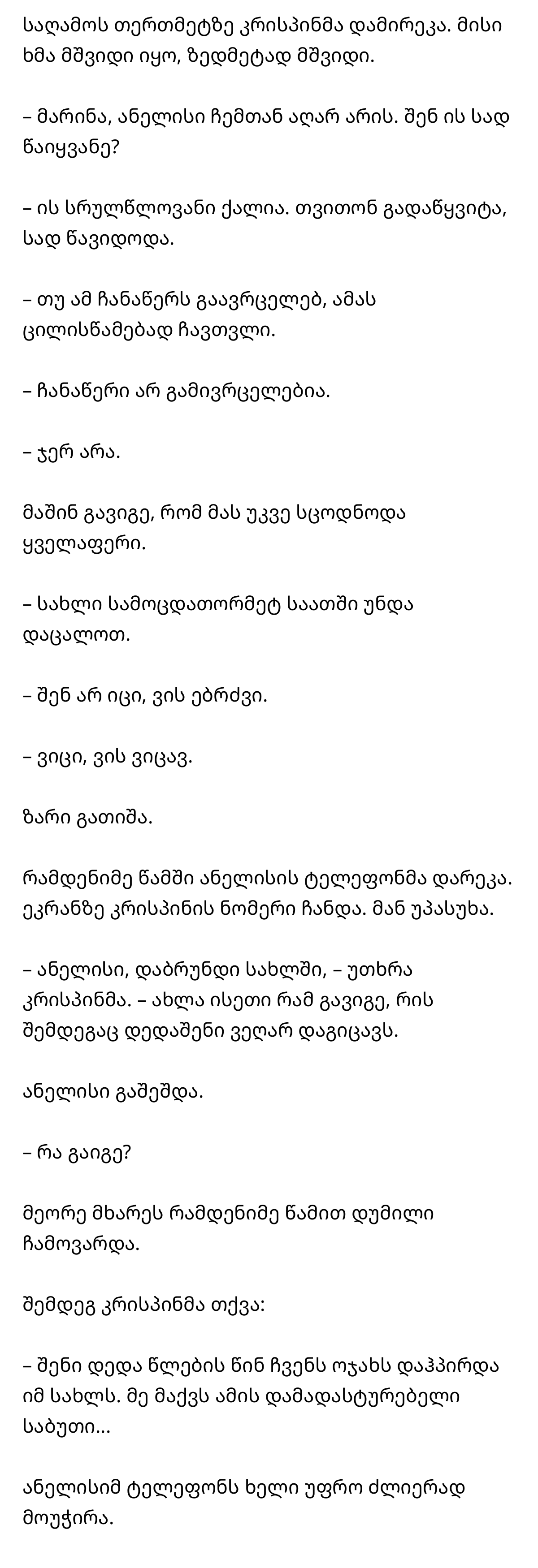
I put my bag on the hallway table and immediately noticed that the ceramic bowl I had given Anelisi for Christmas had been pushed into a corner. In its place lay a ring of unfamiliar keys. A small copper bell hung from the keys and jingled with every movement.
I hated that sound instantly.
In the coat closet I saw a blanket sewn by my mother’s hands, folded and stuffed into a corner. On the sofa lay a brown fleece blanket, the kind they put in cheap hotels.
I bought this three-bedroom house near Flagstaff, on two hectares of land, in 2019. Anelisi and her husband, Crispin, lived there for free for almost eight months—after Crispin’s job transfer fell through and their Tucson lease ended that same week.
The house was empty.
They needed help.
I thought all of this was temporary.
When they moved in, I bought groceries, prepared the beds, and planted orange zinnias at the entrance. Anelisi had loved these flowers since childhood.
Now the flowers no longer existed.
In their place, river stones had been arranged in one straight line.
Crispin’s older sister opened the door for me. I had seen her only once, at the wedding. Then she gave an eleven-minute toast and said almost everything about her brother.

“I am Anelisi’s mother,” I said.
The woman moved aside only enough for me to squeeze inside.
Food boxes, unfamiliar glasses, and bags were scattered in the living room. The television was playing loudly, while another woman sat on the sofa looking at her phone.
Anelisi was washing dishes in the kitchen.
There were so many plates in the sink that it looked as if there were a celebration in the house. When she saw me, relief first appeared on her face, then embarrassment, and finally something quieter—something I did not want to name.
“Mom, I didn’t know you were coming.”
“I know.”
She looked thinner than she had in March.
“How long have you been living like this?”
“Everything is fine.”
I had heard those words on every call in recent weeks.
“Crispin is tense, but everything is fine.”
“His mother has arrived, but everything is fine.”
“The house is a little crowded, but everything is fine.”
I had come from Phoenix to Flagstaff because Anelisi’s voice had become too careful, flat, and fast.
Now I understood why.
Crispin’s mother had arrived at the beginning of July for ten days. A week later his two sisters and one brother-in-law followed. Soon his mother was buying groceries with Anelisi’s card because she “knew better what her own son liked.”
Anelisi’s clothes were piled in a basket in the hallway. An open suitcase stood in the guest room. Unfamiliar cosmetics were lined up on a shelf in the small bathroom.
In every room, someone had claimed a place of their own.
Only Anelisi looked as if she might leave at any moment.



I sat down at the kitchen table. Crispin’s sister was watching something on her phone in the next room.
“Does Crispin know how you feel?” I asked.
“He thinks we are all getting along.”
“Are you getting along?”
Anelisi looked at her hands.
“I don’t want to make things harder for him. He is already very tense.”
“This is your house.”
She looked up at me.
“I know.”
But she said it as if she were not sure of that.
I stayed for two hours. I made tea and listened to doors opening, cupboards closing, people walking on the stairs, and someone searching for food in the refrigerator.
Anelisi did not shed a tear.
But when I left, she hugged me longer than usual.
South of Flagstaff, I stopped at a roadside rest area and called a lawyer. He had helped me with property and inheritance matters for eighteen years.
“The house is still entirely in your name,” he told me.
“I know.”
“Do they have a lease agreement?”
“No.”
“Do they pay rent?”
“That neither.”
His voice became stern.
“Then do not mistake family goodwill for a legal right.”

That night I barely slept.
In the morning I called Anelisi.
“I want you to listen to me. I am not asking you to decide anything today.”
Her voice sounded like a whisper.
“Okay.”
I told her that I would send official notices to Crispin’s mother, sisters, and brother-in-law. The house would no longer be their family’s shared shelter while my daughter was living there like a guest.
“Crispin will get angry,” she told me.
“Then let him get angry.”
“Mom…”
“I know you are afraid. I will take care of the property.”
She was silent for a long time.
“Okay,” she repeated at last.
The lawyer prepared a separate notice in the name of each resident. They had seventy-two hours.
I also hired a locksmith.
Good intentions are not a plan.



On Wednesday morning I put the notices in my bag and headed toward Flagstaff again. Crispin’s mother was preparing breakfast in my cast-iron pan.
“Good morning,” I said.
She did not look at me immediately.
“Anelisi didn’t say you were coming.”
“She didn’t know.”
I laid the envelopes on the table.
“There is one copy for each person living here. You have seventy-two hours to…”
“…to end your residence in this house,” I finished, pushing the envelope toward her.
Crispin’s mother looked at the paper but did not take it.
“What does this mean?”
“Exactly what it says.”
“We are helping the family here.”
“Family asks for help. Family does not occupy someone else’s house.”
Her lips tightened.
“You did all this because you do not respect my son.”
“I am protecting my daughter.”
At that moment footsteps sounded on the stairs. Crispin’s older sister came down, holding my glass vase, which was supposed to have flowers in it. Now it held wooden kitchen spoons.
“What is happening?” she asked.
Her mother pointed at the envelope.
“Your sister-in-law is trying to evict us.”
“This house is not hers,” the woman told me.
“My name is on the deed.”
“Anelisi is your daughter. She agreed to let us.”
“Anelisi agreed to let you live with me. Not to enter your room.”
The woman gave a short laugh.
“Are you going to play with words now?”
“No. With rights.”

I took all the copies from my bag and placed each one on the table. I held the corners of the papers between my fingers. My hands were trembling, but my voice was not.
“You can speak to the lawyer,” I said. “The deadline will not change.”
Outside, the locksmith was already standing by his car. The soft hum of the engine came through the window.
Crispin’s mother raised her voice.
“You cannot treat a family this way!”
“I can when my house has been occupied without my consent.”
“Anelisi would never do this.”
“That is exactly the problem. You were doing everything in her place.”
The room fell silent for a moment.
Then the door handle was pulled hard. Crispin entered, with small drops of snow on his coat. His face showed exhaustion, but when he saw the envelopes, exhaustion changed into anger.
“Mom, what is happening?”
Crispin’s mother immediately pointed at me.
“Your wife’s mother is trying to evict us.”
Crispin looked at me.
“Marina, this is a family matter.”
“No. It is a property matter.”
“You are leaving my family in the street?”
“I gave you seventy-two hours to take your things. I am not leaving anyone in the street.”
“We are here temporarily.”
“A temporary guest does not change locks, arrange rooms, and use someone else’s card for shopping.”
His face hardened.
“Anelisi’s card is the family’s common money.”
A light clatter of dishes came from the kitchen. Anelisi was standing there. I did not know how long she had been listening to me.
Crispin looked toward her.
“Tell her everything is fine.”
Anelisi opened her mouth but made no sound.
I did not answer in her place.
“Anelisi will speak herself when she is ready.”
Crispin smiled bitterly.
“You are turning her against me.”
“I am giving her the right to choose for the first time.”


Outside, the locksmith changed the back-door lock. The clank of metal spread through the whole house. It was strange how much that sound resembled closing something and opening something at the same time.
I sent the new code only to Anelisi’s phone.
Crispin noticed immediately.
“The others will not have the code?”
“No.”
“Including me?”
“Until the deadline expires, you can enter the house. The new code will belong only to Anelisi.”
Anelisi came outside with me. We stood on the steps in front of the house and looked at the mountain. The cold air cut our faces. Her fingers were hidden in her sleeves.
“Crispin will say that all of this should have stayed within the family.”
“You decide what you will tell him.”
“I don’t know how.”
“You do not need to know today.”
She watched the yard for a long time, where stones lay instead of zinnias.
“Mom, if I stay, everyone will say I am a bad wife.”
“If you leave, some will say you are selfish.”
“Then which am I?”
“A person who has the right to breathe in her own home.”
At these words she lowered her head.
From inside, someone jerked the door handle with all their strength. The old key no longer turned in the lock.
Crispin’s mother shouted at us through the window:
“This is not over yet!”
Anelisi looked at me. For the first time, her eyes showed not only fear. Something small but firm had appeared there.
“Mom, I have to tell you something.”
“I’m listening.”
She took a small memory card from her pocket. Its plastic edge had been scratched with her teeth.
“I have had this for two weeks. Crispin does not know.”
“What is it?”
Anelisi looked toward the house, as if even the walls could hear her.
“A recording. And another file. The lawyer told me not to open it until you saw this.”
At that moment my phone rang. It was the lawyer’s number.
“Marina,” he said as soon as I answered, “tell your daughter not to show the card to anyone else. Crispin already knows that we have discovered something…”
And that “something” was supposed to be heard by everyone that very evening…


…that same evening, in the lawyer’s office, where the city lights disappeared into the fog beyond the windows, we opened the memory card for the first time.
It was nine o’clock. Three cups of coffee stood on the table, but we had not touched any of them. Anelisi sat beside me, squeezing both hands together so tightly that her fingers had turned white.
The lawyer, Mr. Irakli, turned on a small device.
At first there was only the sound of dishes. Then Crispin’s voice was heard.
“How much longer are you going to pretend that this is your house?”
Anelisi’s voice was very quiet.
“It is my mother’s house.”
“That is exactly why you have to help us so that we are protected too.”
In the recording, a chair leg scraped across the floor.
“What do you mean?”
“You have to ask your mother to transfer the house. Tell her that you and I live here permanently. If she refuses, we will say that all the expenses have fallen on you and that it is her fault.”
For the first time, clear fear sounded in Anelisi’s voice.
“That is blackmail.”
“That is a family negotiation.”
Then Crispin’s mother laughed.
“If the girl cannot speak to her herself, we will speak to her. An empty house does not look good. Filling it with people will make it more convincing that a family lives here.”
The recording stopped.
Silence fell over the room.
I looked at Anelisi. Her face was pale, but her eyes no longer avoided mine.
“When was this recorded?” I asked.
“At the beginning of August. When he took my phone, I had a small recorder hidden in my apron.”
The lawyer opened the second file.
A document bearing my name appeared on the screen. There was a signature below, but the letters crudely imitated my handwriting.
“What is this?” I asked.
“A loan application,” Mr. Irakli said. “Crispin submitted it in your name. He was going to take the amount against the house’s equity.”
“I did not sign this.”
“I know. I also checked the notary’s record. That day you were in Phoenix, and bank camera footage confirms it.”
Anelisi covered her mouth with her hand.
“He told me he was only signing to review the taxes.”
“Where did he find a copy of your signature?” I asked.
Anelisi took an old folder from her bag.
“It was in our marriage documents. Crispin once asked me to give everything to him.”


Now his voice sounded again in the recording.
“When your mother realizes that her signature has already been used, she will not want a scandal. She will simply leave the house to us so the matter can end quietly.”
Crispin’s mother answered:
“You also have to explain to the girl that standing by her husband is her duty.”
Anelisi lowered her eyes.
“I tried to resist.”
“I know,” I said.
“But then Crispin told me that I would lose everyone. Even you.”
I wanted to say that she should have told me everything immediately. But I saw such exhaustion on her face that the words stuck in my throat.
Mr. Irakli stacked the documents on top of one another.
“This is no longer only a matter of unwanted guests. We have an audio recording, a forged signature, and a bank application. We must contact the police and the bank’s fraud department.”
Anelisi nodded.
“Today.”
For the first time she said it as if the decision belonged to her.
At eleven in the evening Crispin called me. His voice was calm, too calm.
“Marina, Anelisi is no longer with me. Where did you take her?”
“She is an adult woman. She decided herself where she would go.”
“If you spread this recording, I will consider it defamation.”
“I have not spread the recording.”
“Not yet.”
Then I understood that he already knew everything.
“You have to vacate the house within seventy-two hours.”
“You do not know whom you are fighting.”
“I know whom I am protecting.”
He ended the call.
A few seconds later Anelisi’s phone rang. Crispin’s number was on the screen. She answered.
“Anelisi, come back home,” Crispin told her. “I have just learned something after which your mother will no longer be able to protect you.”
Anelisi froze.
“What did you learn?”
There was silence on the other end for several seconds.
Then Crispin said:
“Your mother promised our family that house years ago. I have a document proving it…”
Anelisi gripped the phone more tightly.
The lawyer immediately looked at me.
That night I realized that clearing the house would be the easiest part. Crispin had no way back, and so now he was preparing his most dangerous step…
კრისპინმა საკუთარი ხმა პირველად კედლებს შორის გაიგონა…
მეგონა, სახლის დაცლა იყო ყველაზე რთული. მაგრამ შემდეგ ისეთი რამ გაირკვა, რამაც ყველა წინა არჩევანს სხვა მნიშვნელობა მისცა.
„ჩემს ცხოვრებაში დაბრუნება აღარ შეგიძლია.“
კრისპინმა პასუხი ვეღარ იპოვა.
😱 გაიგეთ, რას მალავდნენ ისინი →
👇 ისტორიის ფინალი უკვე გახსნილია
Related posts:
 Part 4 — They treated my daughter as a guest in my house, but my mother-in-law’s smile suddenly disappeared when the notices were served
 I took my mother from the house, but when my brother opened her room with a duplicate key, the color drained from his face
 My daughter-in-law rented my mother’s lake house for a party, but after my calm response my husband stopped speaking
 When They Considered Taking My Mother to the Doctor Humiliating, the Color Drained from My Husband’s Face and a Heavy Silence Fell over the Room
 The Meat My Mother Sent Was Being Saved by My Husband for His Mother-in-Law, but When He Opened the Refrigerator, His Face Suddenly Turned Pale
 After My Husband’s and Daughter’s Funeral, My Mother Asked Me for the Insurance Money, but the Bag on My Table Suddenly Erased Her Smile