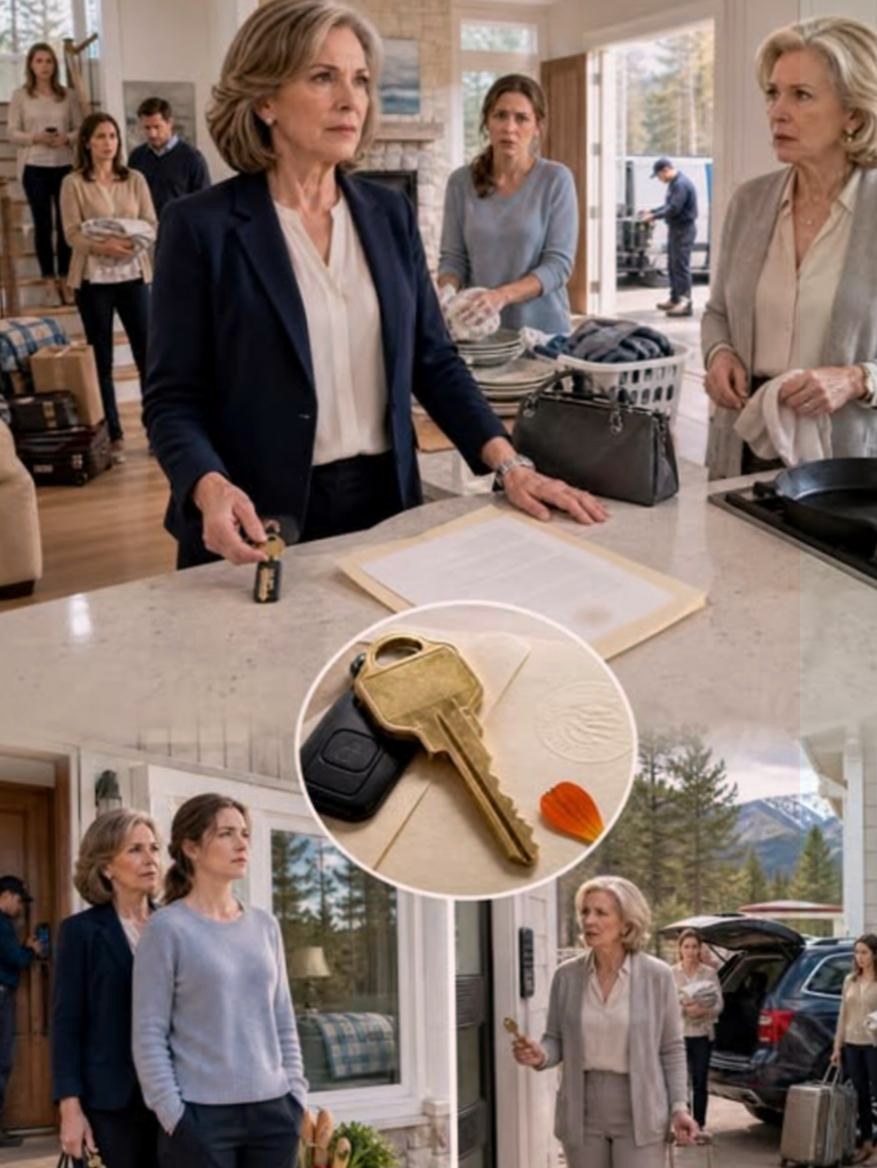


…the document Crispin had spoken about arrived in the lawyer’s email the next morning.
It was not my promise.
It was an old, altered sheet stating that I supposedly gave the house to Anelisi and Crispin forever.
Below it was again my forged signature.
Crispin probably thought I would panic.
I did not panic.
At seven in the morning I called the bank.
At eight we filed a report with the police.
At nine Mr. Irakli called Crispin’s lawyer.
“If your client takes anything from the house, the camera footage will also be handed over to the investigation,” he told him.
The man on the other end exhaled heavily.
“My client says this is a family misunderstanding.”
“A forged signature is not a family misunderstanding.”
“You have not yet proved who prepared the document.”
“But we already know who submitted it to the bank.”
The line went dead.
At the same time, Crispin called Anelisi twenty-one times.
She did not answer the second time.
Nor the third.
On the fourth, she turned off the phone.
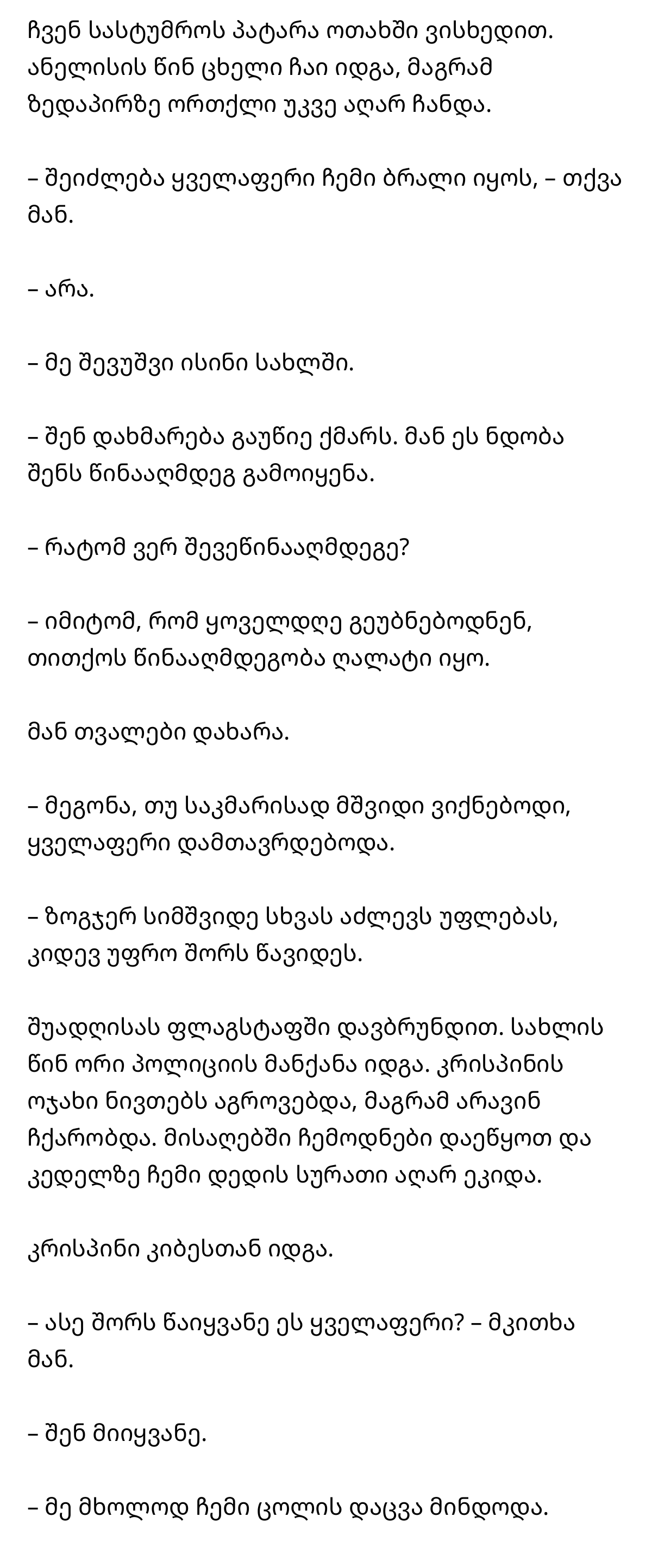

We were sitting in a small hotel room. A hot tea stood in front of Anelisi, but there was no longer any steam on its surface.
“Maybe everything is my fault,” she said.
“No.”
“I let them into the house.”
“You helped your husband. He used that trust against you.”
“Why couldn’t I resist?”
“Because every day they told you that resistance was betrayal.”
She lowered her eyes.
“I thought that if I stayed calm enough, everything would end.”
“Sometimes calmness gives someone else permission to go even farther.”
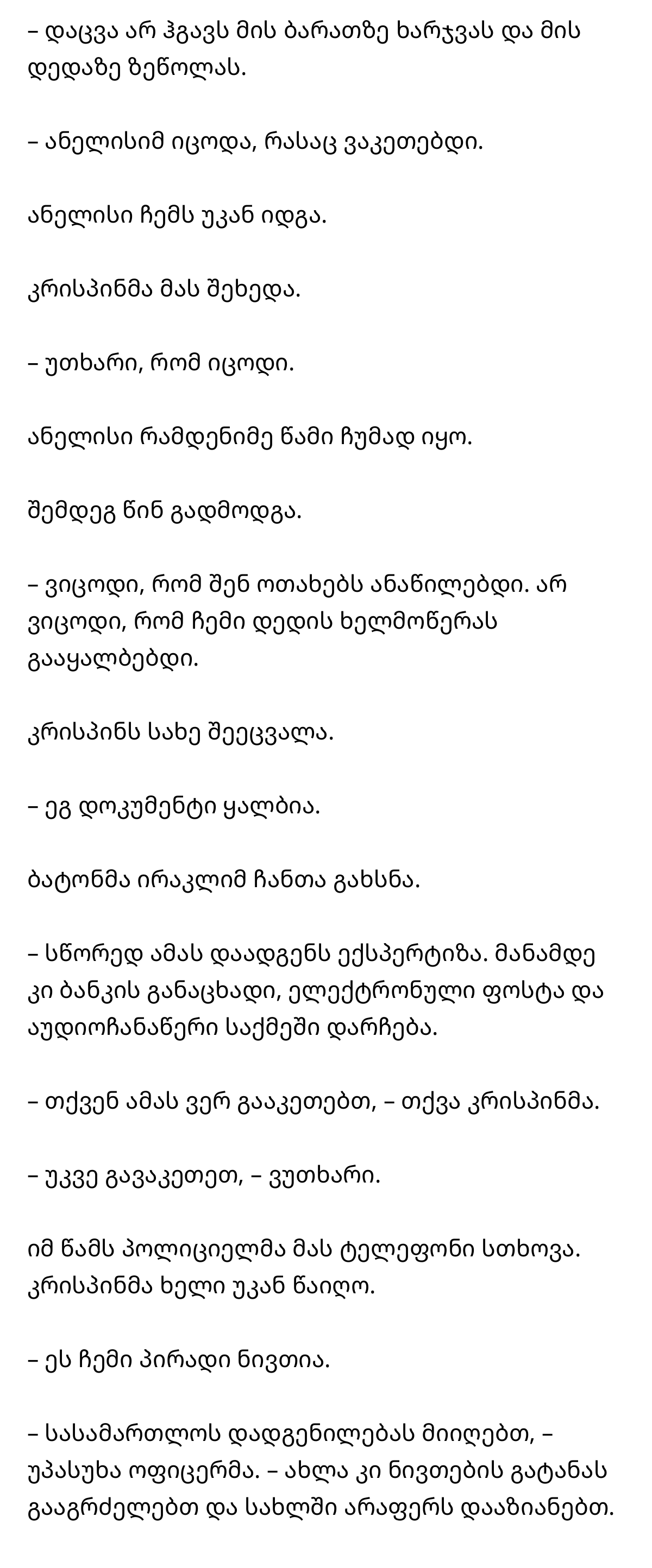
At noon we returned to Flagstaff. Two police cars stood in front of the house. Crispin’s family was gathering their things, but no one was hurrying. Suitcases had been piled in the living room, and my mother’s picture was no longer hanging on the wall.
Crispin stood by the stairs.
“You took this so far?” he asked me.
“You took it there.”
“I only wanted to protect my wife.”
“Protection does not look like spending from her card and pressuring her mother.”
“Anelisi knew what I was doing.”
Anelisi stood behind me.
Crispin looked at her.
“Tell her that you knew.”
Anelisi was silent for several seconds.
Then she stepped forward.
“I knew that you were assigning rooms. I did not know that you would forge my mother’s signature.”
Crispin’s face changed.
“That document is fake.”
Mr. Irakli opened his bag.
“The examination will determine exactly that. Until then, the bank application, the email, and the audio recording will remain in the case.”
“You cannot do this,” Crispin said.
“We already did,” I told him.
At that moment the police officer asked him for his phone. Crispin pulled his hand back.
“This is my personal property.”
“You will receive a court order,” the officer replied. “For now, continue removing your things and do not damage anything in the house.”


For the first time Crispin could not find an answer.
Then we played the audio recording in the room.
His own voice sounded among the walls.
“You have to ask your mother to transfer the house. If she refuses, we will say that all the expenses have fallen on you.”
Crispin stood motionless.
His mother went pale.
“This voice has been edited!” she shouted.
The lawyer answered calmly:
“An expert will carry out a technical examination of the file.”
Crispin moved his eyes from the audio toward Anelisi.
“You recorded me?”
Anelisi raised her head.
“Yes.”
That one word fell more heavily in the room than any shouting.
Crispin rubbed his face with his hand.
“You are my wife.”
“That is exactly why it hurt when you left me alone even in my own house.”
He tried to say something, but no voice came out anymore.
The police made his family finish taking their things out. When Crispin’s mother left, she slammed the door so hard that the copper bell on her keys jingled noisily.
At that sound I realized how many days I had left this house to someone else’s rules.
In the evening Crispin’s lawyer called.
“My client is ready to withdraw the loan application if you withdraw the complaint.”
“No.”
“He is ready to leave the house forever.”
“That is his obligation.”
“You are destroying his marriage.”
“I am only trying to protect my property and my daughter.”
“Think about it, Marina.”
“I already have.”


That night I entered Anelisi’s room. The bed was empty. On the wall there was only one small spot left where her childhood drawing had once hung. On the windowsill lay a miniature copper bell—the one that had been attached to the unfamiliar keys.
Anelisi had left it there.
“I do not want to hear this sound ever again,” she told me.
I took the bell in my hand. It was cold.
“Then you will not hear it again.”
Three weeks later the court issued a temporary protective order. The bank suspended the loan application. The signature examination confirmed that the document had been forged. The audio recording proved completely authentic.
Crispin was charged with attempted fraud and document forgery. His family moved to another city. I received no apology from them.
I no longer needed one.
Anelisi no longer chose to stay with Crispin. She signed the divorce papers calmly. The hardest thing for her was not the court.
The hardest thing was when she took her belongings from the room and finally stopped in the hallway.
“Mom, can I live here for a while?”
“For as long as you want.”
“I will pay you rent.”
“You can help me with the housework.”
She smiled for the first time.
“That is fairer.”
A month and a half later we planted orange zinnias in the yard again. Anelisi loosened the soil with her hands, while I stuck small wooden markers into the ground.
One evening she found a new job in the kitchen—she began working at a local library in a reading circle for children. She woke early, made coffee herself, and drew a small sketch every week.
One day I saw her drawing on the refrigerator.
It was a house, with yellow light shining from the windows. Two women stood at the entrance. Between them a small orange flower was growing.
“Is this us?” I asked.
“Yes.”
“Why are we so small?”
Anelisi put the pencil on the table.
“Because the house is big. But now we fit inside it too.”

On the first snow of winter, Crispin sent me one last message.
“I want to talk to you at least once. Everything can be fixed.”
I did not give Anelisi my testimony.
Nor did I answer in her place.
I only handed her the phone.
She read the text, stood silently for a while, and then typed a reply herself.
“You can no longer return to my life. I wish you strength to cope with being alone with your decisions.”
After sending it, she put the phone on the table.
“I’m ready,” she told me.
“For what?”
“For tomorrow.”
The word was simple, but in that house it sounded free for the first time.
That evening I took the little copper bell from the windowsill and hung it at the entrance. When the wind blew, it jingled lightly once.
Now that sound no longer meant that someone was entering my house.
It meant that the door was opening by my choice.
And this time, we were living in the house.
Missed the beginning?
Related posts:
 They treated my daughter as a guest in my house, but my mother-in-law’s smile suddenly disappeared when the notices were served
 My daughter-in-law rented my mother’s lake house for a party, but after my calm response my husband stopped speaking
 An Unknown Man Humiliated Me in Front of Everyone, but the Restaurant Owner Looked at Me Only Once — and His Smile Immediately Disappeared
 The Video Sent on Our Wedding Anniversary Revealed My Husband’s Betrayal, but One Reflection Suddenly Erased His Smile
 My Father Was Fed by a Poor Woman at Night, but When I Followed Her Trail, a Stranger’s Face Suddenly Turned Pale
 A Flat Tire Stopped Me at a Desert Diner, but When the Waitress Heard My Name, the Color Drained from Her Face