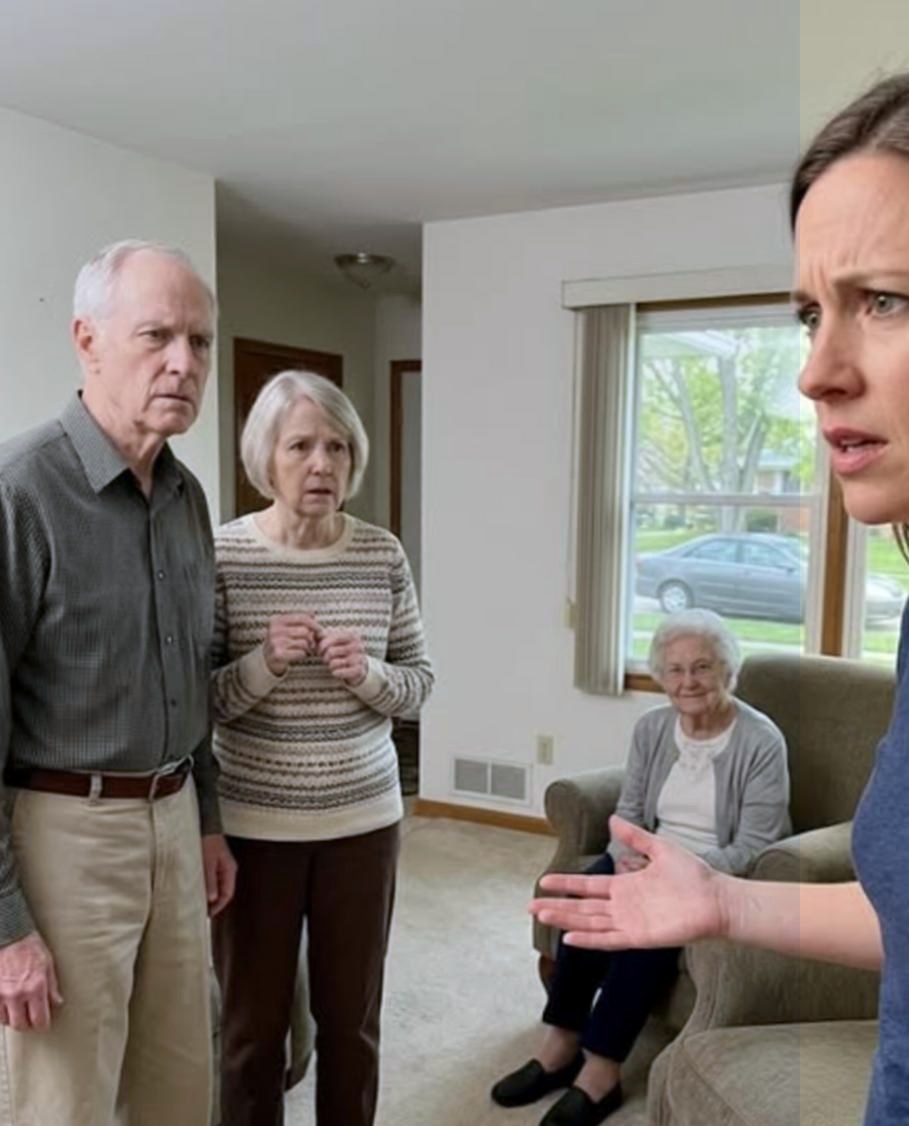

That day, when I saw emptiness in my eleven-year-old daughter’s room, my mother told me that her inheritance had been turned into a swimming pool.
It was ten o’clock in the morning at home. The heavy sound of an excavator could be heard in the yard, while the windowpanes trembled slightly with every jolt. The smell of wet paint and freshly cut wood stood throughout the house; they had dug up the earth for the new pool.
I went straight into my grandmother’s music room.
In the corner, where Lucy’s old cello had always stood, I found only the wooden stand. Beside it, on the floor, lay a small, copper-colored music bookmark. Lucy used it at every rehearsal because Grandma had given it to her and scratched her initials onto it.
Lucy stood in front of the stand and moved her fingers as if she were searching for invisible strings.
“Where is Lucy’s cello?” I asked.
My mother brought the coffee cup to her lips. She did not even turn around.
“Your father took care of it.”
“What does ‘took care of it’ mean?”
Father raised his head from the tablet. He was still holding the pool drawing, and the corner was crumpled under his thumb.
“We sold it,” he said.
For several seconds I could not understand what I had heard.
“You sold Lucy’s cello?”
“It was valuable,” Father replied. “It was just standing there. Your grandmother no longer needed it.”
“Grandma gave it to Lucy.”
My sister Rachel snickered at the kitchen counter.
“She is only eleven years old, Emily.”
The phrase cut through me as if someone had opened a window in the room and let in ice.
“How much did you sell it for?”
Mother put the cup on the counter.
“For eighty-seven thousand.”
Outside, the blue tiles of the pool shone in the sun. I noticed for the first time that their color was exactly the blue Lucy drew on the covers of Grandma’s sheet music.

“You spent eighty-seven thousand dollars on a pool?”
Rachel immediately sprang up.
“It is for the children.”
“My child is a child too.”
Father rubbed his forehead.
“Lucy will be fine. There is a student cello; she can rent one and play.”
“She will be fine” in my family had always meant that Lucy had to give something up.
Lucy quietly came closer to me and took my hand.
“Mom, did Grandma change her mind about it being mine?”
I knelt in front of her.
“No. You did nothing wrong.”
Her palms were cold. In her pocket was the small copper-colored bookmark, which she was gripping with all her strength.
That evening Lucy practiced on the worn cello borrowed from her teacher. The instrument’s sound was thin and fragile. Lucy did not complain. Only once did she stop and tell me:
“Maybe Grandma did not yet want it to really be mine.”
When she fell asleep, my mother’s morning voice kept circling in my head.
“You don’t tell Grandma.”
No—“Don’t upset her.”
That was exactly what she said: you don’t tell her.
The next morning I went to the nursing home. Grandma Margaret sat by the window, an embroidered coverlet on her knees, while the chain of her glasses touched her cheek.
I told her everything: the sale, the amount, the pool, and also that my parents did not want the truth to become known to her.
Grandma’s eyes did not become wet.
“How is Lucy?” she asked.
“She thinks you changed your mind.”
Grandma’s face hardened. She picked up the phone and made one short call.
“Andrew, it is time,” she said. “Let everything be ready for that day.”
Then she looked at me.
“Now they should be afraid, Emily.”


Six weeks later my parents held a pool-opening party. Rachel’s children were jumping into the water, while Mother tended the grill and did not take off her familiar, artificial smile.
Lucy stood beside me. She was clutching a folded towel with both hands and looking at the water as if the sound of her cello had sunk there.
Then the back gate opened.
Grandma Margaret came in wearing a white shirt. Andrew was walking beside her, holding a thin, dark-green folder.
Mother’s smile disappeared immediately.
Father looked at the folder.
“This is a party, Mom,” he barely said.
“I know,” Grandma replied calmly. “That is why I came.”
Andrew handed over the folder. Grandma opened it, took out the first sheet, and placed it in Father’s hand.
Father read it. Then he read it once more.
Grandma looked toward Lucy.
“I gave that cello to you, child,” she said. “Not to them.”
Father started to say something, but Grandma raised her hand and Andrew took another sheet from the folder. Father leaned toward it, brought his fingers to the edge of the paper, and…

Father pressed his fingers against the edge of the sheet, but did not dare open it.
The pool pump hummed monotonously. The children’s noise could be heard on the surface of the water, although around us it suddenly seemed that every sound had gone quiet. The sheet trembled in his hand.
“What is that?” Rachel asked.
Grandma did not answer. Her gaze was fixed only on Father.
Father looked at Andrew.
“Mom, whatever it is, we will discuss this privately.”
“No,” Grandma said. “You made Lucy’s loss public when you built a pool with the money from her cello.”
Mother came up beside Father and tried to read the sheet.
“It is just a piece of paper,” she whispered.
“Then why are you afraid?” I asked.
Mother looked at me. She had a black spot on her lip from the grill smoke.
“You are bringing discord into the family.”
“It was not I who brought discord, but you, when you exchanged a child’s possession for money.”
Father returned the sheet to Andrew.
“We thought Mother simply wanted to give Lucy a gift. There was no legal transfer.”
Grandma smiled for the first time.
“That is exactly why this second sheet is necessary.”
Andrew took another document from the folder. An old notarial stamp could be seen in the upper corner of the paper, and the ink had faded slightly.
“This is the deed of gift,” he said. “It was signed eleven years ago. The instrument was given to Lucy Hayes for her birthday. Since then it has been her property.”
Father’s jaw tightened.
“Lucy is a minor. The parents had the right to dispose of her property.”
“Only for her interests,” Andrew replied. “A pool cannot be considered to be in your daughter’s interests.”
Rachel gripped her glass so tightly that the plastic creaked.
“The money has already been spent.”
“That does not change the crime,” Andrew said.

Lucy gripped my hand more tightly.
“Mom, will they be able to get the cello back?”
There was hope in her voice, and I did not dare touch it.
“I don’t know yet,” I said.
Grandma knelt in front of her, even though her knee hurt.
“Dear, no one will be able to take your cello away forever.”
Father raised his head quickly.
“The buyer has already moved it into a private collection. The contract is complete.”
“I know,” Grandma said. “Andrew contacted him too.”
“What does ‘contacted him’ mean?” Mother grew pale.
Andrew took out his phone and showed the screen to Father.
“The collector is ready to return the instrument if the money is refunded or a court establishes that the sale was illegal. He also provided us with a copy of the document presented at the time of the sale.”},{
Father did not touch the phone.
“Which document?”
Andrew paused for a moment.
“A permission as though Lucy’s legal representative, that is, you, had signed off on the sale. But the signature does not belong to you.”
Mother looked at Father.
Rachel did too.
Father suddenly looked very alone, although three people stood beside him.
“This is absurd,” he said.
“Then it will be easily proven,” I replied.
Grandma closed the folder.
“I did not come here today to humiliate you. I came to leave you a choice. Return the money, find the cello, and admit to Lucy what you did.”
“We don’t have the money anymore,” Mother said.
“I know.”
That one word stopped everyone’s breathing.
Grandma looked at the towel clutched in Lucy’s hands. Then she turned to Andrew.
“Now show her that recording.”
Father’s face changed.
“What recording?”
Andrew opened a file on the phone. The date appeared on the screen—two days before the sale. Lucy lowered her head, and I looked at Grandma.
“Child,” she told me, “this part will be the hardest for you.”
First my mother’s voice came from the screen, then my father’s. Everyone in the room heard the words they hid even from themselves. The recording ended, but Andrew did not turn off the screen.
At the end of the file, an unknown voice uttered one sentence that made Father drop the phone from his hand…

The phone fell onto the wooden floor and the screen cracked.
But the recording continued anyway. The voice could be heard clearly from the small speaker.
“If anyone asks anything, we will say that Emily refused the sale and that the child was no longer interested in the cello.”
It was my father’s voice.
Lucy raised her head. Her eyes were wide open.
Mother immediately shouted:
“It is taken out of context!”
Andrew picked up the phone from the floor and played the recording from the beginning. Several seconds earlier, my mother’s voice could be heard.
“If Grandma finds out, she will take everything away from us.”
Father answered:
“She won’t find out. Emily won’t tell her anything. Lucy is little and will forget soon.”
The recording continued again.
“The pool must be ready this summer,” Rachel was saying. “I have already promised the children.”
“The cello is just a thing,” Mother said. “Money in the family should stay in the family.”
Lucy pressed her lips together. On her face I saw the calm that children put on only when they no longer have enough room to cry.
“You knew?” she asked me.
Rachel put down her glass.
“Lucy, we just…”
“Did you know or not?”
Rachel could not answer.
Grandma looked at the phone.
“This recording was made on the first day of construction of the pool. The camera installed in my house recorded it. I already suspected then that they were hiding something from me.”
Father stepped forward.
“You were installing cameras in my house?”
“In my music room,” Grandma replied. “In the room where your granddaughter played every day.”
Andrew took another sheet from the folder.
“And now the main issue. The sale document states as though the instrument belonged to the father. However, the deed of gift clearly says that the owner is Lucy Hayes. Also, the sale permission is signed by a person who was not in the city at all that day.”

My breath caught.
“Who signed it?” I asked.
Andrew looked at Father.
“An intermediary whom Rachel found signed on your behalf.”
Rachel lost her color.
“I only gave Father the buyer’s number.”
“And told him how to do everything quickly,” Grandma said.
Father sank into a chair. The noise of the pool could still be heard, but now every drop sounded like a heavy blow.
“We were supposed to return the money,” he said.
“When?” I asked.
He could not look me in the eyes.
“When things were sorted out.”
“You built a pool with my child’s money.”
“For the family.”
“No,” I interrupted. “For yourselves.”
Grandma took Lucy’s hand.
“The complaint to the court is already prepared,” Andrew said. “But before we file it, the buyer provided us with one more piece of information.”
Father raised his head.
“What information?”
Andrew took out the last page of the folder.
“The cello you sold was examined by the collector. Inside it was a small wooden plate where the maker’s genuine mark could be seen. It turned out that the value of the instrument was not eighty-seven thousand, but almost three hundred thousand dollars.”
Mother grabbed the chair.
Rachel covered her mouth with her hand.
Father said quietly:
“That is impossible.”
“It is possible,” Grandma replied. “That is why the buyer is now demanding not only the return of the money, but also an investigation into fraud.”
Lucy turned toward me.
“Mom, is the cello still mine?”
I knelt in front of her.
“It was always yours.”
At that very moment Andrew’s phone rang. He listened, his eyes changed, and he ended the call.
“The buyer has temporarily handed the instrument over to the police,” he said. “But the bad news is that the police have now also requested the bank accounts.”
Father tried to stand up.
“No. They cannot do this.”
Andrew calmly added:
“And one more thing. The sale money was not spent entirely on the pool. The remaining part was transferred to an account opened in your name.”
Father looked at Mother.
Mother looked at Rachel.
Rachel shook her head.
Then my father’s phone rang. The bank’s number appeared on the screen. He answered, and within a few seconds his face became completely empty.
“What happened?” I asked.
He could not say a word.
On the other end of the call, someone had already read the sentence they were most afraid to hear…
მამამ საკუთარი ხმა მოისმინა და პირველად გაჩუმდა…
მეგონა, სიმართლე საკმარისი იქნებოდა. მაგრამ ყველაზე მძიმე პასუხი მაშინ მოვიდა, როცა ყველაფერი უკვე დამტკიცებული იყო.
„ახლა ეს არჩევანი მხოლოდ ლუსის ეკუთვნის.“
ოთახში აღარავის გაუღიმია.
👇 ისტორიის ფინალი უკვე გახსნილია
Related posts:
 Part 4 — My Parents Were Celebrating Selling Their Eleven-Year-Old Granddaughter’s Cello, but Grandma Opened a Folder and Father’s Face Changed
 Entré a la fiesta de la empresa con la mano de otro hombre entrelazada con la mía, y mi marido dejó de sonreír
 Mi suegra exigió que abandonara a mi hija herida por su cumpleaños, pero al verme llegar mi esposo dejó de sonreír
 Mi esposo confesó algo terrible frente al quirófano y, cuando mencionó a mi hermana, el rostro de todos cambió
 My eight-year-old son bought a red dress for Lucy, and in the morning unknown bags appeared in our yard and his face turned pale
 Father Left Houses to My Brothers, but Burdened Me with Mother’s Life — Yet My Brother’s Smile Suddenly Disappeared