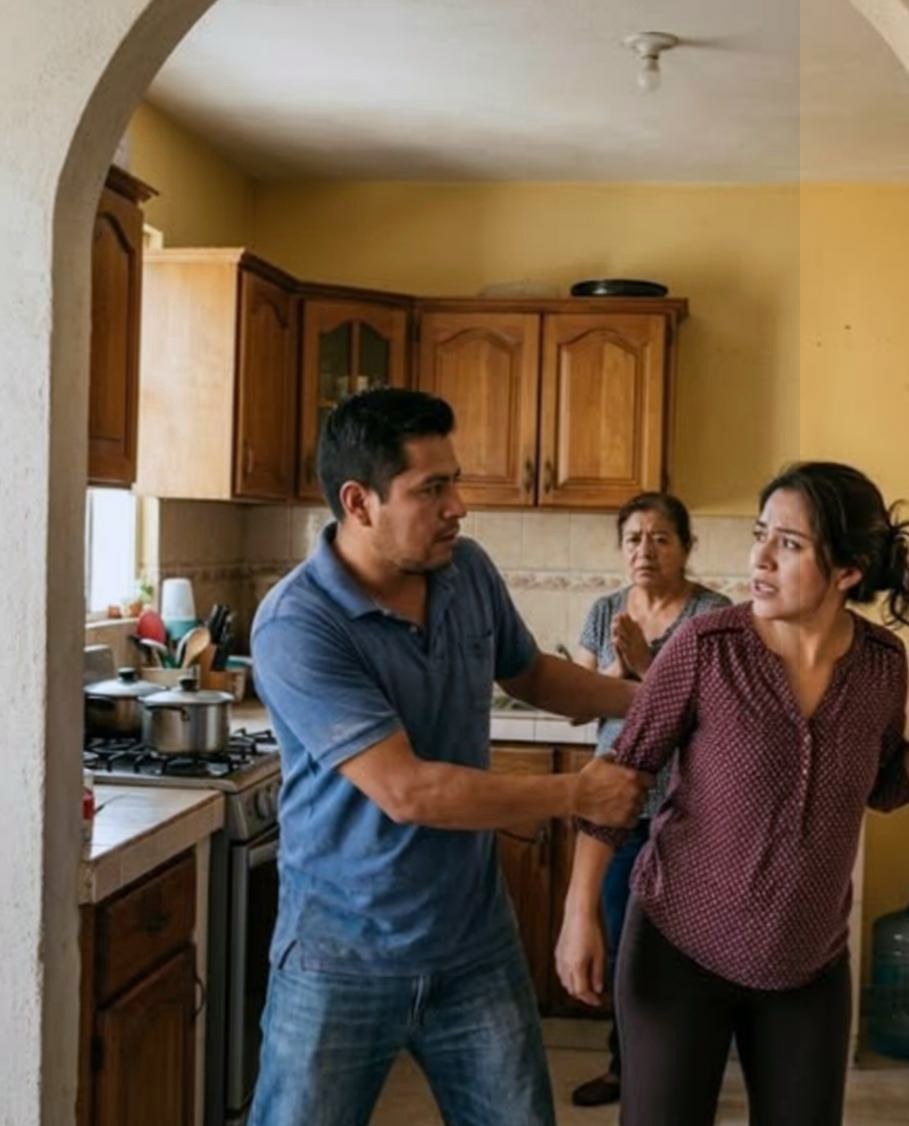
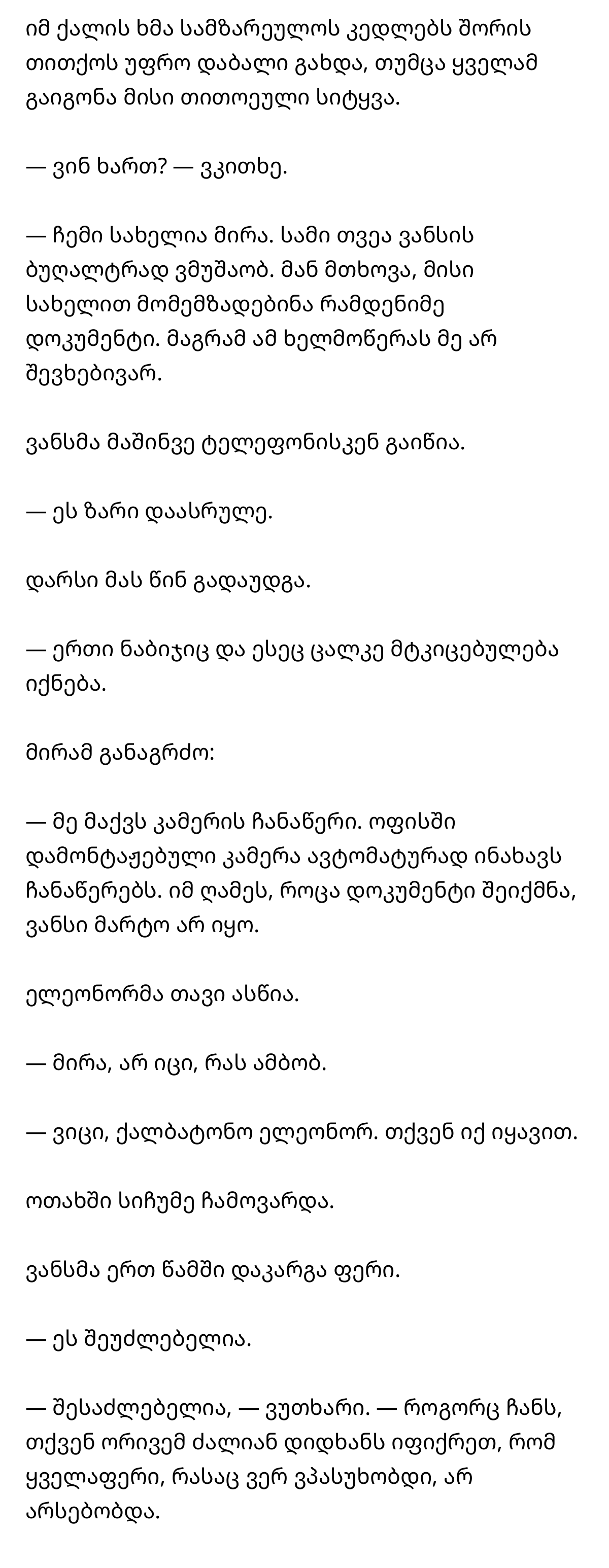

The woman’s voice seemed to become lower between the kitchen walls, although everyone heard each of her words.
“Who are you?” I asked.
“My name is Mira. I have been working as Vance’s accountant for three months. He asked me to prepare several documents in his name. But I did not touch this signature.”
Vance immediately reached toward the phone.
“End this call.”
Darcy stepped in front of him.
“One more step and this too will be separate evidence.”
Mira continued:
“I have a camera recording. The camera installed in the office automatically saves recordings. On the night when the document was created, Vance was not alone.”
Eleanor raised her head.
“Mira, you do not know what you are saying.”
“I know, Mrs. Eleanor. You were there.”
Silence fell over the room.
Vance lost his color in one second.
“That is impossible.”
“It is possible,” I said. “Apparently, both of you thought for far too long that everything I did not answer for did not exist.”
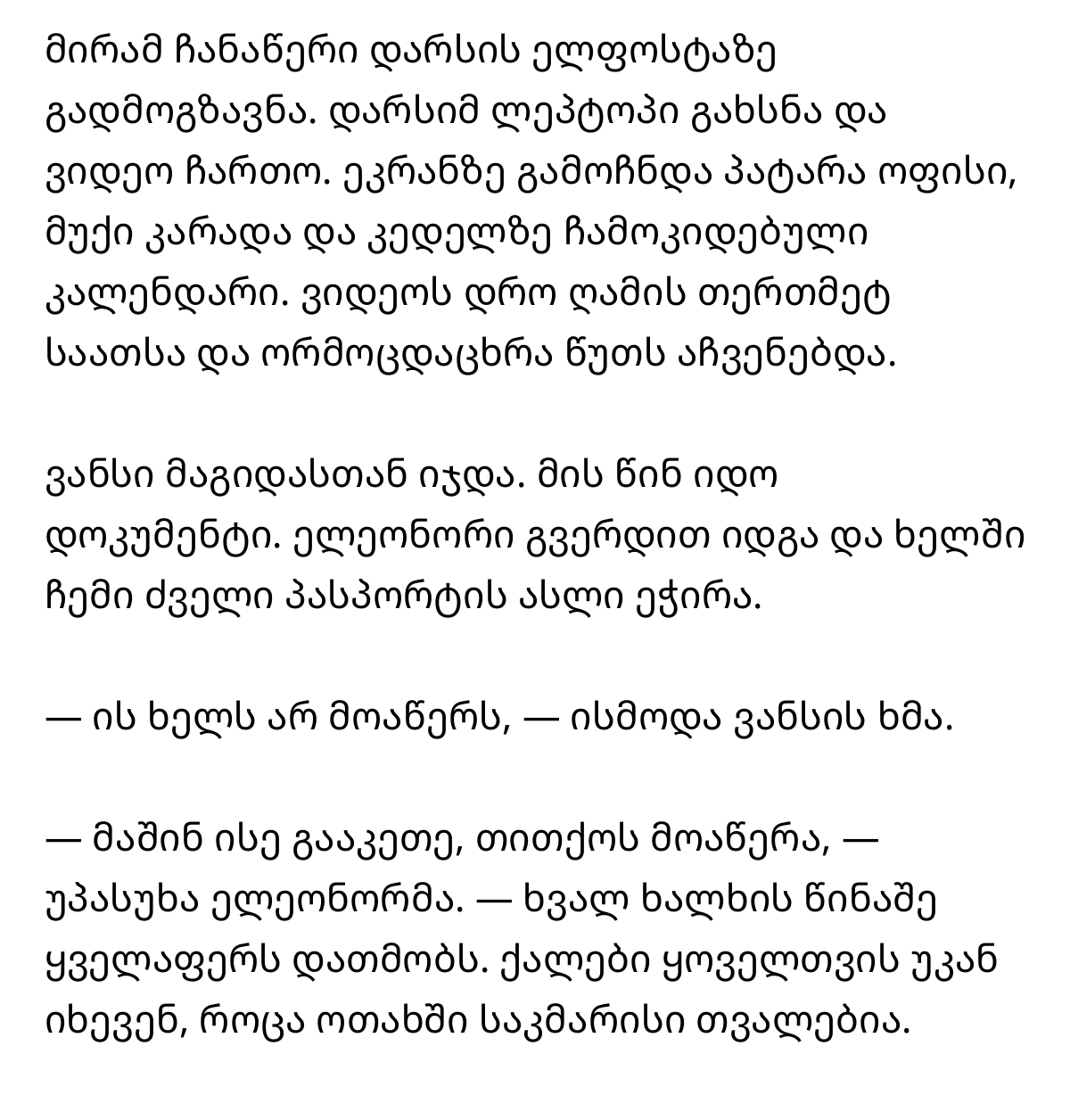
Mira sent the recording to Darcy’s email. Darcy opened the laptop and started the video. A small office, a dark cabinet, and a calendar hanging on the wall appeared on the screen. The video time showed eleven forty-nine at night.
Vance was sitting at the desk. A document lay in front of him. Eleanor stood beside him, holding a copy of my old passport.
“She will not sign,” Vance’s voice could be heard.
“Then make it look as if she signed,” Eleanor answered. “Tomorrow she will give up everything in front of people. Women always retreat when there are enough eyes in the room.”

In the video, Vance turned over several pages.
“If the bank accepts this, the loan will be approved. I will pay off the debts and the house will remain in the family.”
“The house is already in our hands,” Eleanor said. “Sloan is only a temporary guest.”
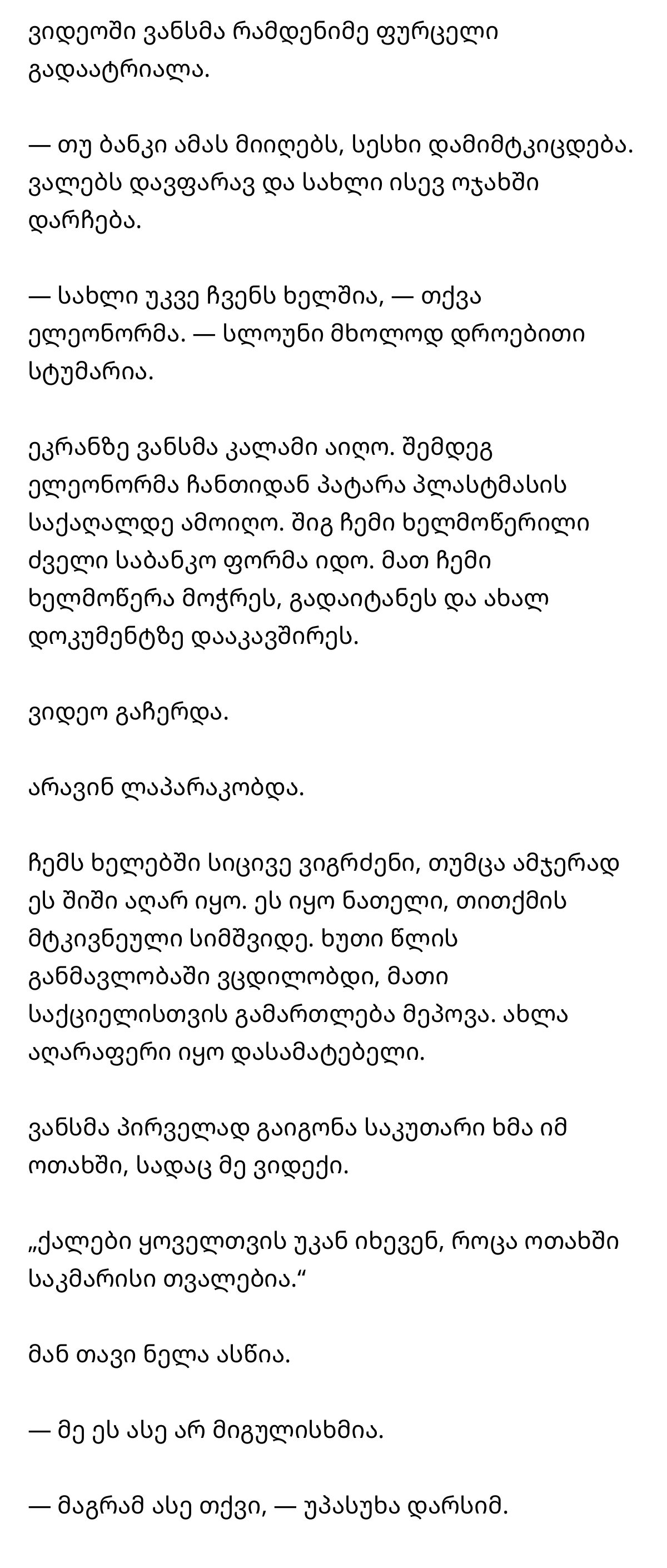
On the screen, Vance picked up a pen. Then Eleanor took a small plastic folder from her bag. Inside was an old bank form signed by me. They cut out my signature, transferred it, and attached it to the new document.
The video stopped.
No one spoke.
I felt cold in my hands, but this time it was no longer fear. It was a clear, almost painful calm. For five years I had tried to find excuses for their behavior. Now there was nothing left to add.
Vance heard his own voice for the first time in the room where I stood.
“Women always retreat when there are enough eyes in the room.”
He slowly raised his head.
“I did not mean it that way.”
“But that is what you said,” Darcy replied.
Vance looked around the room. A photograph from our wedding hung on the wall. In the picture I was laughing, and he had his hand wrapped around my shoulder. Now there was an empty space beneath the photograph, where a shelf had stood years ago. My books had been arranged there, but Vance got rid of them as “unnecessary things.”
“Sloan, I needed money,” he said. “Everything got out of control.”
“No,” I replied. “Control was exactly what you wanted.”
This time Eleanor said nothing. She sat in the same chair, touching the bronze medallion with her fingers as if expecting help from it.

Darcy called the police. A few minutes later, two investigators came to the house. They questioned Vance, photographed the documents, and temporarily confiscated his phone. Eleanor tried to convince everyone that this was a family misunderstanding.
“This is my house’s business,” she repeated.
“No,” one of the investigators said calmly. “This is a case involving a forged document.”
Vance came to me again before they led him out of the room.
“I do not want things to go this far.”
“I did not bring you this far,” I told him. “You came here yourself.”
He lowered his hand.
That same day, the bank canceled the loan application and imposed a temporary restriction on the property. The lawyer representing Vance called Darcy and said that he could not continue his defense.
“My client concealed important information,” he said. “Under these conditions, I cannot protect his interests.”
Vance called me several times.
I did not answer the first call.
On the second, he left a voice message.
“Sloan, please, just talk to me.”
On the third, another message arrived.
“I cannot deal with all this without you.”
I looked at the phone for a long time. Earlier, words like these would immediately make me forget everything and run to help him. Now, for the first time, I understood that saving him was no longer my obligation.
Darcy stood beside me.
“Do you want to answer?”
“No.”
“Are you sure?”
“For the first time, I am.”

That evening I returned to the same house, but the rooms looked different. Sixty empty plates were still arranged in the living room. I picked them up one by one and put them into a box. I did not break a single one. I no longer needed anger to prove that I was right.
In the kitchen I found the golden birthday card that had remained on the floor. Its edge was still wet, and the date of Eleanor’s birthday had almost completely disappeared.
I put the card into a small box.
That night I slept for the first time without a locked door.
Three weeks later, the court approved a temporary divorce agreement. I was given the right to remain in the house because the largest part of the mortgage and taxes had been paid in my name. Vance was forbidden to sell or transfer the property or come near me until the court’s final decision.
Eleanor moved in with her sister. The investigation against Vance continued for the forged signature, false information in the loan application, and threats. I no longer followed these events every day.
Something else became more important to me.
I painted the kitchen walls a warm, honey-colored shade. I replaced the old refrigerator. In its place I put a small wooden shelf, where my books returned.
Darcy began coming to my place for dinner twice a week. Niko taught me financial planning. I was offered a new position at work, and for the first time I set aside part of my salary for my own wishes, without guilt.

Four months later, the first snow came.
My niece, Lea, sat by the window and drew with colored pencils. She was seven years old and still believed that every house had its own voice.
“Aunt Sloan, what voice does your house have now?” she asked me.
I put down the pencil.
“Now?” I repeated.
“Before, the door used to slam. What sound is heard now?”
I opened the window slightly. Outside came the quiet sound of snow, and somewhere far away a car passed.
“Now the sound of a teaspoon is heard,” I told her. “And of people who do not frighten one another.”
Lea drew a small house on the paper. Above it was a yellow sun, and a woman stood by the door. The woman held something small in her hand.
“What is that?” I asked.
“A key,” she answered. “So that no one can lock you in again.”
That same evening I received Vance’s last letter. This time it was not electronic, but a small envelope placed in the mailbox.
“I have changed. Please, listen to me at least once. We can start over.”
I read the letter, then called Darcy and asked whether it could be kept in the case materials.
“Do you want us to add this as evidence?” she asked.
“No. I simply do not want him to remain in my life again.”
I tore the envelope and put it in the paper trash.
I gave no answer.

That night I made tea in the kitchen. A warm lamp shone on the honey-colored wall. On the counter I placed a small box and opened it.
Inside lay the golden card—wet, folded, and with an almost erased date.
For five years I thought that day was the day when my life fell apart.
Now I understood that it was the day when the door opened for the first time.
I did not throw the card into the trash anymore.
I placed it on the windowsill, where the morning snow entered as light.
This time the lock in the house was not locked from the inside.
Missed the beginning?
Related posts:
 My Husband Ordered Me to Make Sixty Dishes for His Mother and Threatened to Throw Me Out of the House, but After My Response His Smile Disappeared
 My family reached for my house and money, but one question instantly erased Vance’s smile
 My family members wanted to take away my house and money, but one document suddenly made Vance pale
 An Unknown Man Humiliated Me in Front of Everyone, but the Restaurant Owner Looked at Me Only Once — and His Smile Immediately Disappeared
 I Entered the Patient’s Room and Looked at the Unknown Millionaire Whose Car I Had Fallen Asleep In — His Mother’s Smile Suddenly Disappeared
 My daughter-in-law rented my mother’s lake house for a party, but after my calm response my husband stopped speaking