
Part 4
The shadow vanished before I could even open the door.
In the yard, only thin needles of rain were visible alongside a paper cup tossed near the trash bin. My father’s black leather bag was nowhere to be seen.
— “Don’t go out,” Nino told me.
— “I won’t.”
Yet I couldn’t fall asleep that night anyway.
Igor sat in the living room calling someone every ten minutes. Once he would utter my name, then a bank manager’s, and then the attorney who had represented us during our wedding.
— “David, I need help right now,” he said in a low voice. “Tell them my wife gave me her consent.”
The response was evidently unambiguous, as Igor pulled the receiver away from his ear immediately.
— “Did he refuse?” I asked.
— “Stay out of our family matters.”
— “This is no longer a family matter.”
In the morning, ten minutes before six, a call came through from the bank’s security department.
— “Mrs. Svetlana, your account has been temporarily frozen,” a woman’s voice informed me. “Additionally, your complaint has been forwarded to the financial crimes division.”
— “All of my accounts?”
— “Only those associated with disputed transactions. Please report to our office today.”
The second call came from the investigator.
— “Do not let your husband leave the house if you can do so safely. We have several questions for him as well.”
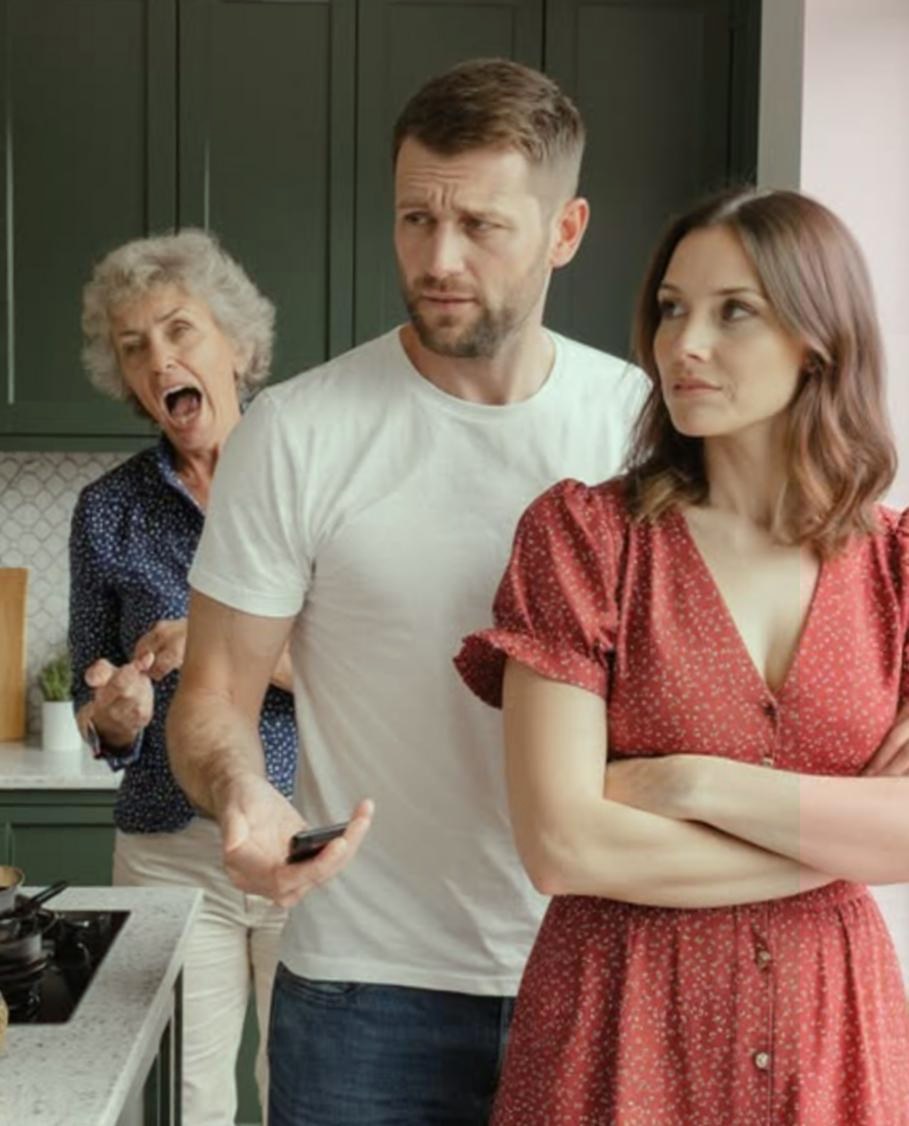
Igor overheard this. His phone slipped from his hand and clattered onto the floor.
— “Did you call the police?”
— “I called the truth.”
He lunged toward me, but Nino stepped between us at the door.
— “One more step, and this conversation will be added as an attempted assault.”
For the first time, Igor found nothing to say.
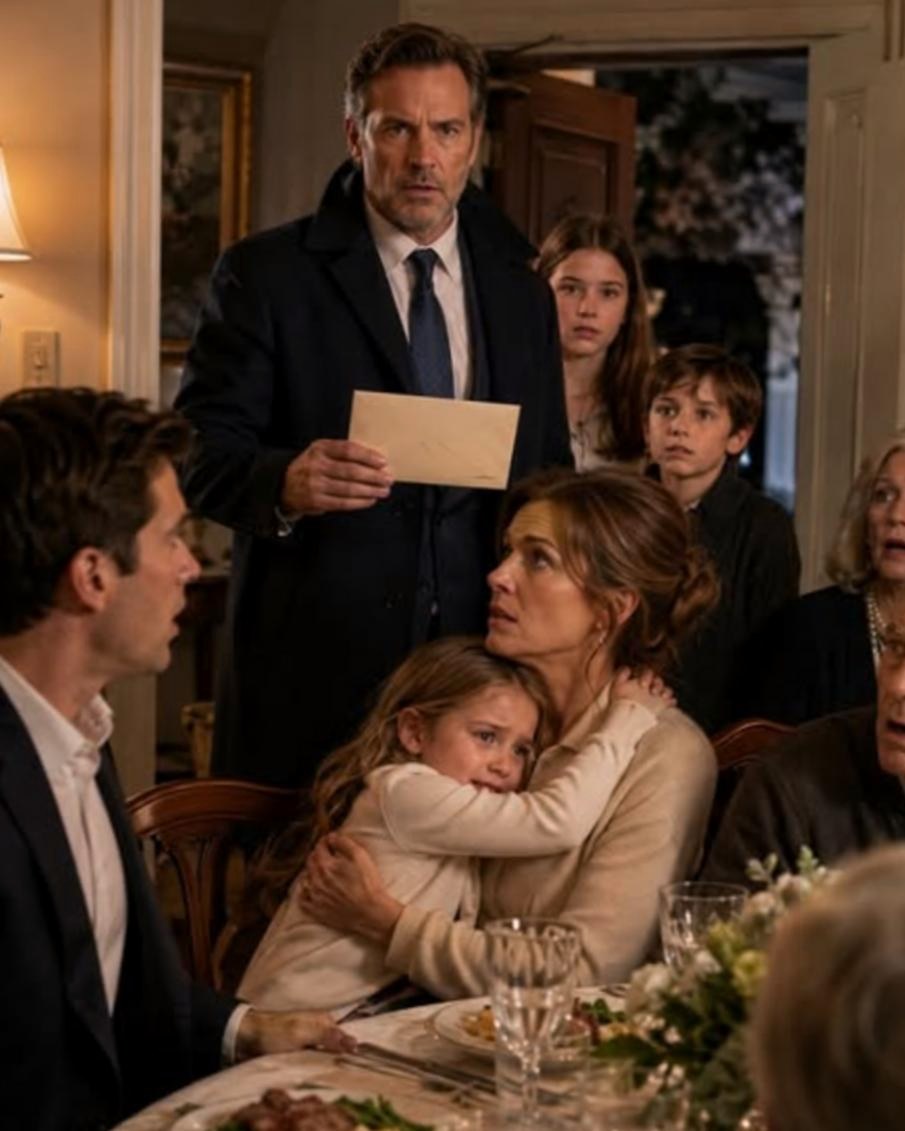
By midday, we were at the bank. Seated inside a glass office were a financial specialist, the investigator, and Nino. The clock on the wall ticked loudly.
The investigator played the audio recording.
Igor heard his own voice:
“Sveta will pay for it anyway. If we tell her Mom needs it, she won’t be able to refuse.”
His words returned to the room as if someone had pulled them straight from the walls.
Igor tensed in his chair.
— “That is taken out of context.”
— “Which part?” the investigator asked. “The part where you state that you took out a loan under your wife’s name, or the part where you ask your mother to accept the funds?”
— “I was planning to pay it back.”
— “Paying it back does not negate the crime.”
Lyudmila was questioned in a separate room. When she emerged an hour later, she no longer resembled the woman who had proudly twirled a sea shell clip on her finger the evening before.
— “Sveta, please,” she said. “My son must not go to prison.”
I stood before her.
— “And I should not have ended up burdened with debts I never took out.”
— “We are family.”
— “Family is where a vulnerable person is not exploited.”
Igor raised his head.
— “If I don’t sign to let the apartment temporarily remain under your name, the bank will take everything from you.”
— “The apartment is already under my name.”
His gaze froze.
That was the detail they had never known. My father had purchased the apartment in my name and finalized the documents with a notary a week before he died. Igor assumed it was joint property because we paid utilities together after our wedding. But the ownership certificate bore only my name.
— “You knew this?” he asked.
— “No,” I answered. “You simply never cared to ask—unless you needed something.”
That same evening, investigators searched our home. From a study desk drawer, they recovered copies of my ID, bank access codes, and several of my father’s old documents.
Inside that black leather bag someone had held near the window, a notary’s letter was uncovered. My father had sent it directly to the bank while he was still alive: if suspicious activity were ever detected on my accounts, the bank was instructed to notify me immediately.
My father had anticipated everything in advance.
Three days later, formal charges were filed against Igor. Lyudmila was also required to give testimony. His attorney refused to represent him upon learning that Igor had concealed loans from him as well.
At the courthouse, I took no joy in his downfall.
I simply sat and answered questions.
— “Is this signature yours?” the judge asked me.
— “No.”
— “Did you spend these funds?”
— “No.”
— “Do you wish to seek a reconciliation with the defendant?”
I looked at Igor.
For the first time, his eyes lacked the certainty that I would eventually yield.
— “No,” I said calmly. “But I don’t wish to destroy him either. I want him to carry the consequences of his own choices.”
On the day of the verdict, the season’s first snow fell. Tiny flakes settled onto the courthouse steps, melting instantly.
Igor was sentenced to four years for fraud and document forgery. Lyudmila received a suspended sentence and was ordered to repay the allocated funds. My bank cards were unblocked, the illegal loan was voided, and court rulings explicitly affirmed my sole ownership of the apartment.
When I returned home, Igor’s clothing had already been removed.
In the bedroom, only an empty hanger remained.
Our wedding photo still hung on the wall. I took the photo down, removed my portion from the frame, and tucked it into a drawer in my room. Not because I wanted to reclaim the past, but because I no longer wanted his face greeting me every morning.
In the corner of the kitchen lay the sea shell clip Lyudmila had left behind. I didn’t toss it into the trash. I placed it inside a small glass jar and set it on a shelf—a reminder of how cheaply they had valued my labor.
Two months passed.
I was promoted to head of a new department at work. In the mornings, I no longer took the subway; I walked the same distance on foot, but now it was a choice rather than a forced measure to save money.
On Saturdays, Nino and I practiced French cooking, though our very first soup turned out so salty that neither of us could hold back our laughter.
I set up a small table by the window in my room. Resting upon it were my father’s photograph, a case closure notice from the bank, and the wooden toy airplane.
One evening, Nino’s seven-year-old daughter, Ana, came to see me. She held a sheet of paper in her hand.
— “Aunt Sveta, I drew this for you.”
Pictured on the paper was a large yellow airplane. Written across its wings in childish lettering were the words: Sveta flies wherever she wants.
A lump formed in my throat.
— “It’s beautiful, Ana.”
— “Are you really going to fly away now?”
Outside the window, a cold March wind blew.
— “Now I am,” I told her. “Now I really am.”
A week later, I purchased a new ticket—this time in my own name, with my own money, for a hotel with a window overlooking the sea.
The day before my departure, a letter arrived from Igor.
Sveta, I understand everything now. Mom ruined me. When I get out, let’s start over. I can’t do this without you.
A second message followed shortly after:
Please, give me just one chance.
I stared at the screen for a long moment. Then I typed out my response:
You already received as many chances as I had throughout all these years. Now I am taking mine.
I didn’t block him immediately. I made sure my reply was sent first.
Then I turned off my phone.
I arrived at the airport early in the morning. People moved about quietly, the wheels of their luggage creating a steady rhythm across the floor. Hanging from the handle of my suitcase was the wooden toy airplane my father had given me.
This time, its wing was dry.
The boarding announcement echoed over the speaker.
I took hold of my suitcase handle and stepped forward.
My father’s promise came true.
I flew away.
Missed the beginning?
Related posts:
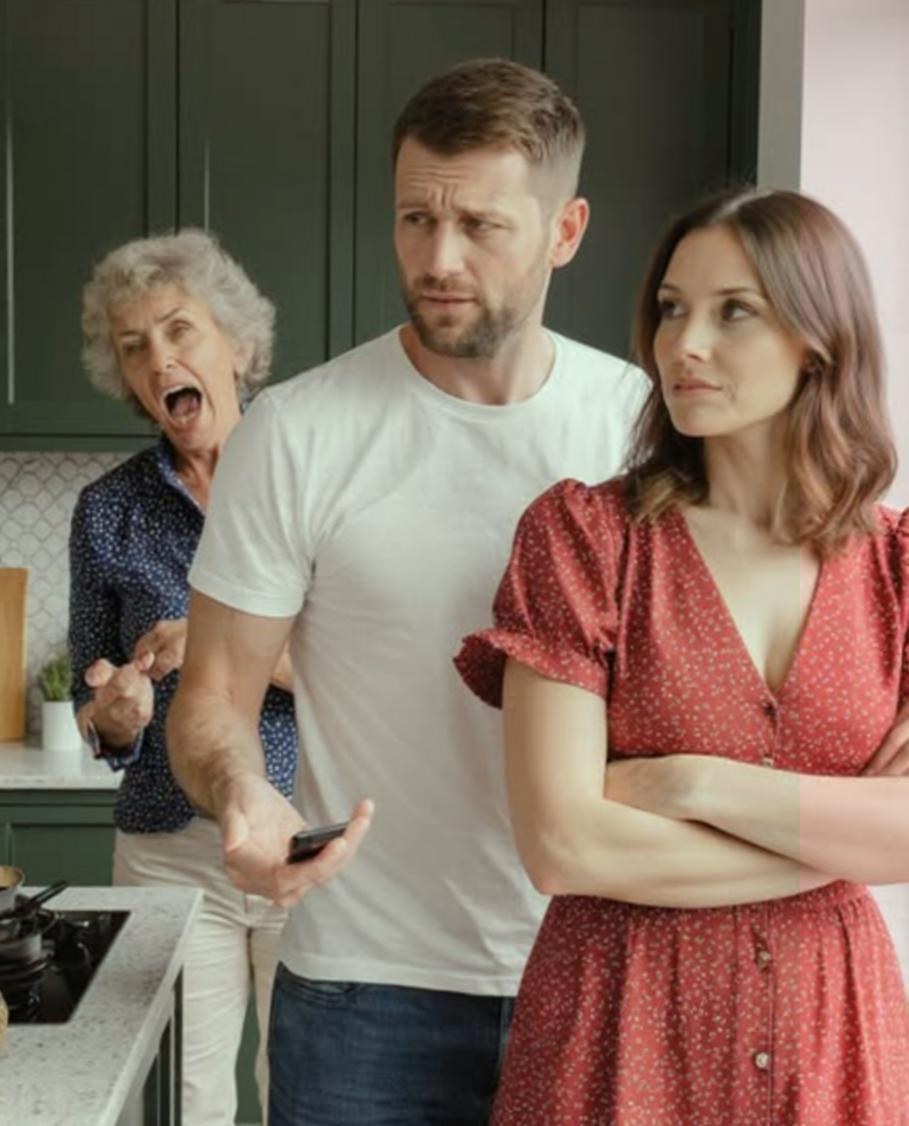 My spouse was going to give the paid vacation charged to my card to their mother, but the smiles suddenly vanished from both their faces at my calm response.
 My spouse left for a student, then returned to pick up a suitcase, but the moment the door opened, the smile vanished from his face.
 Part 4 — My spouse left for the student’s place and returned to pick up a suitcase, but the moment the door opened, the smile vanished from their face.
 My parents demanded twenty thousand dollars from my husband, then his quiet condition made my father stop smiling
 Descubrí que mi esposo quería usar mis ahorros para algo que me ocultaba, y cuando entré en la cocina su sonrisa desapareció
 Voltei antes da viagem e encontrei duas xícaras na cozinha; quando mencionei a câmera, meu marido perdeu a cor