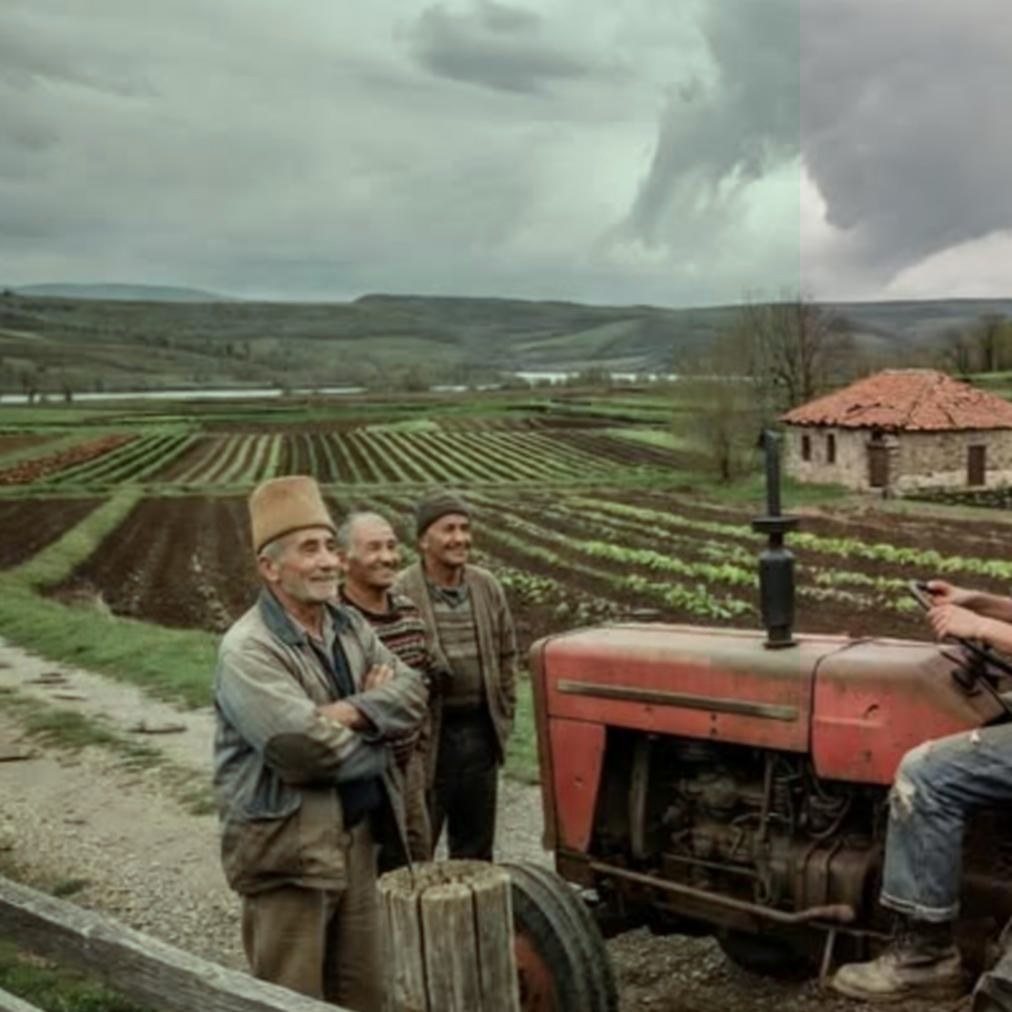

On the day when they were selling my father’s tractor at the auction, Buck Rollins told the whole town that a thirteen-year-old girl could never run a farm.
The morning was cold. I stood by the vehicle shed and fastened my father’s brown work jacket. The sleeves covered my hands, and the collar still smelled of diesel, cedar sawdust, and peppermint chewing gum. That smell reminded me of my father. So strongly that for several seconds I had trouble breathing.
More than a hundred people moved around the farmyard. Men leaned against the beds of trucks, women sold cinnamon buns, children climbed over haystacks. My father had been buried only seventeen days, but they had already turned everything into someone else’s belongings.
A white card was tied to the steering wheel of the red tractor.
“Lot fourteen.”
Aunt June stood beside me. She had become my legal guardian and worked night shifts at the hospital. Her eyes were red.
“You don’t have to watch, Ellie,” she told me.
“I need to know who is buying what.”
“You’re only thirteen years old.”
“Debt doesn’t ask your age.”
My father owed the bank one hundred eighty-six thousand dollars. Buck offered to lease the farm to him for seven years. In return, he would suspend the debt, but the contract said that after a flood he would acquire the lower two hundred ten acres at a “fair market price.”
I read that proposal three times.
Then I put it in front of Buck in the kitchen.
“If you’re saving the farm for us, why do you need the right to buy it after a flood?”
Buck straightened his white hat.
“Your father troubled you with adults’ business too much.”
“Dad taught me to read before I signed anything.”
“You’re thirteen years old.”
“Numbers don’t change just because I will grow up.”
That day Buck stopped smiling for the first time. June did not sign the contract. Three days later the bank scheduled the auction.

The small things were sold first. One neighbor bought my father’s compressor, a builder bought the welding machine, and the tools were divided among three men. Every “sold” felt like a small blow in my heart.
When it was the tractor’s turn, the auctioneer touched the tire with his hand.
“Who can give sixty thousand?”
Buck raised two fingers.
The price rose to sixty-eight thousand. Another farmer shook his head.
“Sold to Riverbend Agricultural Company!”
Tucker, Buck’s son, climbed into the cab and looked at me mockingly.
“If you want, Ellie, you can follow us on foot when we plow that abandoned field.”
The people laughed.
But I looked toward the southern lowland—the forty-eight acres of dark, fertile land that Dad had not plowed in the fall. Rye, clover, reeds, and native flowers had been sown there.
Two weeks earlier Dad had taken me there. Dawn frost glittered on the grass. He put his fingers into the soil and handed me an old, darkened copper key. A small metal plate said: “South Gate.”
“If something happens to me, don’t plow this field until you find out what it is,” he told me.
“It’s forty-eight acres.”
“No, Ellie. It’s a gate.”
Now Buck stood in front of me.
“We’ll start plowing tomorrow morning,” he said. “I can’t leave you that pitiful grass.”
June squeezed my hand.
“This land isn’t his until the court decides.”
Buck snickered.
“By the time the court does, the water will have carried the land away.”

That night, in my father’s workshop, I found his old notebook. On the last page there was only one sentence: “Water will go where you leave it a path.” Beneath it was a small drawing—our land, the Sidar River, and the South Gate.
I put the key in my pocket.
The next morning, when Buck’s men entered the unplowed field, I ran toward the shed. I fell to my knees at the lock on the door, took out the key, and at that exact moment the iron door opened behind me. Buck stood there with a folded folder in his hand, and behind him the engine of a black pickup roared…
Buck held the folder out toward me.
“Last chance, Ellie. Sign, and all of this will remain yours.”
“What all?”
“The house. The upper fields. Your little future.”
June slapped his hand away.
“Get out of here.”
Buck narrowed his eyes at me.
“The water is coming. When it comes, that unplowed field will become garbage and the bank will take everything.”
I did not touch the folder.
“Did Dad know the water was coming?”
Buck’s jaw tightened.
“Your father was sick. In the last months he could no longer think properly.”
That was a lie. I knew because one day before he died, Dad had taught me to measure the river’s level.
June found an old map in the shed. The South Gate did not end at the river—it connected to a channel hidden under the ground. My father’s grandfather had dug the channel decades earlier, but we had never seen the last record.

“Give me the key,” June told me.
We opened the lock. Inside were hidden an iron lever, a water-measuring rod, and a letter written in my father’s hand.
“If Buck tells you that this land is useless, know this: he wants not the land, but what the land protects.”
Suddenly thunder rumbled outside.
A weather warning came on the radio: unprecedented rain was beginning in the mountains.
At that same moment the telephone rang. Only one word appeared on the caller ID—the bank manager.
June answered, listened for several seconds, and lost color.
“Ellie, Buck has already submitted a document that the farm is under his control.”
I looked at my father’s letter. At the end there was a new sentence that he had added several hours before his death: “If you are reading this, look for the hidden recording under the warehouse floor…”
Under the warehouse floor we found a small iron box. Inside lay a memory card covered with dust and a sealed envelope. June lit a lamp. Outside, rain struck the roof like stones.
“Do you want to open it?” she asked me.
“Dad left it for me exactly for this.”
Inside the envelope was a land plan certified by a notary. According to it, the southern forty-eight acres were not private agricultural land but a natural water-protection basin. Dad had the right to restore the soil cover there and protect the diversion of the water. If the field were plowed, the lower part of the village would flood during a flood.

June put the memory card into the computer.
My father appeared on the screen. He was sitting in the workshop, and the same red tractor could be seen behind him.
“Ellie, if you are watching this recording, I can no longer explain it to you,” he said. “Buck knows that the southern field protects Willow Bend. He blocked the old river channel with earth so that the water would collect on our plots. Then he will be able to buy the farm cheaply.”
June covered her mouth with her hand.
I moved closer to the screen.
“Why didn’t you stop him?”
In the recording, Dad seemed to hear my question.
“I tried. I sent letters to the district commission. Buck postponed every hearing. But I left evidence. The water measurements, the truck times, and the camera recordings are in one file.”
The next video started on the screen. At night Buck’s trucks were dumping earth by the river channel. Tucker was directing them. Finally Buck came close to the camera and said:
“When the rain comes, this land will be worth the price of garbage.”
June grabbed the chair.
“My God.”
Dad’s recording continued.
“Ellie, if Buck goes against you, this file must be sent directly to the state environmental agency. But first you must open the South Gate. Otherwise the water will drown the village.”
The screen went black.

At that same moment the sound of an engine came from outside. I rushed to the window. Buck’s workers were already entering the southern field with heavy machinery.
“They’re starting to plow!” I shouted.
June picked up the phone.
“I’m calling the police.”
But only static could be heard on the line. Then a message came from an unknown number: “If you open the gate, the farm will collapse on your head.”
I gripped the key in my hand.
“June, the water is already on its way.”
Far away, from the direction of the river, a low rumble sounded. The ground moved beneath our feet.
Buck knew that now I had no choice left. If I opened the South Gate, all the water would move onto his land. If I did not open it, Willow Bend would flood.
June looked at me.
“Ellie, step back.”
But I put my father’s key into the lock. Just then an emergency message sounded on the radio: the Sidar River’s protective dam had broken, and Buck’s trucks were standing in its path…
ბაკმა საკუთარი ხმა მოისმინა და პირველად გაჩუმდა…
ფინალში ყველაფერი იმ წამს გადატრიალდა, როცა დამალული მტკიცებულება გამოჩნდა. მაგრამ ყველაზე რთული ბრძოლა სასამართლოს შემდეგ დაიწყო.
„ეს სიტყვები თვითონ თქვა.“
ბაკმა პირველად ვეღარ გაიქცა საკუთარი თავისგან.
👇 ისტორიის ფინალი უკვე გახსნილია
Related posts:
 Part 4 — They Mocked Me at the Auction of My Father’s Farm When I Left the Land Unplowed — But Buck Could Not Silence the Meadow by the River’s Roar
 Man lachte, als ich das beste Feld meines Vaters unberührt ließ – bis der Bürgermeister beim Anblick des Flusses plötzlich verstummte
 Sie verspotteten mich, weil ich das beste Feld nicht pflügte – dann verstummte die ganze Stadt, als mein Onkel zum Fluss blickte
 When I Rudely Answered a Woman Who Came to Work at the Workshop, One Look from Her Turned My Life Upside Down
 Seven Months After the Divorce, My Ex-Wife Called Me From the Maternity Ward, But I Froze When I Heard Her First Words
 I jokingly called the woman asking for a job my wife, but one question from her silenced every voice in the office





