
Nathan’s phone was still in his hand when police officers entered the corridor.
They were not alone.
With them came a prosecutor’s investigator and the hospital lawyer. Marjorie stepped in front of them and handed over the folder.
“Everything is here,” she said. “The original records, copies of the security cameras, and Dr. Pierce’s voice messages.”
Nathan’s face changed immediately.
“This is a misunderstanding,” he said. “My wife is emotionally unstable. This woman introduced herself as Vanessa and illegally broke into my office.”
“My wife?” I laughed, but I felt no laughter. “A few minutes ago you were saying that I had no right to be here.”
The lawyer who had followed Nathan looked at his watch.
“Nathan, say nothing else.”
“You are supposed to defend me.”
“Not anymore.”
Those four words fell more powerfully than the handcuffs placed on him by the police officer.

Nathan hid the phone, but it was too late. The investigator had already seen his message.
“Mrs. Pierce, is this number your husband’s?”
“Yes.”
“And did he send this message about your daughter?”
Nathan leaned forward.
“I did not send it. Someone used my phone.”
Marjorie answered calmly:
“Then explain why the camera recorded you reading the message and then telling Elena that she could still lose everything.”
The screen in the corridor was switched on. Security projected the recording onto the wall.
I watched myself: how I stood in front of Nathan, how my hand trembled, how he held the phone. Then his voice sounded.
“You can still lose everything.”
For the first time I heard my husband’s words from the outside.
There was no love in the words. Nor fear of losing me. Only control.
Nathan looked at the screen and slowly sat down.
“It was not like that,” he whispered.
“It was exactly like that,” I told him.
His hands lay on the table. I had watched those hands all my life sewing people back toward life. Now they were trembling because they could sew nothing back.

That same evening the hospital dismissed Nathan from his position. The police sealed his office, while the prosecutor’s office froze the accounts opened in my name so that he could not transfer the money.
The neighbor picked Sophie up from school. When I hugged her, her hair smelled of chocolate shampoo.
“Mom, is Dad ill?”
I knelt before her.
“Dad made a very bad choice. But you are safe.”
“You too?”
“Me too.”
That night I returned to Nathan’s office. It was already empty.
The round wall clock was still ticking. On the desk only one thing had remained—the blue tie I had taken from home that morning.
The bag stood open on the floor. The sandwich had cooled untouched. The tie hung over the back of the chair, as if Nathan might return at any moment and tell me again that he was late for a meeting.
But for the first time the room was no longer waiting for him.
Laura’s case opened many doors. It became clear that Nathan had altered the records of three patients over the years. He told one family that their child had died before the operation, when in fact the child had remained alive for another eleven minutes after the error. He paid money to the family of a second patient from an account opened in my name.
Vanessa remained as a witness.
Her injury did not turn out to be serious, but that night she sat for a long time in the hospital courtyard, holding Laura’s pen.
“Do you hate him?” I asked.
“I did before,” she replied. “Now I simply want no one to be able to deceive anyone like he did.”

“Me too.”
“Elena, apologizing to you will not be enough.”
“You were not his wife.”
Vanessa lowered her eyes.
“But I was your sister’s friend, and for eleven years I knew that the truth was being hidden from you.”
“You came because of Laura.”
“Now I am staying because of you.”
Three weeks later, before the trial, the court prohibited Nathan from returning to the hospital. He was still trying to regain control. Every day he called lawyers, bank managers, and the people he had silenced for years with gifts.
One day his lawyer called me.
“Nathan wants you to meet him.”
“No.”
“He says he needs only ten minutes.”
“He had eleven years.”
The voice fell silent.
“You really do not want to listen?”
“I am no longer going to receive the truth from him. I have already heard the truth.”

A month later Nathan sent me a letter. My old address was written on the envelope, but inside there was only one sentence: “Sophie still needs a father.”
Sophie read the letter.
“I want to have a father,” she said. “But I do not want you to cry again.”
I folded the letter.
“You can love your father and still not allow him to hurt you.”
“You will not answer anymore?”
“No.”
It was the first refusal that did not resemble revenge.
It was simply peace.
Six months later I opened a small legal center in Boston, where I helped patients read medical records and defend their rights. I did not hang Laura’s photograph on the wall. Her photograph lay with me, in the drawer of my desk, together with the little voice recorder that had saved my life.
Sophie came to me from school every day. Sometimes she did her homework while I listened to people’s stories. We grew mint in a pot by the window. Its smell was always present in the office.
The first snow came at the end of November.
Sophie drew a little house on the window. Two paths came out of the house—one toward us, and the other disappearing into an empty street.
“Who is this?” I asked.
“It is the place where no one lies to us anymore.”
“It is a beautiful place.”
“We are already there, Mom.”

That evening I received another message from Nathan.
“I miss you. Meet me just once.”
I looked at the screen for a long time. Before, such a message would awaken an old house in my heart—the corridor, his coat, the shoes left beside the bed, all those little habits I had presented as love.
Now nothing awakened.
I turned off the phone.
And the blue tie, which had lain in the drawer for six months, I gave to Sophie to play with. She tied it to the window handle and attached a small paper flag.
The wind waved the flag.
I closed the window, looked around the room, and understood for the first time that the past can remain with you without living in the house anymore.
The tie fluttered by the window.
And I was no longer waiting for anyone.
Missed the beginning?
Related posts:
 They left the children on the floor, but the unknown millionaire did not hang up the call — my former boss suddenly turned pale
 I Caught My Fiancée in the Maid’s Room, but When Something Fell from the Pillow, She Stopped Smiling for the First Time
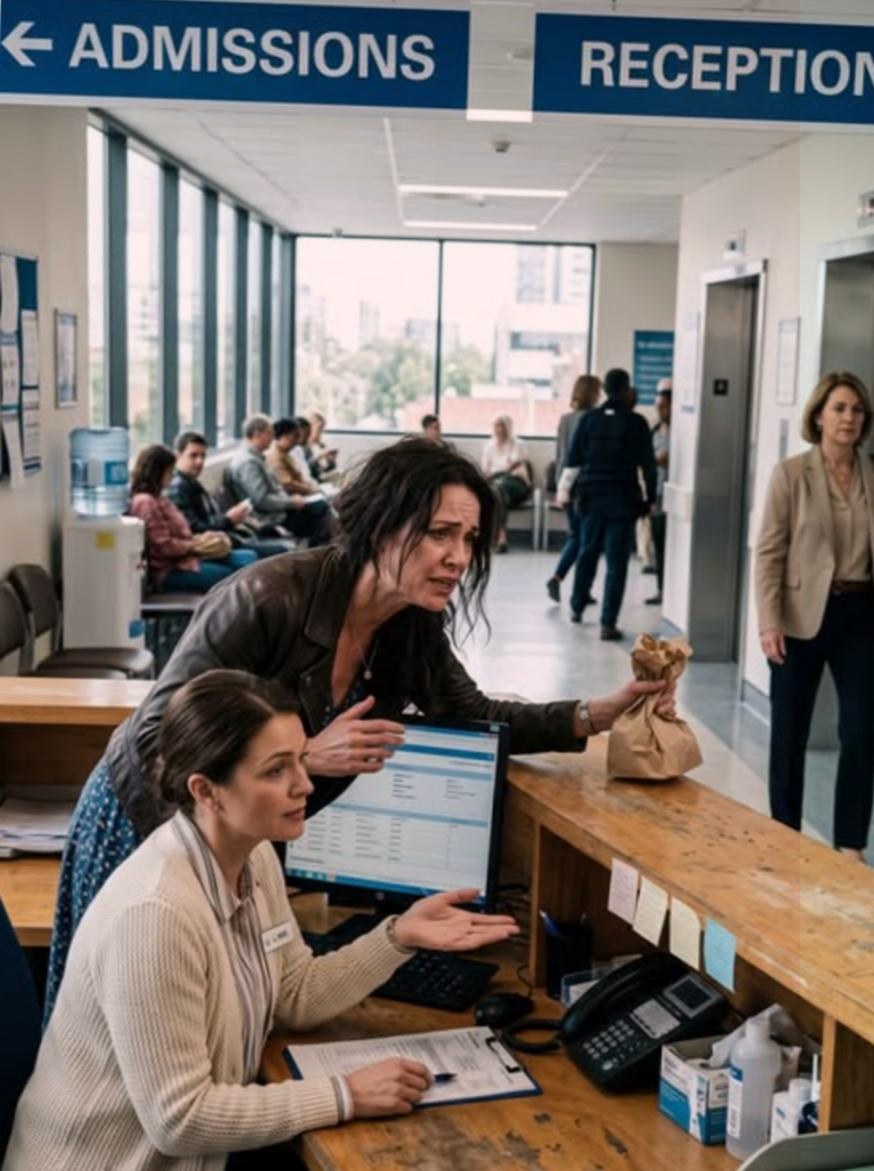
 I went to the hospital to see my husband, but someone else presented herself as his wife and the receptionist’s smile immediately disappeared
 An Unknown Man Humiliated Me in Front of Everyone, but the Restaurant Owner Looked at Me Only Once — and His Smile Immediately Disappeared
 My mother-in-law twisted my arm and handed me divorce papers, but when she heard my refusal, the color drained from her face
 The Widow Working in My House Needed Twenty-Eight Dollars, but the Family Lawyer Turned Pale at the Sight of an Old Letter