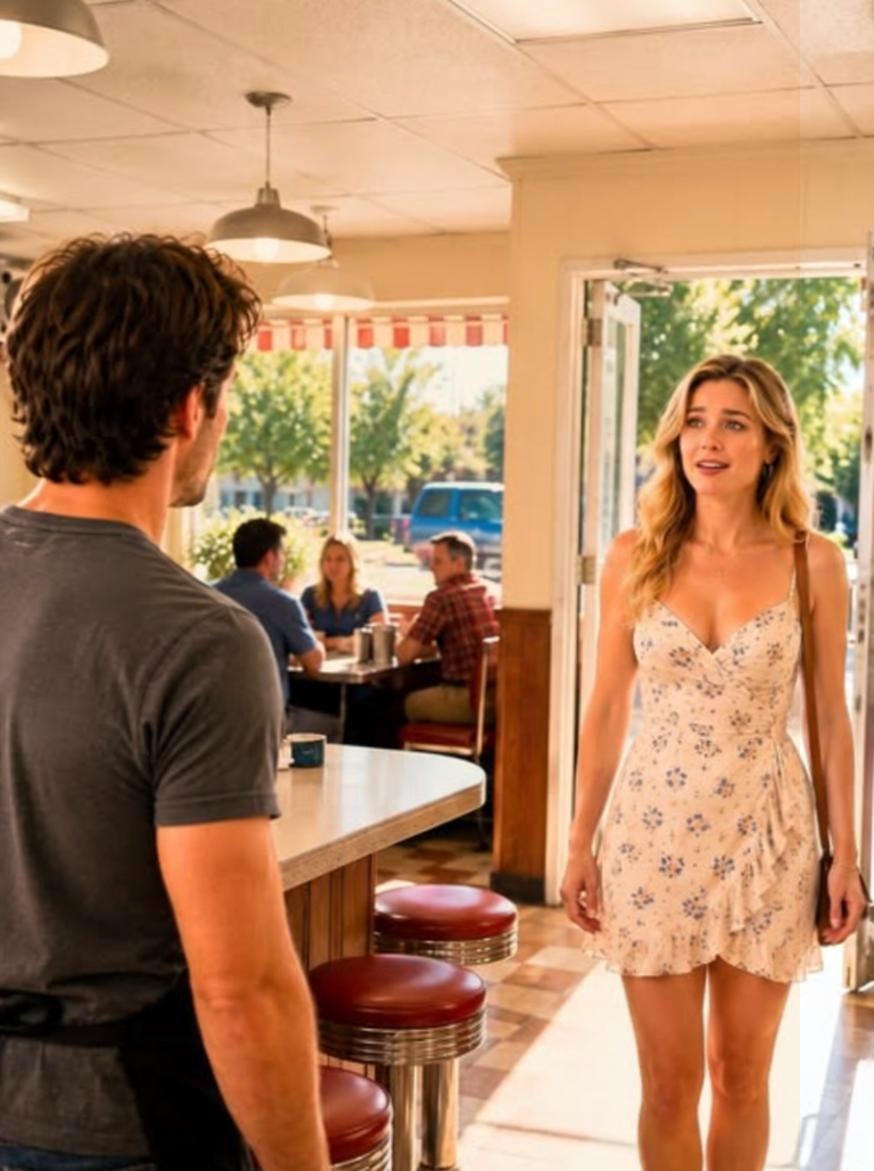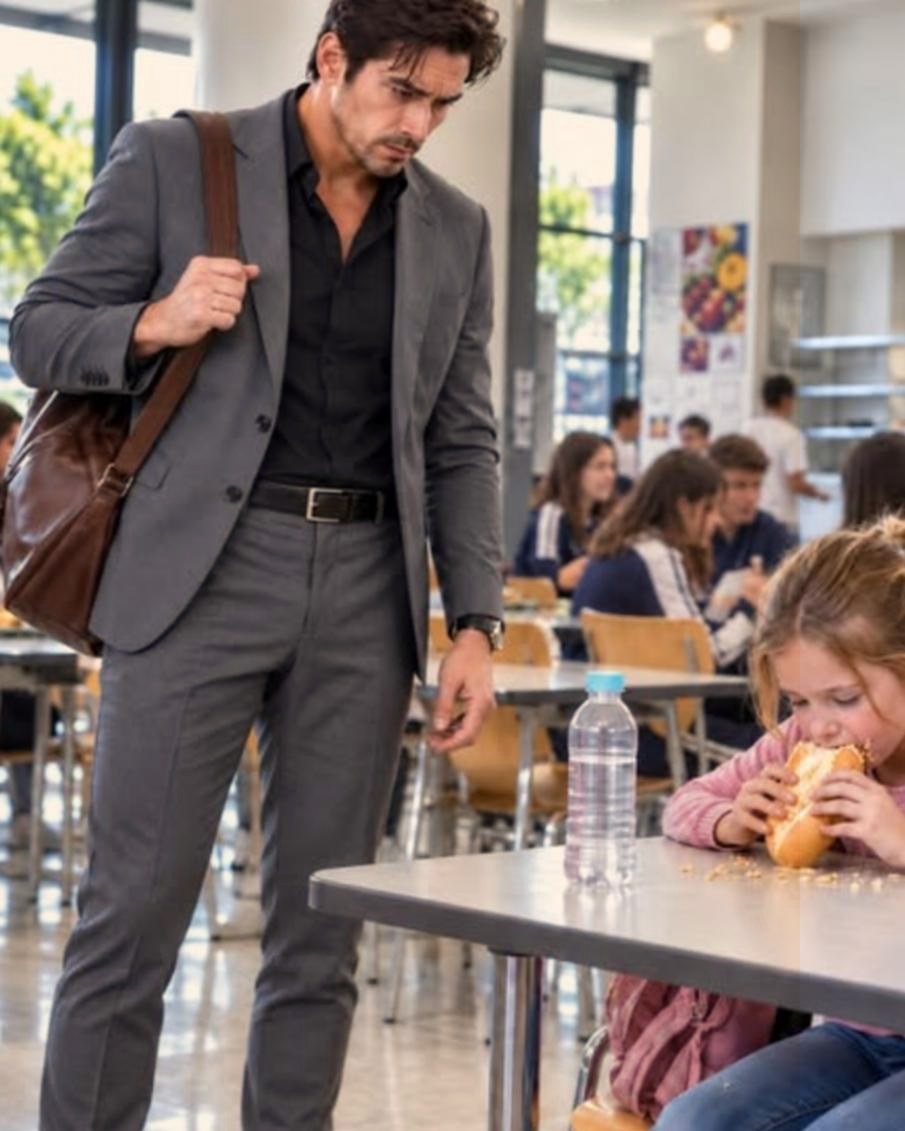

At that very moment Ortega locked the door.
“No one is leaving here alone,” she said.
Evelyn reached for the phone.
“I will call my lawyer.”
“Call my lawyer first,” I said.
She dialed the number, but after several seconds her voice changed.
“What do you mean you cannot come?”
I could not hear the answer, although the lawyer’s refusal filled the room.
Evelyn hung up the phone.
“He told me that he would no longer represent me until he saw all the financial documents.”
Ortega returned the papers to the folder.
“I have already notified the school district’s lawyer. Also Child Protective Services.”
Maya stood beside me and touched the burned lid of that small copper thermos with her fingers.
And I could think of only one thing: for five years this child had believed that her father no longer loved her.

In the evening we went to the old garage, but not alone.
With us were Ortega, the district lawyer, and two police officers. The garage stood several streets away from the school, its brick walls blackened by dampness. When the iron door opened, the sound of rust was heard.
Inside we found a young man.
He held a small memory card in his hand.
“I am Luka,” he said. “I studied in Maya’s class.”
Maya looked at him.
“You are the boy Grandmother was talking about?”
Luka lowered his head.
“Yes. But I went to school. I simply worked in a warehouse in the evenings.”
My mother immediately shouted:
“This boy is a liar!”
The policeman raised his hand.
“Be quiet and listen.”
Luka handed the card to the lawyer.
“There was a camera in the garage. I accidentally saw the recordings when I wanted to repair broken equipment. Maya’s grandmother came here often.”
They played the recording right there, on an old monitor.

Evelyn appeared on the screen. In one hand she held a bank envelope, and in the other a phone. She was telling someone:
“I will tell Jason that the girl spent everything. Before he comes here, I will transfer the money out of the account.”
Then another voice sounded.
“What if the school asks questions again?”
“I will fill out the forms. The teachers will see assistance and will not look for the money.”
Maya closed her eyes.
I watched the screen and heard my own mother’s voice as if I were hearing it for the first time.
“That is my voice,” Evelyn said quietly.
“Yes,” the lawyer answered. “And this recording will be submitted to the court.”
My mother sat down on the chair.
“I only wanted to keep Maya. You would have taken her away anyway.”
“I am her father,” I said. “And you were separating her from me so that you could keep my money.”


Maya turned toward me.
“You really did not want to leave me?”
I knelt down.
“Not a single day.”
“Then why did you not call me?”
The answer to that question was the most painful.
“Because I believed Grandmother. And that is my fault.”
Maya looked at me for several seconds.
“I do not need you to punish yourself. Just do not believe it anymore when someone tells me that you do not love me.”
That night I did not return to the hotel. I stayed with Maya in her small room, where old star stickers still clung to the wall. Under the bed I found three empty thermoses. Each contained crumbs of a bun.
The next morning the case officially began.
Child Protective Services spoke with Maya separately. The bank froze the accounts. The school district rechecked all the assistance applications. It turned out that Evelyn had repeated the same lie for years in different institutions.
She was charged with fraud, forgery of documents, and child neglect.

I did not shout against her in court.
When the judge asked whether I had anything to say, I said only this:
“I want everyone to understand that Maya was never irresponsible. I was irresponsible, because I did not verify the truth.”
Evelyn lowered her head.
For the first time I no longer needed to defend myself from her.
After court I entered Maya’s room. The bed was empty, and on the wall there remained her small photograph—Sarah holding ten-year-old Maya, both in a sunflower field.
Beside the photograph on the shelf stood that small copper thermos.
I bought a new one, but I did not throw away the old one.
A few weeks later I moved from Dallas to Austin. I rented a small house near the school. In the morning I woke Maya. In the kitchen I fried eggs, put fruit in her bag, and each time asked her:
“Do you need anything else?”

One morning she smiled.
“Dad, today just do not let me forget the drawing.”
Her drawing was: me, her, and Sarah, three figures in one green yard. Sarah was drawn in the sky, but she had a smile on her face.
Maya pinned the drawing to the school wall.
“Mom would have liked it too,” she said.
“I know.”
Months later the first snow came. It was a rare sight in Austin. Maya stood by the window and drew small circles on the glass with her finger.
My life was still chaotic. I changed jobs. I went to therapy. Bank matters, court letters, and old debts waited for me every day.
But there was no longer the silence of hunger at home.
There was the sound of plates.
There was laughter.
There was a question that no longer frightened me:
“Dad, will you be home tomorrow too?”
“Yes,” I answered. “Tomorrow too.”

One evening I received a letter from Evelyn. It was short.
“Forgive me. I lost everything. I want to see Maya.”
I held the letter in my hand for a long time.
Maya asked me:
“Who is it?”
“Grandmother.”
“Did you decide?”
I looked at the snow through the window.
“No. Now you have the right to decide.”
Maya lowered her head.
“I do not want to yet.”
“Then it will not happen.”
I wrote Evelyn an answer: “Not at present. When Maya is ready, she will tell you herself.”
It was not revenge.
It was a boundary.

The next morning Maya took the old thermos and carried it toward the trash bin.
“I will not keep this anymore,” she said.
“Are you sure?”
She looked at the black stain remaining on the lid.
“I kept it so I would not forget what hunger was like. Now I do not want to remember it anymore.”
She did not throw the thermos into the bin.
She put it on the windowsill, in the first ray of sunlight.
And that morning, for the first time, it no longer looked like an object that had survived.
It looked like a closed door.
Missed the beginning?
Related posts:
 She returned to my workshop after eighteen years and changed everything with one phrase — the woman standing at the door suddenly turned pale
 I accused my daughter of wasting money, but one question from the school principal wiped the smile from my mother’s face
 The New Boss Made Me Hide My Daughter’s Existence at Work, but Her Face Suddenly Turned Pale During the Meeting with the School Principal
 My Husband Left Our Sick Daughter at Home Again, but the Doctor’s Face Suddenly Changed at the Hospital
 I Returned Home for New Year and Opened the Door to a Cold Apartment, While My Mother Answered Me on the Phone with Strange Calm
 Part 4 — She returned to my workshop after eighteen years and changed everything with one phrase — the woman standing at the door suddenly turned pale