
Nodar immediately turned off the light.
Only the orange light coming in through the street window remained in the office.
Luka quietly asked from the next room:
“Grandma, who is it?”
“It is my friend,” I answered, although fear still slipped into my voice.
There was another knock at the door.
Nodar picked up the phone and called the security service.
“There are people at the back entrance,” he said. “Let no one come in.”
Elene stood by the wall and clutched the bag with both hands. The little copper bird trembled on the clasp.
“Vakhtang has never come here before,” she said in a whisper.
“But now he has come,” I told her.
“No. Now he is trying to save what is left.”
Nodar pulled the curtain aside slightly.
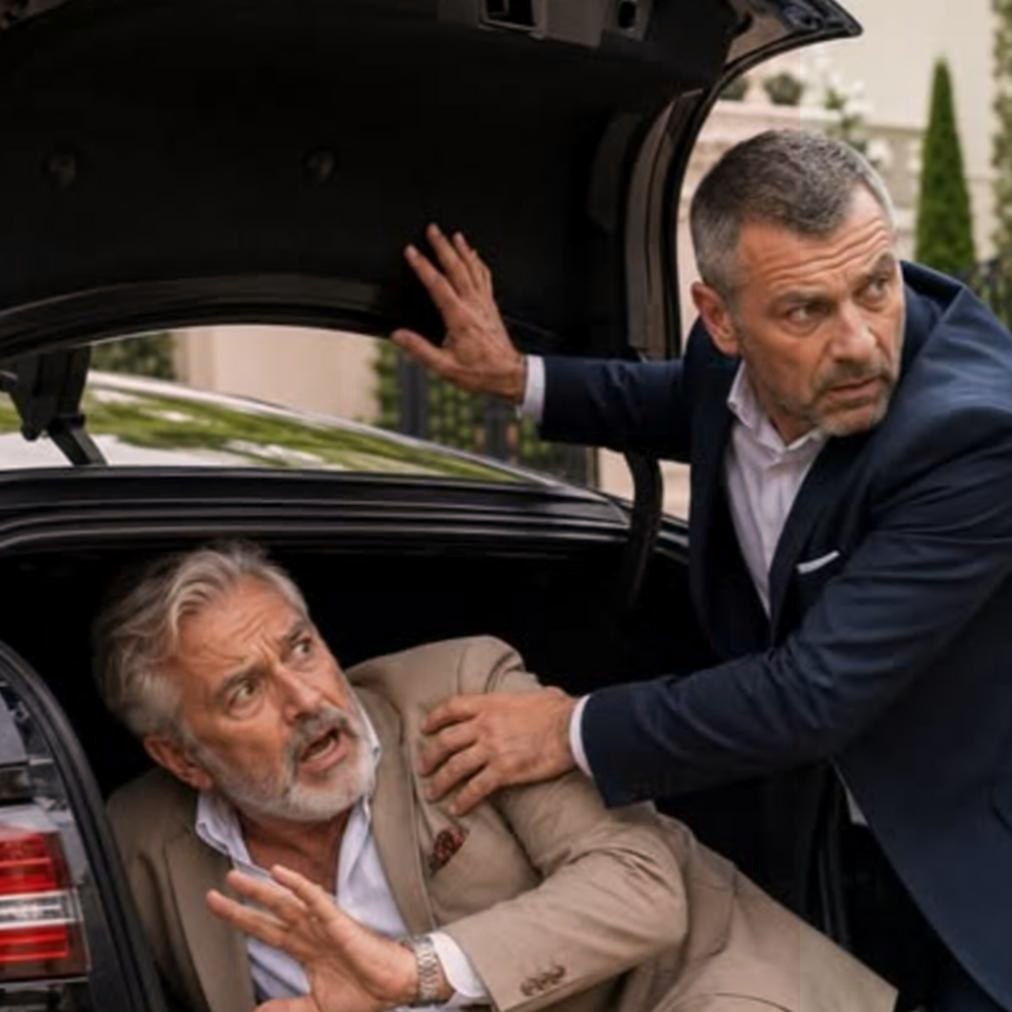
“One man left. The other is standing by the car.”
“Where is Irakli?” I asked.
Nodar looked at me.
“In the hospital. He had a heart attack after the police began searching his company.”
I felt nothing.
Neither joy nor relief.
Only exhaustion.
For ten years I thought I was raising my grandson alone. In reality, some people were secretly paying money to hide their crimes, and waiting for the day when they would take the child away again.

In the morning Nodar filed an official statement with the police. The memory card, Mariam’s letter, and the bank statements were attached to the case.
Vakhtang called me in the very first hour.
“Marine, let us talk calmly.”
“You had been talking to me for ten years, without me even knowing that you existed.”
“The money was to help your family.”
“No. It was for your silence.”
“If you use this material in court, Irakli will go to prison.”
“That is not my decision.”
“You are pushing him toward death.”
For the first time my voice broke.
“No, Vakhtang. Your fear is doing this.”
I ended the call.
Three days later the police searched Vakhtang’s house and company. Irakli was still in the hospital, but his lawyer withdrew from the case.
“You told me that you were only helping Mariam,” he told Vakhtang in the hospital corridor. “Now I have heard the recording. You said your own words yourself.”
Vakhtang shook his head.
“This recording means nothing.”
The lawyer placed papers on the table.
“It means that you personally threatened a pregnant girl. It also means that for ten years you transferred money under a false designation and filed a custody demand only when your family’s crime was exposed.”
“You work for me.”
“I no longer work for you.”
Vakhtang struck the papers with his hand.
“Every lawyer lives by money.”
“And I want to live the rest of my life with a conscience.”

That same week the court left Luka’s temporary custody with me and prohibited Vakhtang from approaching him. The case against Irakli continued separately, because his signed refusal and the hospital recording were sufficient for him to face his own decisions for the first time.
The hardest day was still the one when I had to tell Luka the truth.
In the evening I entered his room. His baseball glove hung by the window, and a half-drawn picture lay on the table.
“May I talk to you?” I asked.
“Is it about my father?”
His question went through my heart.
I sat down beside him.
“Yes. Now I know who he was.”
“Was he a bad person?”
I was silent for a long time.
“He was afraid of very bad decisions. But fear did not excuse him for making bad decisions.”
“Did Mother know that he existed?”
“She knew. And she loved you very much.”
Luka lowered his head.
“Then why didn’t you tell me until now?”
“Because I didn’t know. And also because your mother wanted you to spend your childhood peacefully.”
He looked up at me.
“Will you still be my grandma?”
I no longer needed an answer to that question.
“Always.”
He put his arms around me and hugged me with such force, as if ten years of fear had been locked inside his small shoulders.

Several weeks later I returned to the school kitchen. In the morning the smell of bread spread through the corridors, the children made noise, and for the first time in a long while I did not check the clock every five minutes.
Luka moved to a new baseball team. On Sundays we still baked cinnamon pancakes, except now he poured the milk into the batter, while I taught him how not to burn the pan.
I kept Mariam’s letter in a small wooden box. The memory card remained with Nodar. The case was still ongoing, but my life was no longer only waiting for the investigation.
One morning Luka brought me a drawing. Three people stood in a sunny field in it: me, himself, and Mariam.
“Where is Dad?” I asked.
“I didn’t want him in the picture,” he said. “But Mother had to be here.”
I held his answer to my heart.
When the first snow came in winter, we went to Mariam’s grave. Luka brought a new card, this time written in his own hand.
“Mother, I am well.”
The wind almost extinguished the candle again, but Luka protected the flame with his hands.
That evening I received the last message from Vakhtang.
“Come, let us forget everything. It will be better for Luka if we are a family together.”
I looked at the phone for a long time.
Then I wrote him only one sentence:
“What is better for Luka is the truth, not your comfort.”
And I blocked the number.

That same week Elene confirmed her testimony. She admitted that ten years earlier she had wanted to come to Mariam’s funeral, but she was afraid of her brother. Now we met for the first time peacefully, without court, without security cars.
“Will you forgive me?” she asked.
“Forgiveness is not the end of the road, Elene. Sometimes it is only the moment when you stop carrying someone else’s fear.”
She nodded and began to cry.
I was no longer trying to save anyone from their own choices.
Several months later Luka won his first home baseball game. When he returned from the field, he held an old card on which only one word was written in Mariam’s handwriting: “Continue.”
I found this card in the same envelope in which the letter had been hidden. All this time I had not noticed it, because I looked at fear longer than I looked at love.
When I returned home, I placed the card on the windowsill. Outside, the first snow was falling silently.
Luka was turning pancakes in the kitchen and laughing.
And I touched Mariam’s letter, then looked at the bag with the copper bird that Elene had left me.
The bird was no longer trembling.
Snow was falling beyond the window.
The light remained in our home.
Missed the beginning?
Related posts:
 My uncle told me that my land was worth nothing, but I put the documents on the table and his lawyer immediately stopped smiling
 For three years he told me that he would never walk again, but when his laughter returned home, it froze my husband in place
 At my daughter’s grave, an unknown woman handed me a letter, and at the sight of my grandson her face suddenly turned pale
 Before our fifth anniversary, I overheard my husband’s secret conversation and his laughter suddenly stopped
 My daughter-in-law rented my mother’s lake house for a party, but after my calm response my husband stopped speaking
 My Former Billionaire Husband Left Me Because of the Children, but He Saw the Twins in a Restaurant and Lost the Color in His Face