
That evening, when eight-year-old Emily stood before me and insisted that she would pay for the formula on Friday, I immediately noticed her one lie: she had no money at all.
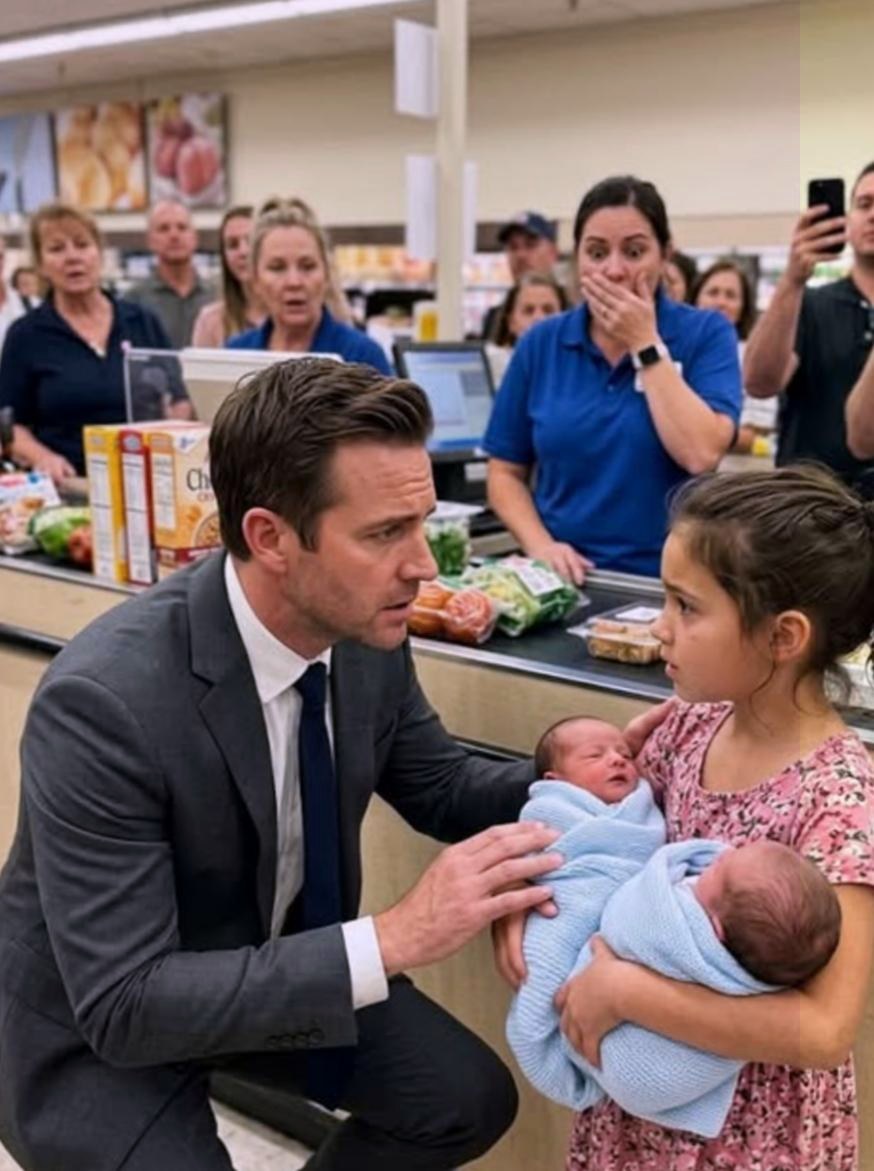
It was the last Tuesday of October, in St. Paul, ten minutes before six in the evening. My van broke down a few streets from the office, and the telephone kept ringing without interruption. I entered a small supermarket to buy water and was already heading toward the door when I saw the child standing at the checkout.
Emily’s worn blue dress was torn at the knee and repaired several times with coarse thread. Her hair was tied into a ponytail tilted to the left. A five-month-old baby was clinging to her chest, and another was sitting in a small seat that the girl dragged close to her feet. She held only one package in her hands — formula.
The cashier, Marcy, smiled politely.
“Sweetheart, where is your mother?”
Emily lowered her head. She was straightening the baby’s blanket with her fingers, as if answering could buy her time.
“Mother isn’t here.”
“Father?”
“He left.”
Marcy looked first at the children, then at the girl.
“When was the last time the little ones ate?”
Emily’s lips trembled.
“Yesterday morning.”
“And what did they eat afterward?”
“Nothing. I gave them warm water. When they get hungry, they cry. After the water, they become quiet for a little while.”
At that moment, one of the babies began to cry. Emily picked it up so quickly, supported its head so carefully, and began rocking it so skillfully that something broke inside me. That movement was far too familiar for an eight-year-old child.


I found the wallet in my pocket immediately.
“I’ll pay for the milk,” I said.
Emily suddenly turned her eyes toward me.
“No.”
“Everything is all right.”
“I can pay on Friday.”
“There’s no need.”
“Nobody does anything for free,” she told me, gripping the package as if I were going to take it from her hands.
I should not have heard those words from a child. Especially in such a calm voice.
Along with the milk, I put diapers, bottles, baby porridge, juice, and two loaves of bread on the counter. Emily stepped back.
“I can’t carry that much.”
“You will.”
“I don’t have enough money.”
“I’m not asking you to pay.”
“Then what will you ask of me?”
There was such weariness in her question, as if she had not had this conversation for the first time. Marcy wiped her eyes, and I only shook my head.
“Nothing. I simply want the children to be full today.”
I followed her home on foot. On the back street behind the store, in front of an old wooden house, Emily stood for a long time. The window of the upper floor was boarded up, and the wooden floor of the porch creaked at every step.

As we went up the stairs, the girl stopped me.
“Mr. Grant, if you come inside, promise me that you will not tell anyone what you see.”
“Emily, what am I supposed to see?”
She looked up at the upper window. Her face went pale.
“Mother told me to hide it.”
“Did someone threaten you?”
Emily immediately fell silent. She put her hand on the doorknob but did not turn it.
“We are not alone here,” she whispered.
Then the door opened, and from inside came the sound of a heavy iron object falling. Emily flinched, pressed the baby more tightly to her chest, and I stepped in front of her.
At that same moment, the floor above creaked. Someone on the other side of the door was slowly coming down the stairs…
First a shadow appeared on the stair, and then an old robe. I stood in front of Emily, and my right hand was clenched into a fist without my realizing it. The baby was still crying, but the girl made no sound.
“Who is here?” the man asked sternly.
A middle-aged man came down from the darkness of the second floor. His face was tired, his beard had gone untrimmed for several days, and there was a black, burned mark on his right wrist. He looked first at Emily, then at the bags in my hands.
“I’m Grant,” I said. “I came from the store. I bought food for the children.”
“Nobody asked you.”
“The children haven’t eaten since yesterday morning.”
The man looked toward Emily.
“Are you starting again?”
The girl flinched immediately.
“Daniel, he only bought milk.”
“You be quiet.”
There was such harshness in his voice that even my body tensed. Emily stroked the baby’s back and stared at the floor.
“Are you their father?” I asked.
“Who are you to ask me questions?”
“A person who saw that your children are hungry.”
Daniel took one step forward. Behind him, at the end of the hallway, a door was half open. From there came the smell of dampness and burned plastic. A torn child’s drawing hung on the wall, and on it, in red pencil, was written one word: Mother.

“Go outside,” he told me.
“I’m not going anywhere until I call an ambulance.”
“If you call the police, you will never see Mother again.”
Emily raised her head.
“Where is Mother?”
Daniel’s face changed, but only for a moment.
“She’s in the hospital.”
“Which one?” I asked.
He did not answer me. Instead, he opened the door wide and extended his hand toward the hallway.
“Go.”
At that moment, the floor above creaked again. Daniel quickly looked up. In that one second, Emily took my hand and squeezed my fingers so tightly that it was as if she said: not now.
I took out my phone and quietly called child protective services. Marcy promised to come from the store as a witness. While we waited, Emily sat in the corner of the kitchen and fed the baby water from a bottle.
“Did Mother leave you?” I asked carefully.
“No. They hid Mother.”
“Who?”
Emily looked around the room.
“The one who came every month.”
“Daniel?”
“No. Daniel is afraid of him.”
At these words, the clock hanging in the hallway stopped. Under its glass was a white piece of paper, and twelve dates were written on it, each on a separate line.
“What is this?” I asked.
Emily stood up.
“Mother’s notes.”
“What did she write down?”
“Whom she spoke with. When he came. When he did not let me stay alone with the children.”
“Who?”
The girl looked toward the stairs and lowered her voice.
“Victor Hale. The owner of the house. But Mother told me not to say his name aloud.”}]},{
Daniel suddenly rushed into the kitchen and struck the wall clock with his hand. The clock fell to the floor, the glass shattered, and the dates scattered among the wooden splinters.
“Where are those papers?” he shouted.
Emily hid in the corner.
“I don’t know.”
“You’re lying to me!”
I grabbed Daniel by the arm.
“Don’t touch the child again.”
He tore his arm free and ran toward Emily’s bedroom. The girl rushed up the stairs, and I followed. In the room, he found a small brown folder under the mattress and pressed it to his chest.
“Mother said I should open it only if a good person came,” she whispered.
Daniel stopped in the doorway.
“Don’t you dare.”
The sound of sirens was already coming from below. Emily searched for the folder’s clasp with her fingers. I bent down beside her.
“Open it,” I told her.
“What if what I think is inside is there?”
“Then you will learn for the first time why your mother disappeared.”
Emily slowly lifted the clasp, but before she could take out the first page of the folder, a strange man’s voice sounded in the hallway:
“No one touches the children. I am their lawyer…”
A tall man in a black hat stood in the doorway. Two police officers and Marcy were beside him. The man took out a document, but when Daniel saw who had entered, the blood drained from his face.
“Victor, why did you come here?” Daniel asked.
“Because this house is mine,” the man calmly replied. “And all of you must leave immediately.”
Emily hugged the folder more tightly. I stood in front of her.
“I called the police for help for the children,” I said. “Now this girl will tell us everything.”
Victor smiled at me, but his eyes did not smile.
“Stranger, you know nothing about this family.”
“That is exactly why we must find out.”
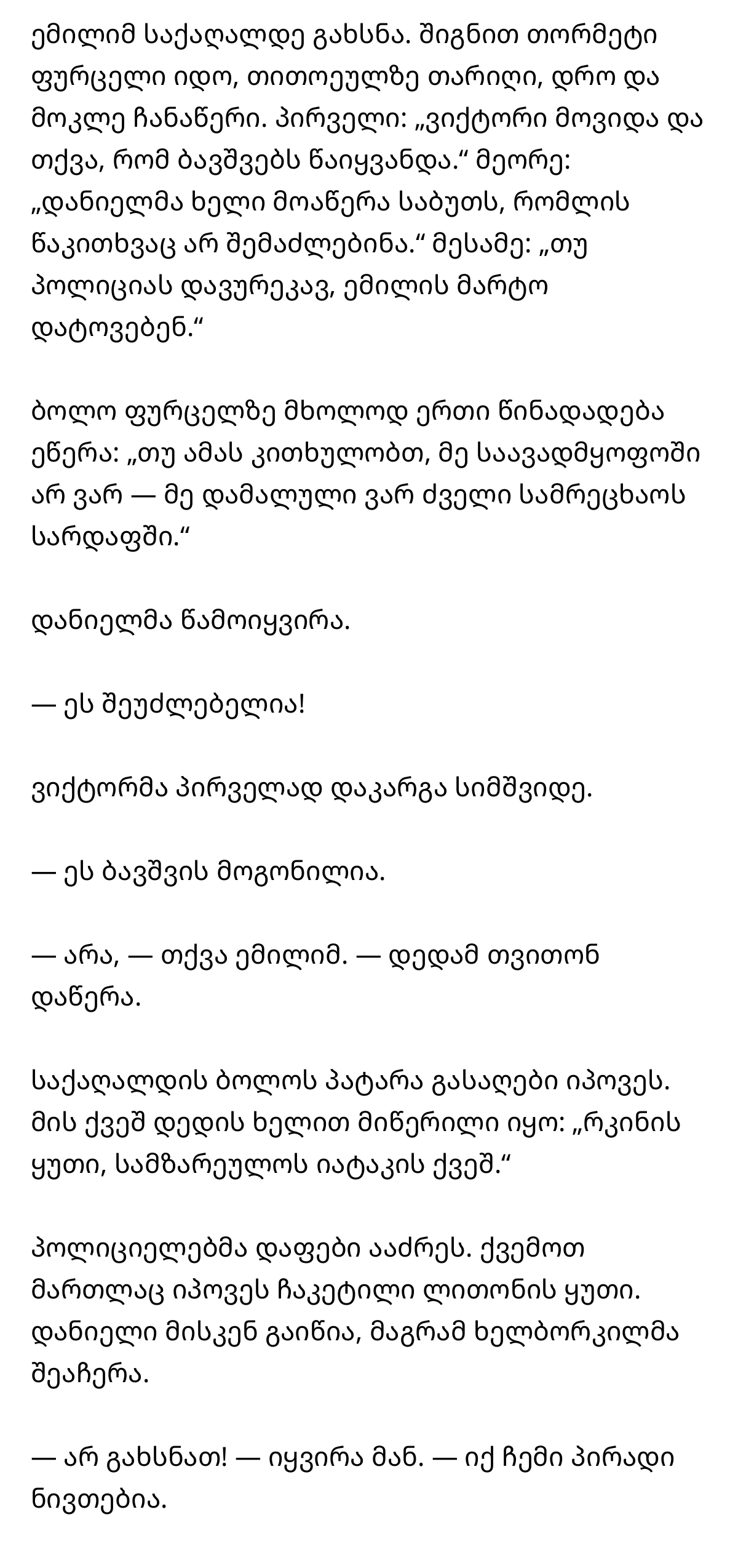

Marcy went over to the police officers.
“I heard everything in the store,” she said. “The children had no food.”
Daniel shook his head.
“She is lying. Emily was always stubborn.”
“A stubborn child does not give her brothers water because she has no milk,” I said.
The first police officer took hold of Daniel, while the second knelt beside Emily.
“You can open the folder if you want.”
Emily looked at me. Fear and hope were visible together in her eyes.
“Mother told me I should wait for Grant,” she said. “If he ever came.”
These words fell into the room like heavy stones.
“Did Mother know I would come?” I asked.
“Not you. She simply said that at least once a person would appear who would ask for nothing in exchange for money.”
Emily opened the folder. Inside were twelve sheets, each with a date, a time, and a short note. The first: “Victor came and said he would take the children.” The second: “Daniel signed a document whose reading he did not let me finish.” The third: “If I call the police, they will leave Emily alone.”
On the last sheet there was only one sentence: “If you are reading this, I am not in the hospital — I am hidden in the basement of the old laundry.”
Daniel screamed.
“This is impossible!”
Victor lost his composure for the first time.
“The child made this up.”
“No,” Emily said. “Mother wrote it herself.”
At the end of the folder they found a small key. Under it, written in the mother’s hand, were the words: “Iron box, under the kitchen floor.”
The police officers pulled up the boards. Beneath them they really found a locked metal box. Daniel lunged toward it, but the handcuffs stopped him.
“Don’t open it!” he shouted. “My personal things are in there.”
“Then why is everyone afraid?” I asked.
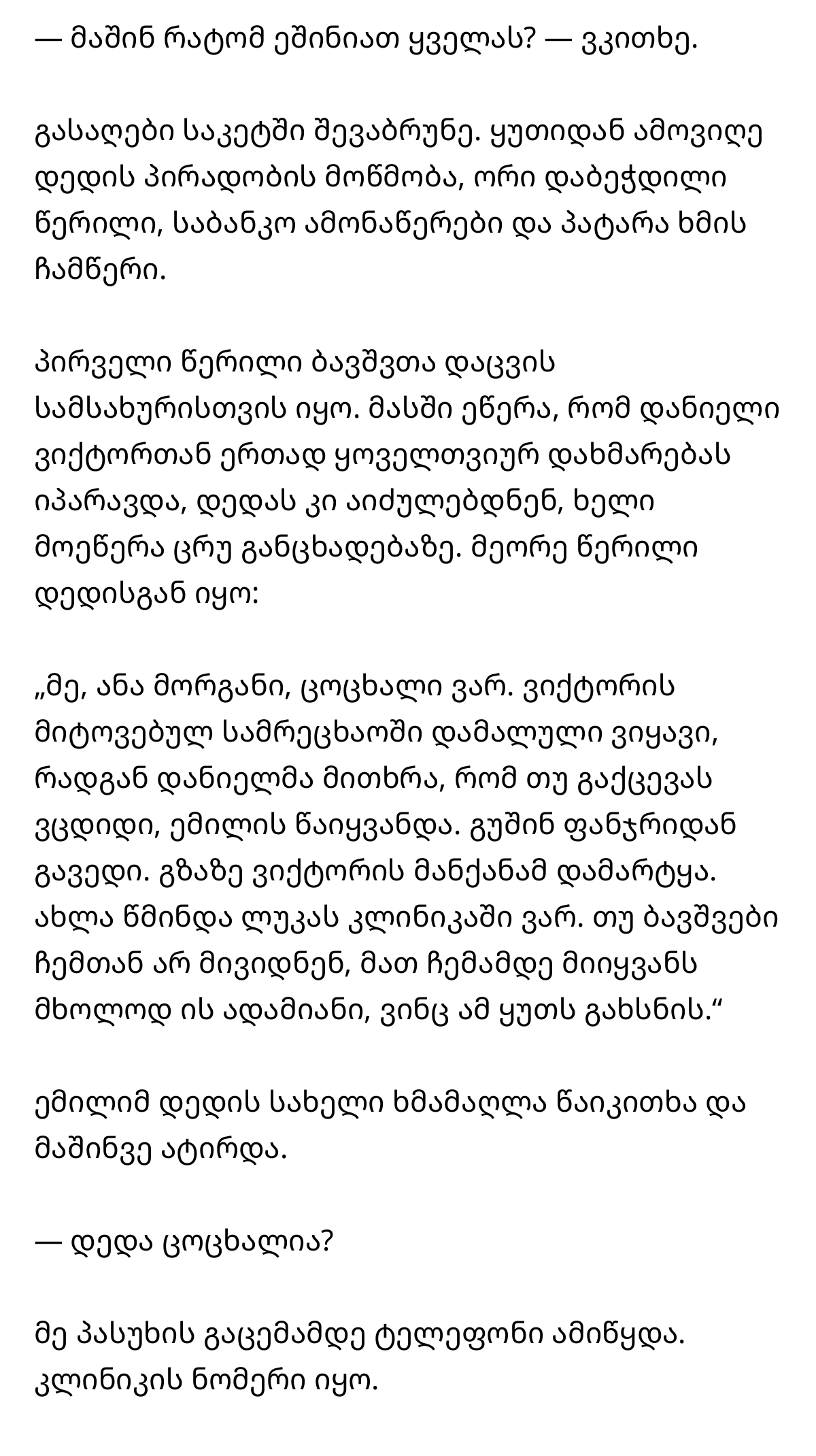
I turned the key in the lock. From the box I took out the mother’s identification card, two printed letters, bank statements, and a small voice recorder.
The first letter was for child protective services. It said that Daniel and Victor stole the monthly assistance together, while they forced the mother to sign false statements. The second letter was from the mother:
“I, Anna Morgan, am alive. I was hidden in Victor’s abandoned laundry because Daniel told me that if I tried to escape, he would take Emily away. Yesterday I went out through the window. On the road, Victor’s car hit me. I am now at St. Luke’s Clinic. If the children do not come to me, only the person who opens this box will bring them to me.”
Emily read her mother’s name aloud and immediately began to cry.
“Is Mother alive?”
Before I could answer, my phone rang. It was the clinic’s number.
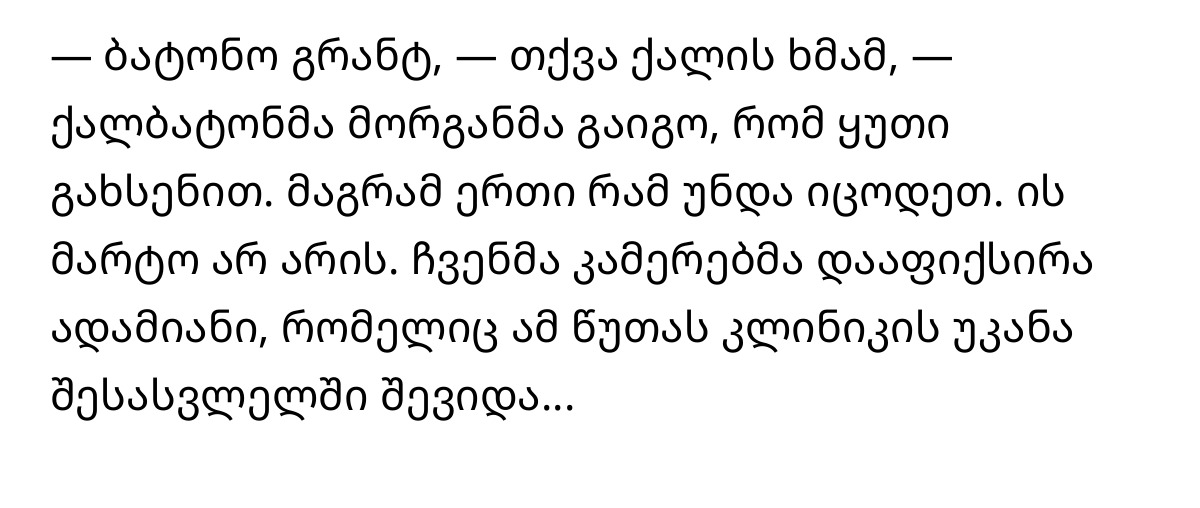
“Mr. Grant,” a woman’s voice said, “Mrs. Morgan found out that you opened the box. But there is one thing you must know. She is not alone. Our cameras recorded a person entering the rear entrance of the clinic at this very moment…”
დედის ხმა ჩაიწერა, მაგრამ ყველაზე მძიმე ჯერ წინ იყო…
ფინალში ყველა დამალული სიტყვა თავის ადგილს დაიკავებს. ერთი პასუხი კი ადამიანებს საკუთარი არჩევანის წინაშე დააყენებს.
„მე ეს არ მინდოდა…“
მაგრამ ოთახში უკვე ყველა სიმართლეს უსმენდა.
😱 გაიგეთ, რას მალავდნენ ისინი →
👇 ისტორიის ფინალი უკვე გახსნილია
Related posts:
 On a Rainy Night Emily Asked Me to Take Her Home, but One Question of Mine Suddenly Changed Her Face
 When My Wife Announced She Was Going on a Date with Another Man, Her Smile Disappeared After My Calm Response
 I sheltered an unknown girl in a rented room, but when black cars stopped at my door, my heart clenched
 I always protested leaving three children for free, but after my calm answer Sloan’s smile suddenly disappeared
 I took my mother from the house, but when my brother opened her room with a duplicate key, the color drained from his face
 Part 4 — An eight-year-old girl asked for milk at the checkout, saying she would pay on Friday — and when we opened the door of her house, I froze