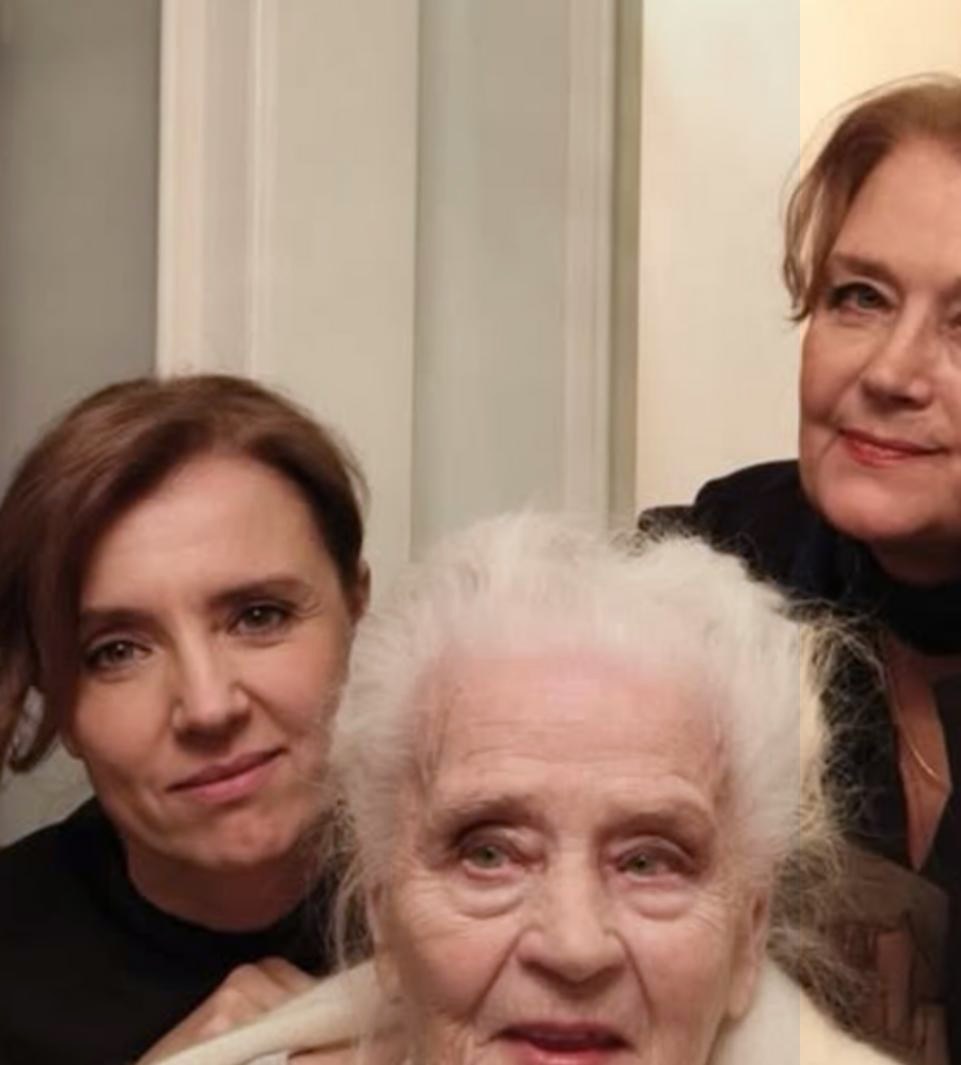

That day, when the archive employee told me that Xenia did not want to give birth to her own child, the folder I was holding fell to the floor. It was ten o’clock in the morning. The old newspaper storage smelled of dust and dried glue, while raindrops struck the windowpane as if someone were knocking from inside.
“This story is written differently everywhere,” Nino, the archive keeper, told me, placing her finger on a yellowed clipping. “But here it says something else.”
“What do you mean?”
Nino did not answer me. She only took out a small wooden box whose lock was covered with rust. On the lid of the box, it was written by hand: “Xenia Arkhipovna. Do not open without the family’s consent.”
At that moment I felt for the first time that I was no longer investigating an ordinary biography. For several weeks I had been collecting material about the life of Irina Alfyorova’s mother, Xenia. I knew that the woman had reached one hundred and four years, had lived through the war years, and, despite her old age, still spoke with remarkable strength. But I could not get one sentence out of my head: it seemed that while still pregnant she had decided to give the child to others.
“Who wrote this note?” I asked.
“Xenia herself. In the forties. The handwriting was confirmed by a doctor.”
Nino carefully unfolded the paper. The ink had almost disappeared, but several words could be seen clearly. “If it is a girl, perhaps it would be better if I did not raise her…”
Something caught in my throat. I knew that such words would make a reader judge the woman immediately. I did the same, until my eyes followed that one phrase: “…because I must not sacrifice her to hunger and the noise of war.”

At noon I went to Xenia’s house. She lived in a low apartment building on the outskirts of the city. Beside the door hung a small copper bell, whose sound was strangely warm. Irina opened the door for me. In her hands she held a folded white shawl, and on its edge a small purple cross was embroidered.
“Are you the journalist who is writing about my mother?”
“Yes. I want to tell everything exactly.”
Irina looked at me for several seconds.
“Exactly? Then do not ask my mother only about what sounds good.”
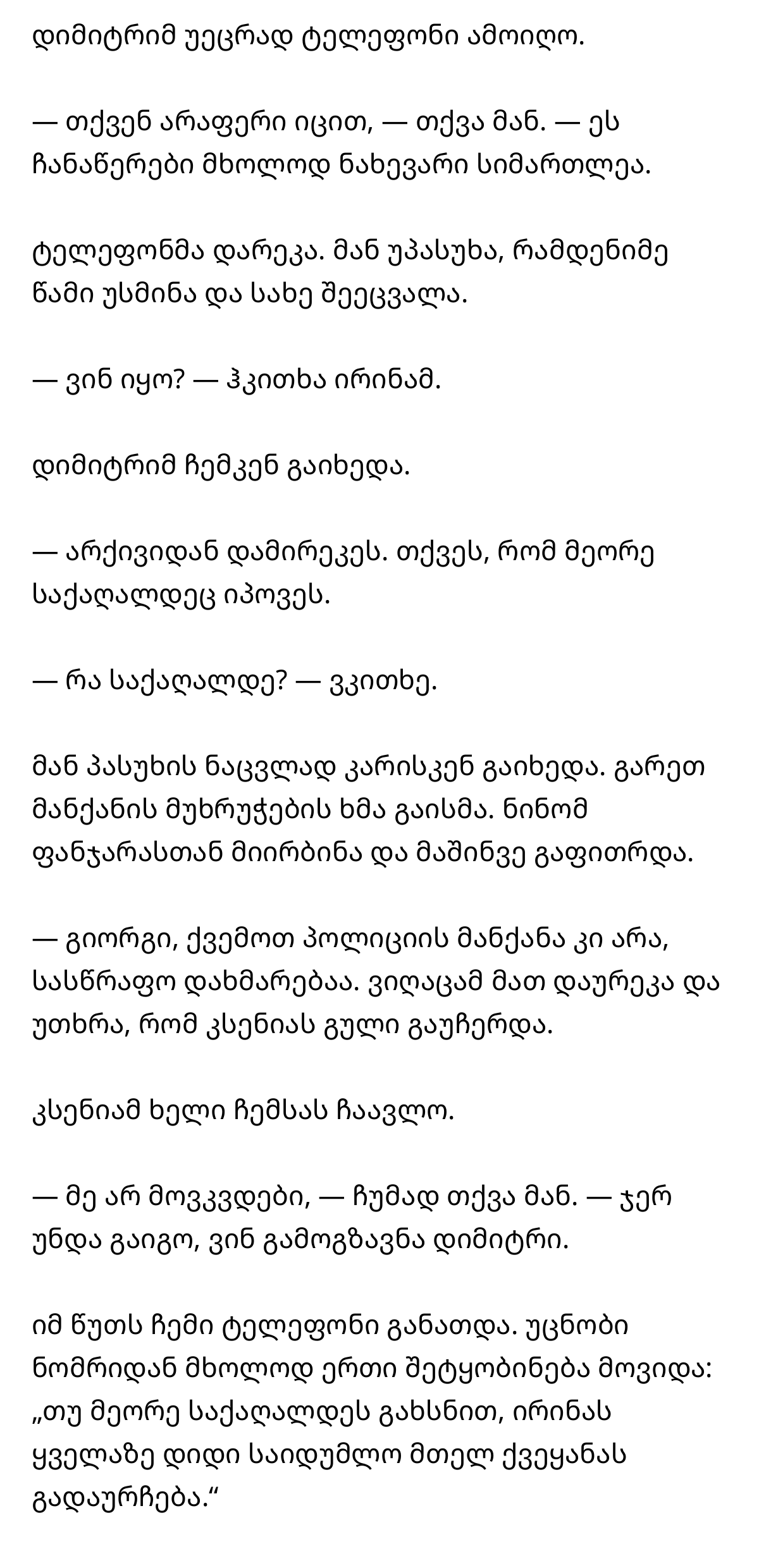
In the room, Xenia’s breathing could be heard. The one-hundred-and-four-year-old woman sat in an armchair, the same white shawl with the purple cross over her shoulders. Her eyes were bright.
“Come, child,” she told me. “Today you must understand why I wanted to leave you.”

Irina immediately turned around.
“Mother, do not say this now.”
“This is exactly when I must say it,” Xenia answered. “Before one more person writes that I was a heartless mother.”
I opened my notebook, but the pen froze in my hand.
“With whom were you going to leave Irina?” I asked with difficulty.
Xenia gripped the edge of the shawl. The purple cross disappeared between her fingers.
“With the person who then hid from me for my whole life that he had taken away my child’s right to choose.”
Silence fell over the room. Irina looked toward the window.
“Mother, you told me that that man was lost in the war.”
Xenia’s face suddenly changed.
“I told you that because the truth was more dangerous.”

Just then someone knocked hard on the door. Three times. Briefly and sternly.
Xenia raised her head.
“He has returned,” she whispered.
Irina rushed to the door, while I looked at the box left on the table. From the outside, the lock had already been broken. Someone had tried to open it before me. And when the door handle slowly went down, Nino called me on the phone: “Giorgi, there is another sheet in the folder. Do not touch it until I tell you, because it says what made Xenia choose silence for her whole life…”

An almost eighty-year-old man stood behind the door. He held a dark hat, and old ink stains could be seen on his fingers.
“Who are you?” Irina asked him.
“The one who returned the truth to this house,” the man answered.
Xenia immediately cried out:
“Dmitri, go away from here!”
Hearing her voice, I understood that this meeting was not accidental. Dmitri placed a folded paper on the table.
“I hid from you for twenty-nine years that the girl might survive,” he said. “Now I have no time left.”
“You never protected her,” Irina said, her voice trembling. “You only frightened Mother.”
Dmitri looked at me.
“Journalist, if you publish this sheet, everyone will learn that Xenia rejected her own child from the very beginning.”
Xenia struck the table with her hand. The purple cross moved on the shawl.
“No, let everyone learn why I said those words.”
Nino quietly told me on the phone that the second sheet in the folder had Dmitri’s signature. I took the paper.
One sentence was written on it: “The child must not remain with the mother, because her birth will expose many things.”

Irina read it and lost color.
“What was supposed to be exposed?”
Xenia could not answer. Dmitri, however, lowered his head for the first time.
Then Irina noticed a small stamp on the back of the paper and said quietly:
“This is the stamp of my birth certificate…”
At that same moment, a small key fell from the floor beside Xenia’s armchair. I bent down to pick it up and saw that the number on it exactly matched the lock of the archive box. Dmitri saw the key at once and seized my wrist.
“Do not open it yet,” he told me. “Otherwise you will learn that Irina’s whole life stood on a lie…”
Dmitri’s hand was cold and heavy. I freed my wrist and placed the key on the table.
“Now we will open it,” I said. “In front of everyone.”
It was six o’clock in the evening. Nino, Irina, and Xenia’s family doctor, Elena, were already sitting in the room. On the table stood the old wooden box, and beside it a glass filled with water, shaken by the trembling of Xenia’s hand.
“You have no right,” Dmitri said.
“Not a right, but a responsibility,” I answered. “All of you have hidden this truth for a century.”
I put the key into the lock. The iron opened with a crunch. Inside the box lay a triangularly folded letter, a doctor’s card, an old photograph, and a small blue card on which a birth date was written.

Irina held her breath.
“Read the letter first,” Xenia said.
I opened the paper. Xenia’s handwriting was firm at first, but then the letters gradually began to fade.
“I, Xenia Arkhipovna, am writing this so that one day my child will be told: I did not want to get rid of her. In the first year of the war, Dmitri told me that the birth of a girl would destroy his career. He asked me to hand the child over to an orphanage and tell everyone that I had failed to save her. I agreed only so that I could leave her alive. But then I learned that the child’s name and origin were to be given to another family. Therefore I decided to flee.”
Such silence fell over the room that every strike of the wall clock could be heard.
“So you were not leaving me?” Irina asked.
Xenia raised her head.
“I was saving you from death, child.”
“Why did you not tell me your whole life?”
“Because Dmitri threatened me. He said that if I revealed the truth, he would destroy your career and tell people that you had grown up under an illegal name.”
Dmitri chuckled, but the laughter stopped at once.
“All of this is invented.”
Nino took the photograph and read the date written on its back.
“Here are the witnesses’ names. Two of them are still alive.”
Doctor Elena looked at the birth card.
“The stamp belongs to the state maternity hospital. There is no record of a child’s sale. But there is a second record here: an order transferring the child, signed by Dmitri.”
Irina leaned against the wall. Tears ran down her face, but she no longer made a sound.
I took the last sheet. It said that Dmitri was not Xenia’s husband, but a wartime supervisor, and that he traded in children’s documents. By fleeing, Xenia saved her own life and her child’s name.


Dmitri suddenly took out his phone.
“You know nothing,” he said. “These records are only half the truth.”
The phone rang. He answered, listened for several seconds, and his face changed.
“Who was it?” Irina asked.
Dmitri looked toward me.
“They called me from the archive. They said they had found a second folder as well.”
“What folder?” I asked.
Instead of answering, he looked toward the door. Outside, the sound of a car braking was heard. Nino ran to the window and immediately turned pale.
“Giorgi, it is not a police car below, but an ambulance. Someone called them and said that Xenia’s heart had stopped.”
Xenia grasped my hand.
“I will not die,” she said quietly. “You must first learn who sent Dmitri.”
At that moment my phone lit up. Only one message came from an unknown number: “If you open the second folder, Irina’s greatest secret will escape the whole country.”
And at the end of the message was my own address…
კსენიამ ბოლოს ის ჩანაწერი მოისმინა, რომელმაც ყველაფერი შეცვალა…
მეგონა, სიმართლე უკვე ვიცოდით. მაგრამ ბოლო ნაწილი ყველაზე მძიმე აღმოჩნდა.
იქ გაირკვა, ვის ეკუთვნოდა მთელი ამ წლების შიში.
„მე მისი დაცემა არ მინდოდა, მხოლოდ სიმართლე მინდოდა.“
ოთახში პირველად არავის უცდია მისი შეჩერება.
😱 გაიგეთ, რას მალავდნენ ისინი →
👇 ისტორიის ფინალი უკვე გახსნილია
Related posts:
 Part 4 — The Mother Decided to Reject Her Unborn Child, but One Old Letter Silenced Everyone Present
 I Accidentally Entered a Billionaire’s House, and in the Morning I Woke Up in His Bed—and the Security Stopped Silently on the Threshold
 My daughter-in-law rented my mother’s lake house for a party, but after my calm response my husband stopped speaking
 My Disabled Sister’s Fall Was Followed by Violence, but When I Entered the House, My Mother’s Smile Suddenly Disappeared
 Six days after giving birth, my husband took my child from me to court, but even the lawyer stopped breathing when he saw my uniform
 My husband asked me not to reveal one strange secret to our child, but his mother lost color on the phone screen





