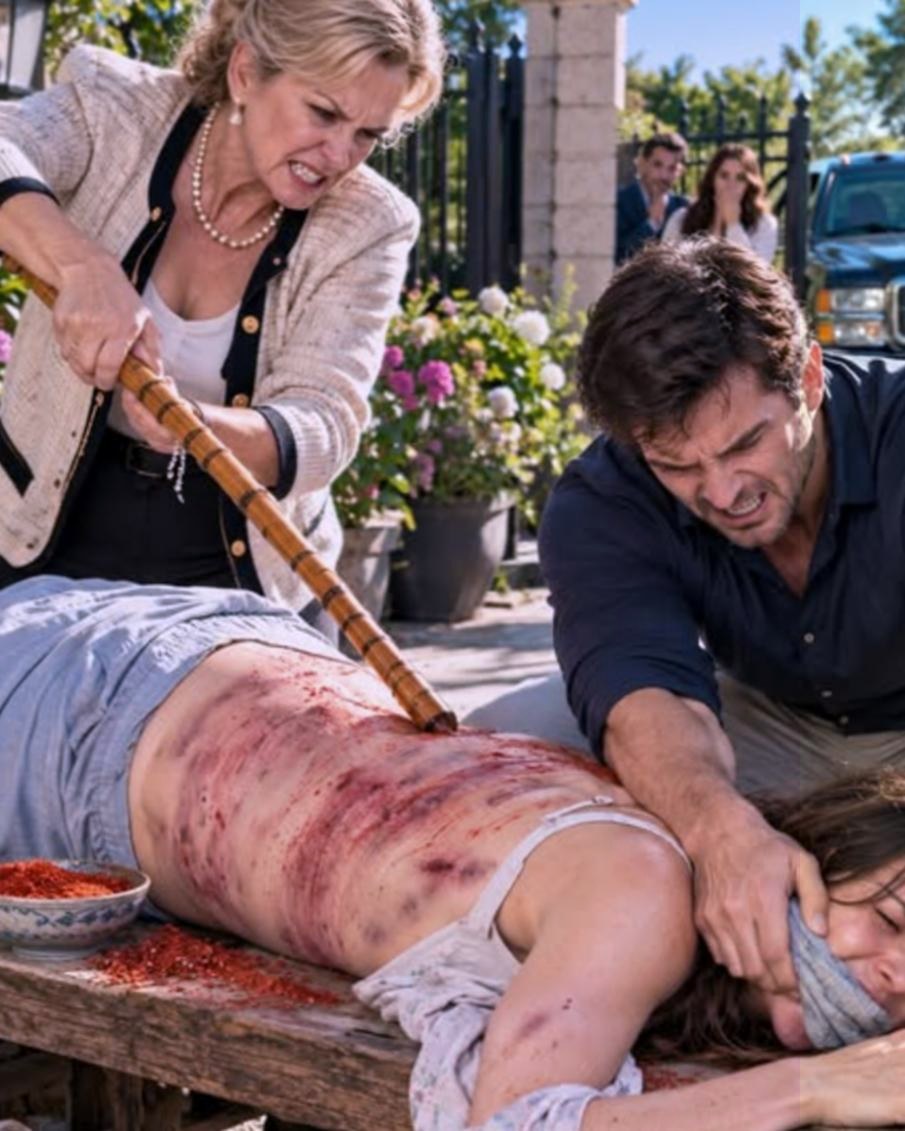

I recognized my brother, Levan, in the second voice.
“If she does not back down, we will frighten her so much that she will give up both the child and the house,” Dato was saying.
Levan answered:
“The main thing is to get the signature. After that she will not be able to prove anything.”
At first I could not understand what signature they were talking about.
Lasha sat in front of me and no longer said anything.
“When was this recording made?” I asked.
“Three days before the attack. Your brother met your husband. Dato asked the truck driver to stop at the end of the street. He said that he was simply waiting for goods and forgot to turn on the camera.”
I closed my eyes.
Levan was the only person in my family with whom I had spoken about my tension with Dato. I thought that he was on my side.
“Did he know?”
“Yes.”
“Did he know that I was pregnant?”
“Yes.”
These two short answers struck me more heavily than all of Dato’s words.

That same morning Levan called me.
“Nino, you understood it incorrectly,” he said. “Dato only wanted to frighten you.”
“Was throwing me onto my stomach also called only frightening?”
“His mother went too far.”
“And you knew that they were planning this.”
A long silence fell.
“You also know that the family will fall apart if you continue all this, don’t you?” he said at last.
“The family fell apart on the day you decided that my fear was cheaper than the truth.”
I ended the call.

An hour later Dato’s lawyer called me. His voice was calm and businesslike.
“Mrs. Nino, my client is ready to reach an agreement.”
“What agreement?”
“You will publicly deny the fact of violence, and he will not approach you.”
“Have you listened to the recording?”
“I have listened to it.”
“Then you know that this agreement is not protection, but silencing.”
The lawyer sighed.
“Dato says that he was angry and could not control himself.”
“I also could no longer control my body when he laid me on the bench. But I was still trying to protect the child.”
“If the case reaches court, many things will become public.”
“Enough was already public in the house where I was humiliated.”
The call ended.

The next day Dato was brought to the investigator’s room for the first time to listen to the recording. I stood in the corner of the room. The same memory card lay on the table, small and black, marked with a white number.
The recording began.
My muffled scream.
Marina’s voice.
Then his own voice.
“Do what Mother tells you.”
Dato lowered his head.
When it was heard for the second time, he closed his eyes.
The third time was not necessary.
“I did not say it like that,” he whispered.
Lasha stopped the recording.
“You heard it yourself.”
Dato looked toward me.
“Nino, I did not want it to turn out this way.”
“But you made it this way.”
“Mother provoked me.”
“Mother hit me. And you held me.”
For the first time I saw on his face what I had waited for through the years: the impossibility of escaping from his own words.
That same evening Marina read the report and sat down on the chair. She still held the small jar that the investigators had taken from the house. Red powder remained on the broken edge of its lid.
“I was only teaching her how she should behave,” she said.
“Violence is not upbringing,” Lasha answered.


A case was opened against them. The court left the protective order against Dato in place and imposed a restraining measure. Marina felt humiliated in court, but I was no longer watching her punishment. I was only listening to my child’s heartbeat.
Levan gave testimony later. He admitted that he had spoken with Dato about money and thought frightening Nino would resolve a family dispute. I did not forget his words, but I did not try to save him either.
When the judge asked Dato whether he had anything to say, he looked toward me.
“I loved her,” he said.
I answered calmly:
“Love does not tie a person to a wooden bench.”
The first months were difficult. I moved temporarily into a small apartment where the neighbor’s brick wall could be seen directly from the window. At night I woke at every sound. Drops of water, the locking of a door, heavy footsteps—everything reminded me of that yard.
But Doctor Irakli checked my child’s heartbeat every week.
“She is strong,” he would tell me.
I smiled.
“I will try to be strong too.”
“You already are.”

Three months later my daughter was born. I named her Elene. When I first laid her on my chest, her tiny fingers wrapped around my finger, and I felt such peace as I had not found in any house for a long time.
Dato sent a letter to the hospital.
“I want you to listen to me at least once. I have changed.”
I read the letter to the end.
Then I folded it and did not answer.
Several weeks later he tried again. This time, through a lawyer, he conveyed that he wanted to see the child. Meetings were scheduled only in the presence of a supervisor. I trusted the law, but I did not cross my own boundaries either.
At the first meeting with Dato, Elene was wrapped in a pink blanket. Dato saw the child and his eyes lit up.
“May I hold her?”
“Only in the presence of the supervisor,” I told him.
“Nino, I am her father.”
“Fatherhood is not a title, but responsibility.”
He lowered his head.
I was no longer testing his remorse. My task was for Elene to grow up safely.
Months passed. I started working in a small kindergarten, where in the mornings I arranged colored pencils on the tables for the children. In the evening I bathed Elene, warmed milk in the kitchen, and arranged her drawings on the windowsill.

One winter morning, when the first snow came, Elene drew a house, a big sun, and two figures on the floor. One was tall, the other small.
“Who is this?” I asked.
“Me and you,” she answered.
“Where is Father?”
Elene put the pencil aside.
“We live here.”
That evening for the first time I did not think about what our house was missing. I saw what was in it.
Warmth.
Peace.
And a door that I locked from the inside.
I received Dato’s last message six months later.
“If you ever want, let us start again, I will be here.”
I looked at the screen for a long time.
Then I wrote:
“Starting again is impossible where you ended trust with violence. Elene and I are moving forward.”
I sent it and blocked the number.
That night I did not listen to the old recording again. I put the memory card in a small wooden box, together with the photograph of the chipped bench that the investigator had given me from the case materials.
The dark crescent-shaped stain was still visible in the photograph.
But now it was no longer a sign of my fear.
It was the place from which I had left.
The light of the first snow entered Elene’s room. The child was sleeping peacefully. I closed the window, put the wooden box on the shelf, and turned the key in the door.
This time the door was locked not against me, but for my peace.
Missed the beginning?
Related posts:
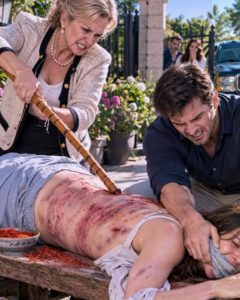 The husband humiliated his pregnant wife in front of his mother, but one strange gesture from a truck driver froze him on the spot
 I saw a new bandage on my niece’s shoulder at the camp, and on the way my sister ordered me to turn back — her voice suddenly cut off
 My husband gave flowers to his former lover, and I left the hall — behind the cameras, his smile disappeared
 My daughter-in-law emptied our yard in front of the guests, but her hands trembled when she heard one decision of mine
 I Overheard My Husband’s Secret Conversation at the Airport, but When He Mentioned Losing My House, His Companion Suddenly Turned Pale
 A few days after giving birth, my husband put divorce papers in front of me in the kitchen, but his face changed after my calm answer