
For several seconds after the lawyer’s words, no one moved.
Then everything began at once.
Nora locked the door.
The lawyer called the police.
Daniel lowered the curtain and looked at the street.
“Where was he seen?” I asked.
“Near your house,” the lawyer answered me. “A neighbor said that a man was looking through old photographs.”
“Who is he?”
The lawyer swallowed.
“Your father’s former driver. His name is Revaz.”
Daniel pushed his chair back.
“Revaz was there then too.”
“You knew him?”
“I knew his voice. That night I was sitting in the car when he took my bag from me and told me that if I did not leave the city, I would see your grave.”
The word “grave” froze me inside.
The police came in ten minutes. Two detectives entered the room, with wet shoes and the smell of rain coming from their jackets.
“Mrs. Elene, you are safe now,” one of them told me.
“I was not safe for fifty years,” I answered. “I simply did not know why I was afraid.”
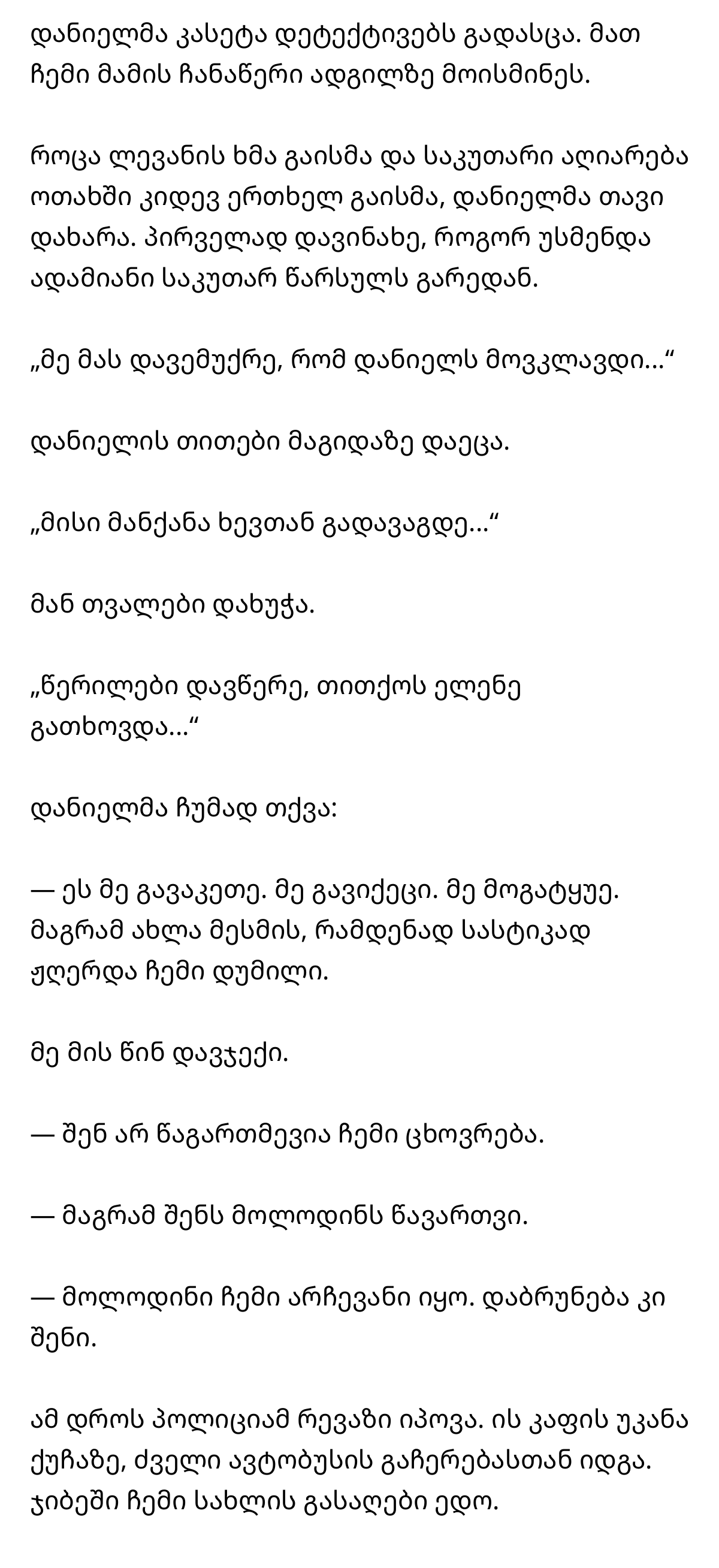

Daniel handed the cassette to the detectives. They listened to my father’s recording there.
When Levan’s voice sounded and his confession was heard in the room once again, Daniel lowered his head. For the first time I saw how a person listened to his own past from the outside.
“I threatened her that I would kill Daniel…”
Daniel’s fingers fell onto the table.
“I drove his car over the ravine…”
He closed his eyes.
“I wrote letters as if Elene had married…”
Daniel said quietly:
“I did that. I ran away. I lied to you. But now I understand how cruel my silence sounded.”
I sat down in front of him.
“You did not take my life away.”
“But I took away your waiting.”
“Waiting was my choice. Returning was yours.”
At that moment the police found Revaz. He was standing on the back street of the café, by the old bus stop. My house key was in his pocket.
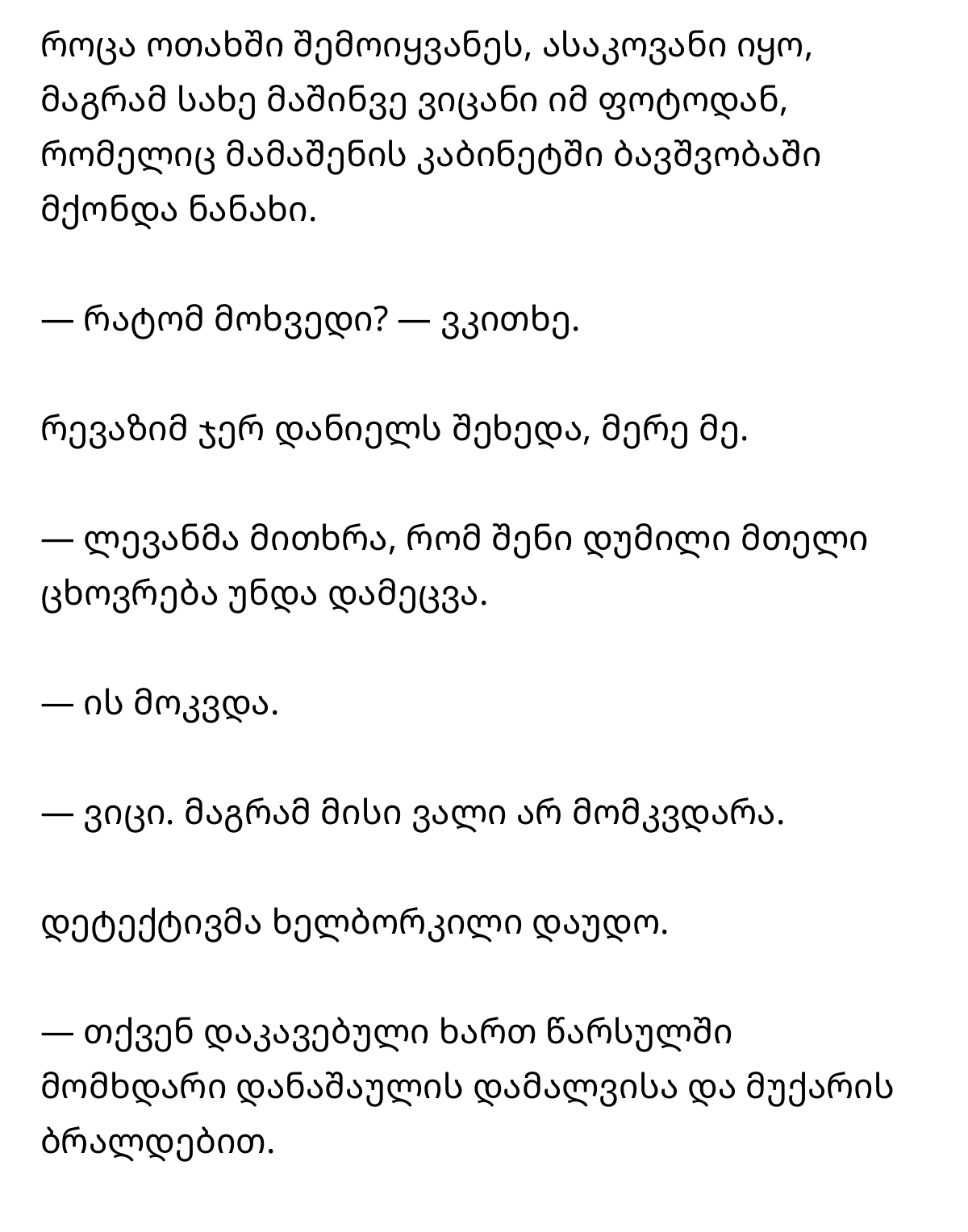
When they brought him into the room, he was old, but I immediately recognized his face from a photograph I had seen in my father’s office as a child.
“Why did you come?” I asked.
Revaz looked first at Daniel, then at me.
“Levan told me that I had to protect your silence my whole life.”
“He is dead.”
“I know. But his debt did not die.”
The detective handcuffed him.
“You are under arrest on charges of concealing a crime committed in the past and making threats.”
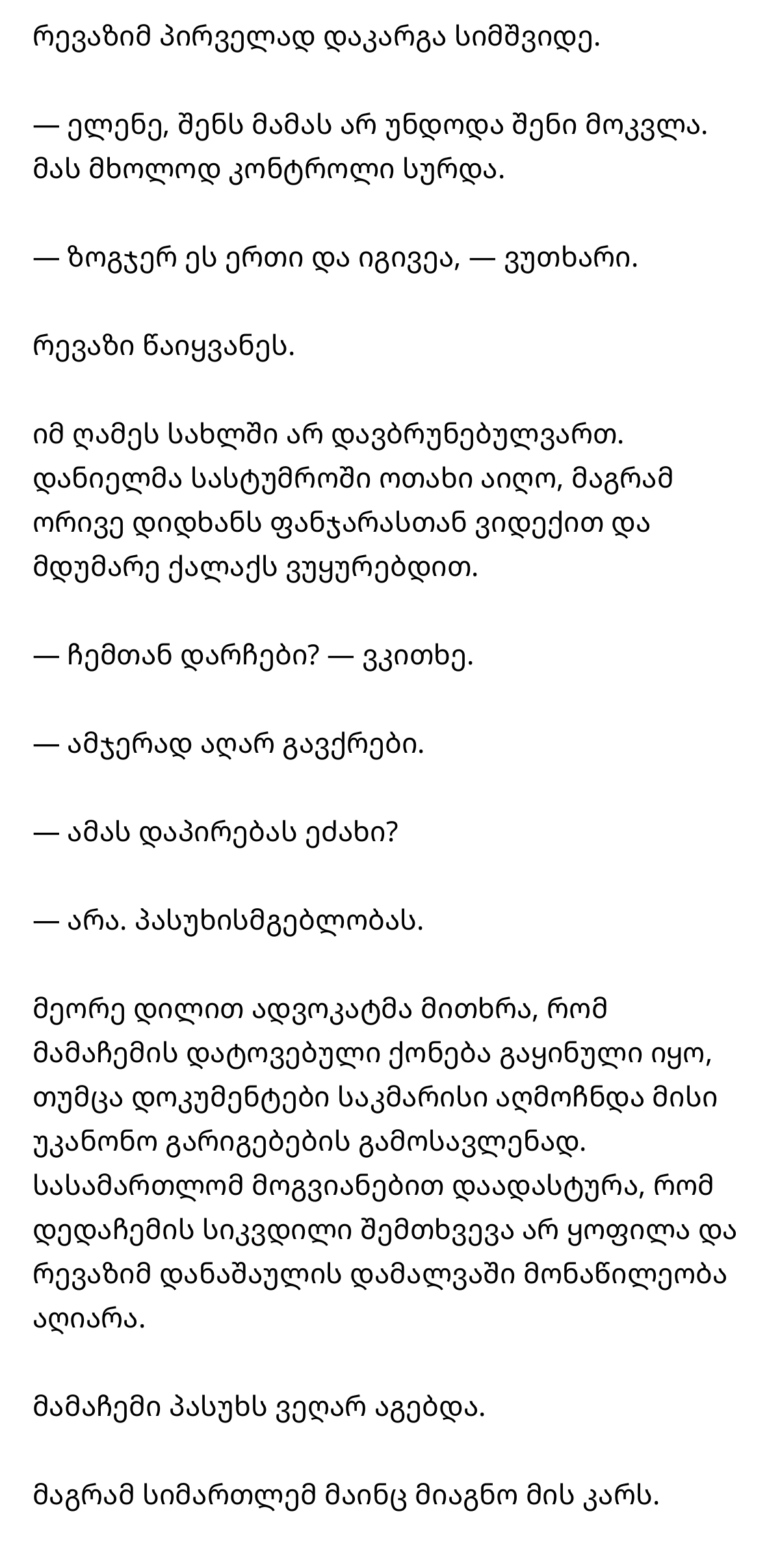

Revaz lost his calm for the first time.
“Elene, your father did not want to kill you. He only wanted control.”
“Sometimes that is the same thing,” I told him.
Revaz was taken away.
That night we did not return home. Daniel took a room at a hotel, but both of us stood by the window for a long time and looked at the silent city.
“Will you stay with me?” I asked.
“This time I will not disappear.”
“Do you call that a promise?”
“No. Responsibility.”
The next morning the lawyer told me that the property my father had left was frozen, although the documents were sufficient to expose his illegal dealings. The court later confirmed that my mother’s death had not been an accident and that Revaz admitted participating in concealing the crime.
My father could no longer answer for it.
But the truth still found its way to his door.
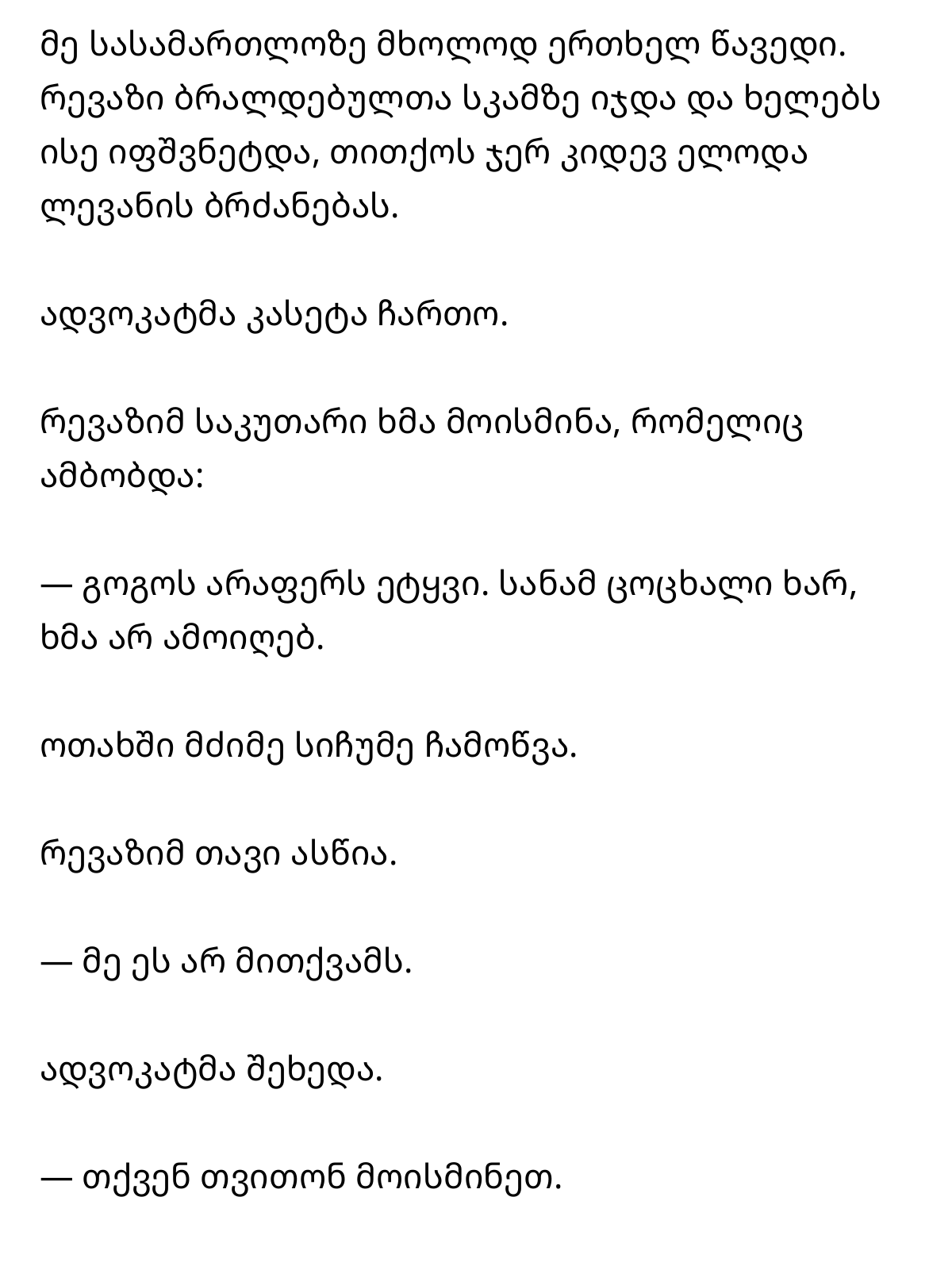
I went to court only once. Revaz sat on the defendants’ bench and rubbed his hands as if he were still waiting for Levan’s order.
The lawyer turned on the cassette.
Revaz heard his own voice, which said:
“You will tell the girl nothing. As long as you live, you will not say a word.”
A heavy silence descended in the room.
Revaz raised his head.
“I did not say that.”
The lawyer looked at him.
“You heard it yourself.”

Revaz lowered his eyes.
That day I understood that sometimes the harshest punishment is not prison. It is hearing your own voice when you can no longer convince anyone that you were another person.
After the trial I returned home.
For the first time in fifty years I opened my mother’s room. Everything was almost unchanged: the curtains, the wooden wardrobe, the dried lavender on the windowsill. Only one thing was missing—the family photograph hanging on the wall.
My father had taken it.
Daniel found the photograph several weeks later in an old storage room. Its corner was folded, while my mother’s face was covered with dust.
I placed the photograph on the table.
Daniel placed my small bronze key beside it.
“You carried this your whole life,” he told me.
“I thought I was waiting for the future.”
“In reality, you were preserving the past.”
“Now I no longer want to preserve it.”
I slowly took the key off my neck.
But I could not throw it away.

Four months later we moved to a small town. We bought a house by the river, and planted lavender beneath the windows. Daniel baked bread in the mornings. And I began working at the library.
In the first weeks I startled at every noise.
Then, little by little, I learned that the doorbell did not always mean danger.
In winter, a little girl named Sopho, who lived next door, often came to us. Once she sat down at the table and drew a house on a sheet of paper. The house had a red roof, and two people stood by the door.
“Is this you?” I asked.
“Yes,” she answered me. “You are waiting for each other.”
Daniel looked at the drawing.
“No, Sopho. Now we are going together.”
The girl drew two small figures holding hands.
Six months later a message arrived on Daniel’s phone. He looked at the screen for a long time.
“Who is it from?” I asked.
“From Revaz’s lawyer.”
The message said that Revaz wanted to meet me. He said that he had another letter from Levan and that it was to be handed only to me.
Daniel placed the phone on the table.
“You are not obliged to go.”

“I know.”
“It may be the truth.”
“It may be that someone still wants to transfer an old fear onto me.”
That night I thought for a long time.
The next morning I sent a reply.
“I will not come anymore. Whatever you have, it no longer belongs to my life.”
When I wrote this, I did not feel guilt for the first time.
I was no longer punishing anyone.
I was simply no longer opening the door behind which fear had stood all my life.
One February morning the first snow came. Daniel went outside and attached a small wooden sign to the door of the house. It said: “Returning is permitted here.”
I watched from the window as snow spread over the river.
I put the bronze key into an old wooden box. The red enamel bird still shone as if alive.
The key was no longer a promise.
It was no longer waiting.
It simply became a small object from the past, which I now possessed, and not it.
Daniel entered the room.
“Coffee is ready, Elene.”
“I’m coming.”
He left the door open.
I looked at the key for the last time and closed the box.
Then, for the first time in my life, I opened a door not to the past, but to the future.
Missed the beginning?
Related posts:
 On the anniversary of the accident, my granddaughter handed me a sheet of paper and asked me one calm question — the glass stopped in my hand
 They threw me out from the Christmas table, but when I said whom the house belonged to, the smile disappeared from Vanessa’s face
 Part 4 — On the anniversary of the accident, my granddaughter handed me a sheet of paper and asked me one calm question — the glass stopped in my hand
 A ten-year-old girl arrived at the hospital with a sick infant, but a single call made the doctors’ blood run cold.
 Part 4 — Ten Years Later, an Unknown Woman Came to My Daughter’s Grave, and My Hands Began to Tremble at the Sight of One Envelope
 Rowan seated a secretary in my place and told me, “Remember your place” — but he turned pale at the sight of my calm smile