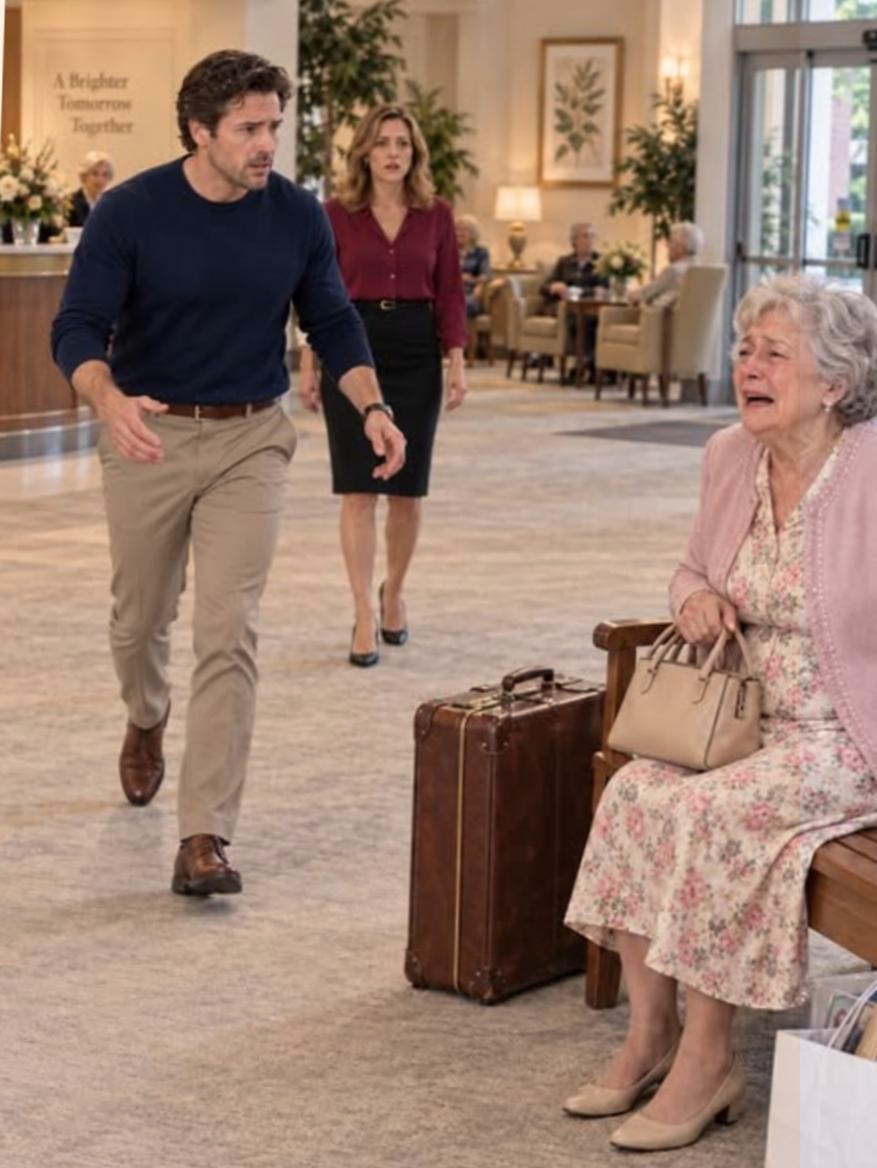

When I heard Miranda’s last words, I sat down on the edge of the bed. Dawn was beginning outside the window. From Grandma’s room came the quiet sound of medicine bottles, while the copper bell on her suitcase moved every time she got out of bed.
“What could be written in the will?” I asked.
“I don’t know yet. Leonard will bring a copy in the morning. Don’t call anyone.”
But Dad had already called me.
Once.
Twice.
And the third time he left a voicemail.
“Ivane, you will get the money back. Just tell Miranda not to continue the case. Your mother is sick, and I am not going to go to prison.”
I listened to the message to the end and put the phone on the table.
Grandma was standing in the doorway. In her hand she held a white cup decorated with small golden birds.
“What did he say?”
“That he is afraid of the consequences.”
“No,” she told me. “He is afraid of himself. Those are two different things.”
Miranda came in the morning. In her hand was a dark-brown folder. She placed it in front of us, but did not open it immediately.
“Leonard is coming with the bank investigator. Arthur gave him your grandfather’s will to prove that he had the right to dispose of part of the property.”
“He had?” I asked.
“If you read the will correctly, no.”
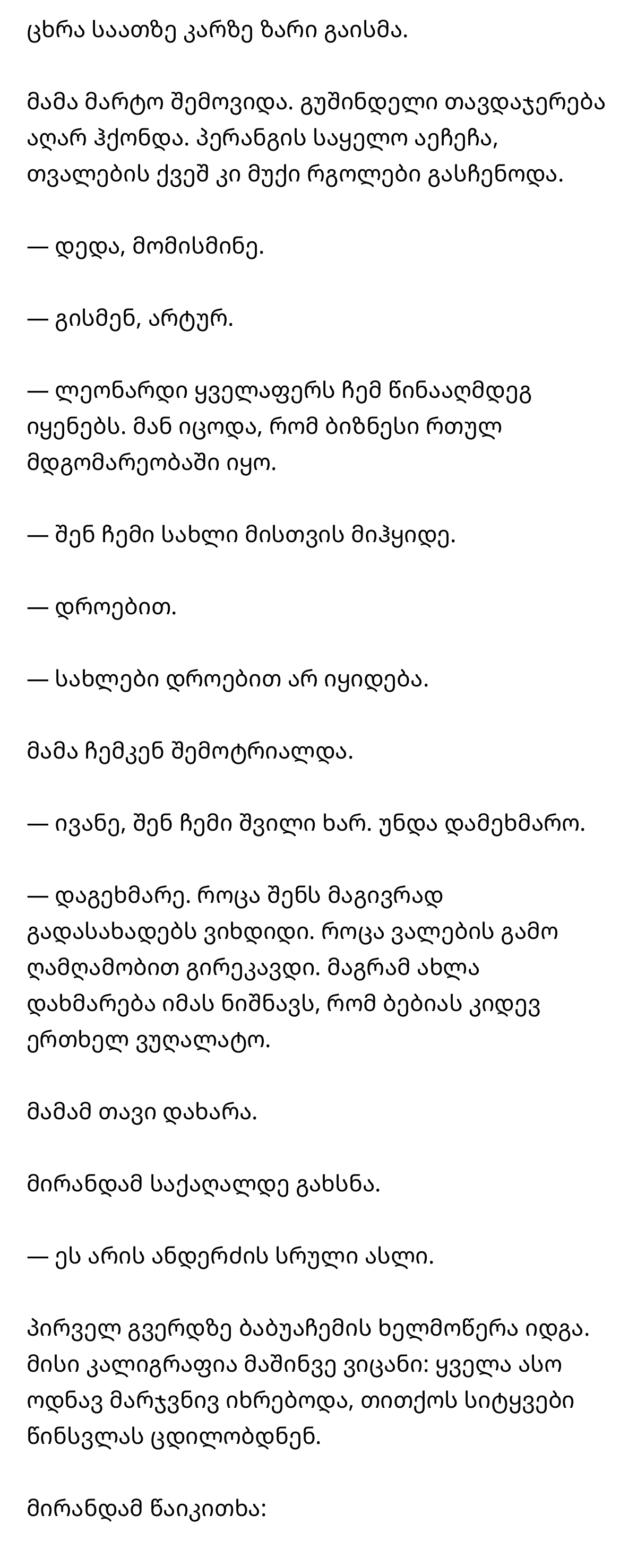

At nine o’clock the doorbell rang.
Father came in alone. Yesterday’s confidence was gone. His shirt collar was disheveled, and dark circles had appeared under his eyes.
“Mother, listen to me.”
“I am listening, Arthur.”
“Leonard is using everything against me. He knew that the business was in a difficult position.”
“You sold my house to him.”
“Temporarily.”
“Houses are not sold temporarily.”
Dad turned toward me.
“Ivane, you are my son. You have to help me.”
“I helped you. When I paid the bills in your place. When I called you at night because of the debts. But now help means betraying Grandma one more time.”
Dad lowered his head.
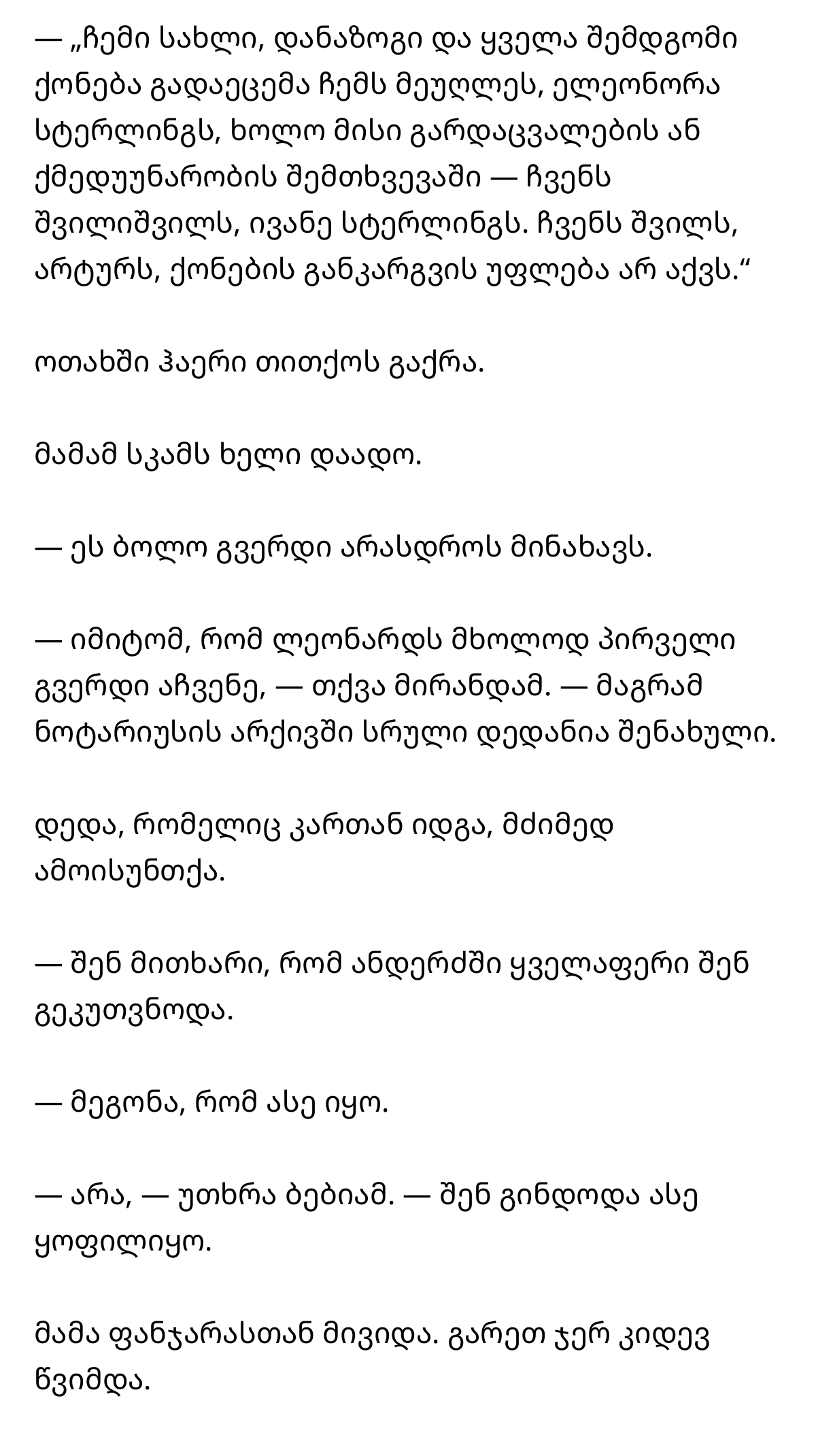
Miranda opened the folder.
“This is the complete copy of the will.”
On the first page was my grandfather’s signature. I recognized his handwriting immediately: every letter leaned slightly to the right, as if the words were trying to move forward.
Miranda read:
“My house, savings, and all subsequent property shall pass to my wife, Eleonora Sterling, and in the event of her death or incapacity—to our grandson, Ivane Sterling. Our son, Arthur, has no right to dispose of the property.”
The air in the room seemed to disappear.
Dad put his hand on the chair.
“I had never seen this last page.”
“Because you showed Leonard only the first page,” Miranda said. “But the complete original is kept in the notary’s archive.”
Mother, who was standing by the door, exhaled heavily.
“You told me everything in the will belonged to you.”
“I thought it did.”
“No,” Grandma told him. “You wanted it to be so.”
Dad went to the window. It was still raining outside.
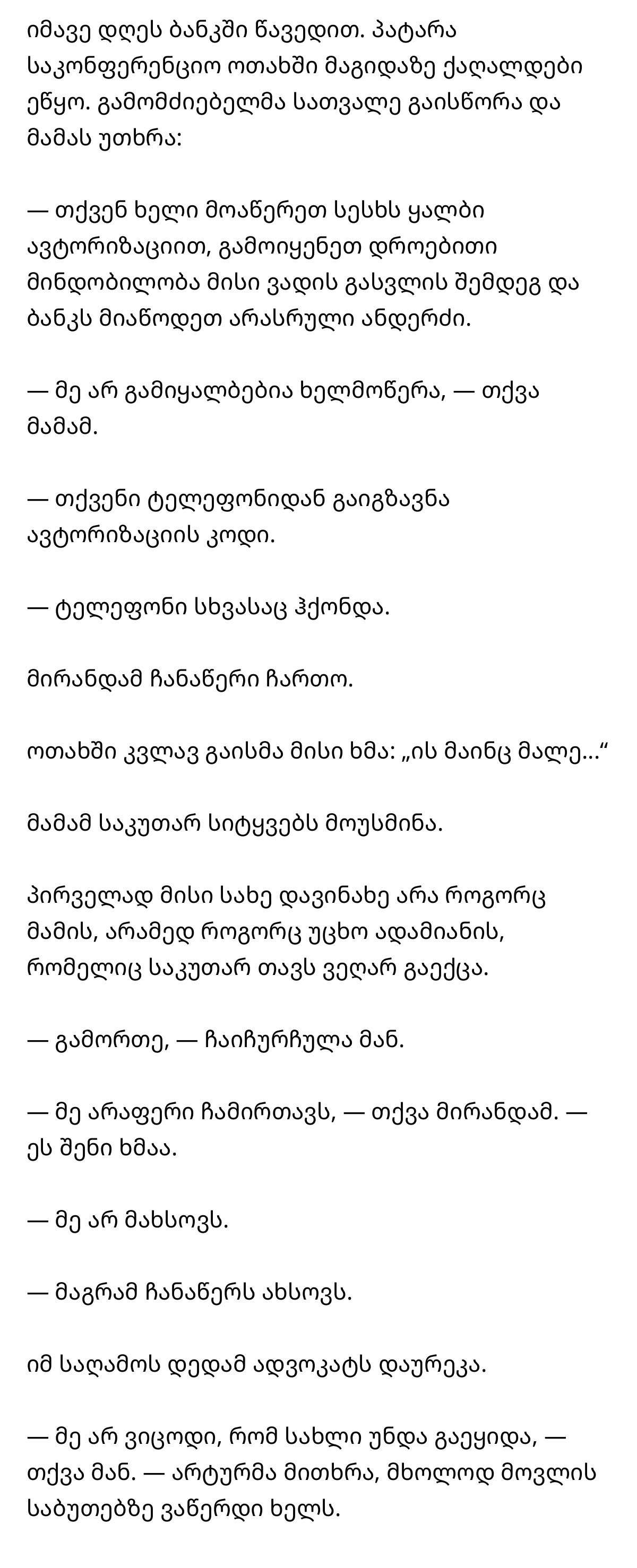

That same day we went to the bank. Papers were arranged on the table in a small conference room. The investigator adjusted his glasses and said to Dad:
“You signed the loan with false authorization, used the temporary power of attorney after it had expired, and provided the bank with an incomplete will.”
“I did not forge the signature,” Dad said.
“The authorization code was sent from your phone.”
“Someone else had the phone too.”
Miranda turned on the recording.
His voice was heard in the room again: “She would soon anyway…”
Dad listened to his own words.
For the first time I saw his face not as a father, but as the face of a stranger who could no longer escape himself.
“Turn it off,” he whispered.
“I did not turn anything on,” Miranda said. “That is your voice.”
“I don’t remember.”
“But the recording remembers.”
That evening Mother called the attorney.
“I did not know that the house was supposed to be sold,” she said. “Arthur told me I was signing only care documents.”
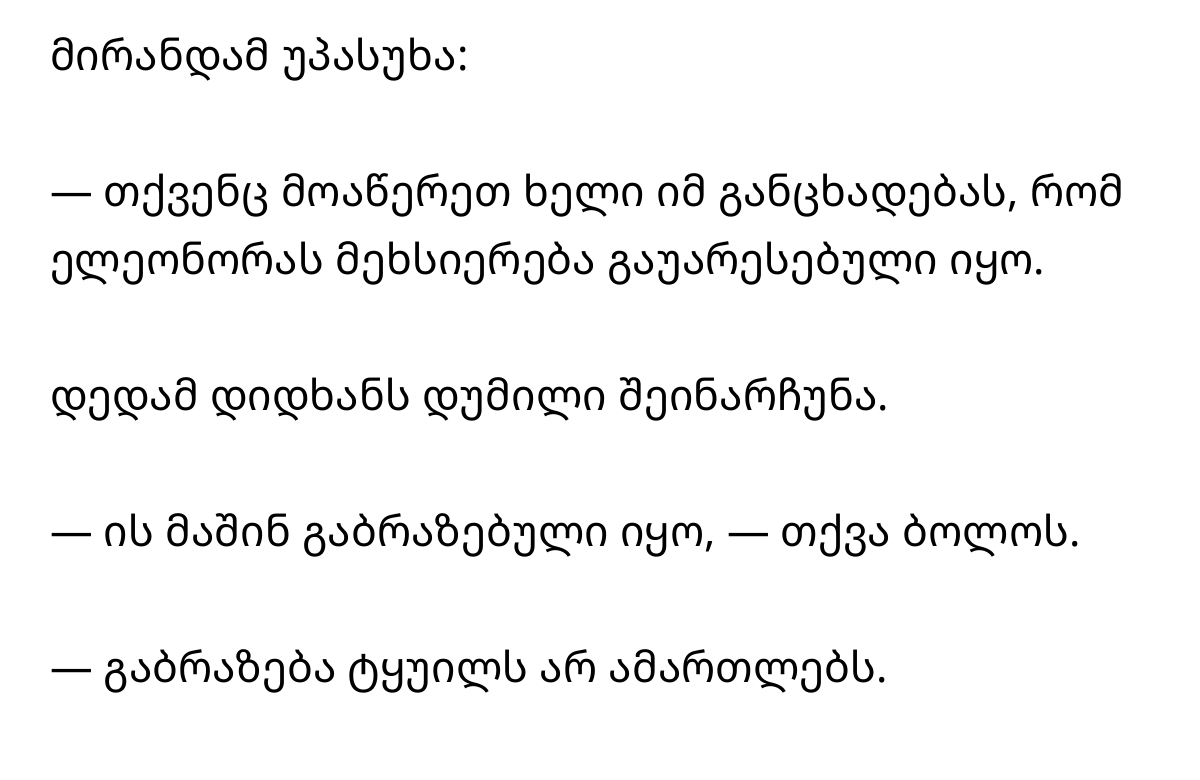
Miranda answered:
“You also signed the statement that Eleonora’s memory had deteriorated.”
Mother remained silent for a long time.
“She was angry then,” she said at last.
“Anger does not justify a lie.”

The next day Arthur knocked on the door of our apartment. Behind him stood a police investigator. Father held a small plastic box in his hand.
“These are Mother’s things,” he told me. “I want to return them.”
Grandma opened the box. Inside were her old photograph, Grandpa’s watch, and the small copper bell that had hung on the suitcase.
“Why did you take it?” I asked.
“I found it in that room. I don’t know.”
“You do,” Grandma said. “You were looking behind the fireplace. The bell fell there, and you did not notice that the camera was turned on.”
Dad lowered his eyes.
In the following weeks everything moved slowly, but firmly. The bank stopped the sale of the loan. The court canceled the order freezing Grandma’s house. The investigator opened a case against Dad for financial fraud and forgery of a signature.
Mother began living separately. She wrote an apology letter, but Grandma read it only once and then folded it.
“I am not going to remain angry with her,” she told me. “But forgiveness does not mean returning.”
Father went to court. I was giving testimony. He did not look back at me.
When the judge listened to the recording, Dad hid his head in his hands. It was not a moment of victory. I was not happy then either. I simply saw how the door he had spent his whole life trying to open with other people’s trust was closing in front of him.

Several months later I moved with Grandma to a small town. Her house survived, but we renovated the upper floor. I worked from home, while Grandma sat by the window every morning and scattered seeds for the birds.
The first snow came at the end of November.
Grandma drew a small house on the window with her finger.
“Will we live here?” she asked.
“We already live here.”
“Then why am I sometimes afraid?”
I sat beside her.
“Because you had to be alone for a long time.”
She rested her head on my shoulder.
“I am no longer alone.”
I put a new work desk in the kitchen. I arranged Grandma’s medicines in colorful boxes. Every week we checked the bank statement together, although she no longer needed my help. I simply wanted no one to hide her own life from her anymore.

One evening Dad sent me a letter. Not from prison—he was still waiting for the court’s final decision. He wrote that he had changed, that he wanted the family back, and that everything could start over.
Grandma read the letter.
“What do you think?” she asked me.
I was standing by the window. Outside, snow was quietly falling on the path that we cleared together every morning.
“I am no longer going to save him.”
“Isn’t that cruelty?”
“No. It is the right to let a person face the consequences of their choice.”
I wrote a short reply: “I wanted to help you, but I can no longer promise to restore trust. I wish you to take responsibility to the end.”
I sent the letter and turned off the phone.
Grandma removed the copper bell from the suitcase handle. Of all the things remaining in the house, it was the only one that had been with us even when they tried to take her life away.
She hung the bell above my work desk.
“Why here?” I asked.
“So that you remember,” she told me, “sometimes the way of escape leads you precisely to the place where your real home is waiting for you.”
The wind shook the window.
The bell rang once.
And this time that sound did not mean anyone’s escape.
Missed the beginning?
Related posts:
 They Took Grandma to Dinner and Abandoned Her in a Nursing Home, but Dad Suddenly Turned Pale When He Heard My Decision
 I Caught My Husband Kissing His Mistress in the Kitchen While I Was Twelve Weeks Pregnant, but One Letter of Mine Erased Her Smile
 My Parents Were Celebrating Selling Their Eleven-Year-Old Granddaughter’s Cello, but Grandma Opened a Folder and Father’s Face Changed
 My sister announced the death of my very-much-alive father, but when he leaned toward the phone, his voice changed everything
 My Family Was Moving Furniture into My House Until They Opened One Folder and Ryan Froze on the Spot
 My Billionaire Employer Invited Me to Humiliate Me on My Birthday, but When I Stepped Out of the Black Car, Her Smile Disappeared